Traditional Dance – Basic 2 Cultural & Creative Arts Lesson Note (First Term)
Download Lesson NoteLesson note at a glance
- Subject
- Cultural & Creative Arts
- Class
- Basic 2
- Term
- First Term
- Topic
- Traditional Dance
- Order
- Topic 7 of 9 this term
- Reading time
- 1 min
Learning Objectives
By the end of the lesson, pupils should be able to:
- Explain traditional dance
- Identify traditional dance in Nigeria (e.g. Gada, Atilogwu etc)
- Discuss the different occasions of performing them
Introduction
Traditional dances are special ways of moving our bodies to celebrate our culture. Each region in Nigeria has its own traditional dances.
Content
What is Traditional Dance? Traditional dance is:
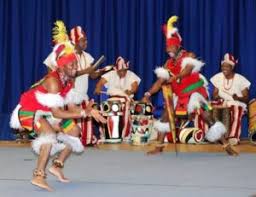
- Special body movements from our culture
- Dances passed down from our ancestors
- Performed during celebrations and ceremonies
- Usually done with traditional music
Examples of Nigerian Traditional Dances:
- Gada Dance – from Northern Nigeria
- Atilogwu Dance – from Eastern Nigeria (Igbo land)

Bata Dance – from Western Nigeria (Yoruba land)

- Swange Dance – from Middle Belt Nigeria
Occasions for Traditional Dances:
- Festivals – like New Yam Festival, Durbar
- Weddings – to celebrate new couples
- Harvest time – to thank God for good crops
- Religious ceremonies – to worship and pray
- Welcome visitors – to show hospitality
- Cultural events – to preserve our heritage
Features of Traditional Dances:
- Colorful traditional costumes
- Traditional musical instruments
- Group participation
- Tell stories through movement
Activity
- Watch a simple traditional dance demonstration
- Learn basic steps of a local traditional dance
- Practice moving to traditional music rhythms
- Draw people performing traditional dance
Multiple Choice Exercise
- Traditional dance comes from: a) Modern times b) Our ancestors c) Other countries d) Schools
- Atilogwu dance is from which part of Nigeria? a) North b) South c) East d) West
- Traditional dances are performed during: a) Festivals b) Weddings c) Celebrations d) All of the above
- Gada dance is from: a) Eastern Nigeria b) Western Nigeria c) Northern Nigeria d) Southern Nigeria
- Traditional dancers usually wear: a) School uniform b) Traditional costumes c) Modern clothes d) Sports wear
Answers: 1(b), 2(c), 3(d), 4(c), 5(b)
This term's Cultural & Creative Arts topics
Basic 2 First Term · 9 topics
First Term Cultural & Creative Arts (CCA) Lesson Notes for Other Topics

Introduction to Drawing - Objects in Our Environment
Read the full lesson note.

Introduction to Singing
Read the full lesson note.

Singing About Flowery Plants Using Tonic Solfa
Read the full lesson note.

Staging - The Way a Play is Produced and Presented
Read the full lesson note.
Types of Flowers
Read the full lesson note.

Drawing of Staff/Stave, The Grand Staff, and The Clefs
Read the full lesson note.

Use of Lines
Read the full lesson note.

Theatrical Elements and Personnel
Read the full lesson note.
Forms of Dance
Read the full lesson note.

Imaginative and Creative Drawing
Read the full lesson note.

Choral Singing
Read the full lesson note.

Casting and Rehearsal
Read the full lesson note.

Card Making and Decoration
Read the full lesson note.

Introduction to Life Drawing
Read the full lesson note.
Rhythmic Pattern 2
Read the full lesson note.
Lesson Notes for Other Classes

Basic 1 Lesson Note
The complete lesson note to guide your studies.

Basic 3 Lesson Note
The complete lesson note to guide your studies.

Basic 4 Lesson Note
The complete lesson note to guide your studies.

Basic 5 Lesson Note
The complete lesson note to guide your studies.

Basic 6 Lesson Note
The complete lesson note to guide your studies.

JSS1 Lesson Note
The complete lesson note to guide your studies.