
Use of Lines Basic 3 Cultural & Creative Arts (CCA) Lesson Note
Download Lesson NoteTopic: Use of Lines
Class: Primary 3
Subject: Cultural and Creative Art
Topic: Use of Lines
Duration: 30 minutes
Learning Objectives
By the end of this lesson, pupils will be able to identify different types of lines and use them to create simple drawings and patterns.
Introduction
Lines are one of the most important things we use when we draw or create art. A line is a mark we make when we move our pencil, crayon, or brush across paper. Lines can help us draw shapes, show movement, and make our artwork look interesting.
Main Content
Types of Lines
There are many different types of lines we can draw.
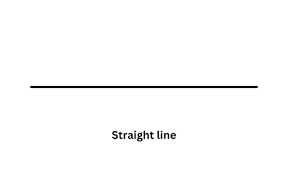
- Straight lines go in one direction without bending.
- Curved lines bend and flow like a snake or a river.

- Zigzag lines go up and down like mountains.

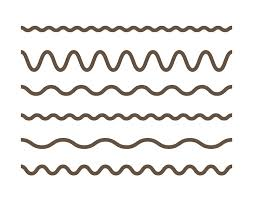
- Wavy lines move up and down gently like ocean waves.
- Thick lines are bold and strong, while thin lines are light and delicate.

How Lines Help Us Draw
Lines are the building blocks of all drawings. We use straight lines to draw houses, boxes, and roads. Curved lines help us draw circles, flowers, and people’s faces. When we put different lines together, we can create any picture we want. Lines can also show feelings in our artwork. Zigzag lines can look exciting, while smooth curved lines can look calm and peaceful.
Creating with Lines
We can use lines to make patterns and designs that look beautiful. When we repeat the same lines over and over, we create patterns. Lines can also be used to fill in shapes or make textures that look like fur, grass, or water. The way we draw our lines can make our artwork look rough or smooth, fast or slow.
Class Exercises
Exercise 1: Line practice session. Draw five different types of lines across your paper: one straight line, one curved line, one zigzag line, one wavy line, and one dotted line.
Exercise 2: Create a simple house using only straight lines. Draw the walls, roof, door, and windows using different straight lines of various sizes.
Exercise 3: Nature drawing with curved lines. Draw a tree using curved lines for the trunk and branches, and wavy lines for the leaves blowing in the wind.
Exercise 4: Pattern making activity. Choose one type of line and repeat it across your paper to create a decorative pattern. You can make stripes, waves, or zigzag patterns.
Exercise 5: Combine different lines to draw a simple landscape. Use straight lines for the ground and mountains, curved lines for hills and sun, and wavy lines for clouds and water.
Evaluation
Pupils will demonstrate their understanding by creating a drawing that uses at least three different types of lines. The teacher will observe how well pupils can control their lines and use them purposefully in their artwork.
Assignment
Look around your home and find three objects. Draw each object using the most suitable types of lines. For example, use straight lines for a book, curved lines for a ball, and wavy lines for curtains. Bring your drawings to share in the next class.
First Term Cultural & Creative Arts (CCA) Lesson Notes for Other Topics

Introduction to Drawing - Objects in Our Environment
Explore lesson notes covering all topics.

Introduction to Singing
Explore lesson notes covering all topics.

Singing About Flowery Plants Using Tonic Solfa
Explore lesson notes covering all topics.

Staging - The Way a Play is Produced and Presented
Explore lesson notes covering all topics.

Types of Flowers
Explore lesson notes covering all topics.

Drawing of Staff/Stave, The Grand Staff, and The Clefs
Explore lesson notes covering all topics.
Theatrical Elements and Personnel
Explore lesson notes covering all topics.
Forms of Dance
Explore lesson notes covering all topics.
Imaginative and Creative Drawing
Explore lesson notes covering all topics.
Choral Singing
Explore lesson notes covering all topics.
Casting and Rehearsal
Explore lesson notes covering all topics.
Card Making and Decoration
Explore lesson notes covering all topics.
Introduction to Life Drawing
Explore lesson notes covering all topics.

Rhythmic Pattern 2
Explore lesson notes covering all topics.

Types Of Objects And Shapes
Explore lesson notes covering all topics.
Lesson Notes for Other Classes

Basic 1 Lesson Note
The complete lesson note to guide your studies.

Basic 2 Lesson Note
The complete lesson note to guide your studies.

Basic 4 Lesson Note
The complete lesson note to guide your studies.
Basic 5 Lesson Note
The complete lesson note to guide your studies.
Basic 6 Lesson Note
The complete lesson note to guide your studies.

JSS1 Lesson Note
The complete lesson note to guide your studies.