
Marriage Practices in Nigeria – Basic 3 Social Studies Lesson Note (First Term)
Download Lesson NoteLesson note at a glance
- Subject
- Social Studies
- Class
- Basic 3
- Term
- First Term
- Topic
- Marriage Practices in Nigeria
- Order
- Topic 16 of 20 this term
- Reading time
- 4 min
- INTRODUCTION TO NIGERIAN MARRIAGE PRACTICES
Nigeria is a country with many different tribes and cultures. Each tribe has its own special way of conducting marriages.
Major tribes in Nigeria:
- Yoruba (Southwest Nigeria)
- Igbo (Southeast Nigeria)
- Hausa-Fulani (Northern Nigeria)
- Other tribes: Tiv, Efik, Ijaw, Kanuri, etc.
Common features in Nigerian marriages:
- Family involvement is very important
- Traditional ceremonies are performed
- Both families must agree to the marriage
- Gifts are exchanged
- Music, dance, and food are part of celebrations
- YORUBA MARRIAGE PRACTICES
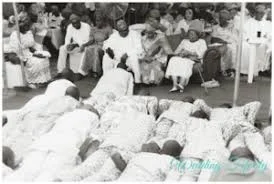
Location: Southwest Nigeria (Lagos, Oyo, Ogun, Osun, Ondo, Ekiti states)
STEPS IN YORUBA MARRIAGE:
- INTRODUCTION (Mo mi i mo e)
- Boy’s family visits girl’s family
- Families get to know each other
- Girl’s family investigates boy’s background
- ASKING FOR HAND IN MARRIAGE (Afenja)
- Boy’s family formally asks for girl’s hand
- Girl’s family accepts or rejects
- Engagement date is set if accepted
- ENGAGEMENT CEREMONY (Idana)
- Both families meet officially
- Bride price (dowry) is discussed
- Gifts are exchanged
- Date for traditional wedding is set
- TRADITIONAL WEDDING
- Clothes: Bride wears aso-oke (traditional cloth), groom wears agbada
- Alaga: Female ceremony coordinators lead the event
- Prostration: Groom prostrates to bride’s family
- Wine carrying: Bride searches for groom among seated men
- Prayers: Elders bless the couple
- Exchange of gifts: Families give presents
- IGBO MARRIAGE PRACTICES
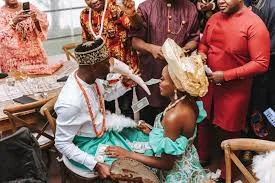
Location: Southeast Nigeria (Anambra, Abia, Imo, Enugu, Ebonyi states)
STEPS IN IGBO MARRIAGE:
- INQUIRY (Iju ese)
- Boy’s family investigates girl’s family background
- Girl’s family also investigates boy’s family
- INTRODUCTION
- Formal introduction between both families
- Families discuss the marriage proposal
- BRIDE PRICE NEGOTIATION (Ime ego)
- Girl’s family lists requirements
- Boy’s family agrees to pay bride price
- Lists include money, drinks, clothes, etc.
- TRADITIONAL WEDDING (Igba nkwu)
- Clothes: Bride wears george wrapper and coral beads
- Wine ceremony: Bride finds groom with palm wine
- Igba nkwu nwanyi: Special ceremony for the bride
- Breaking of kola nut: Symbol of peace and unity
- Prayers and blessings: Elders pray for the couple
- HAUSA-FULANI MARRIAGE PRACTICES
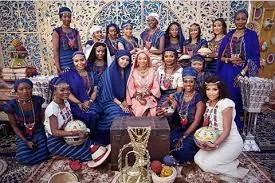
Location: Northern Nigeria (Kano, Kaduna, Katsina, Sokoto, etc.)
STEPS IN HAUSA MARRIAGE:
- PROPOSAL (Neman aure)
- Boy’s family approaches girl’s family
- Marriage proposal is made
- ACCEPTANCE (Karba)
- Girl’s family accepts the proposal
- Bride price (sadaki) is agreed upon
- ISLAMIC WEDDING (Nikah)
- Imam: Conducts the religious ceremony
- Witnesses: Male witnesses must be present
- Mahr: Dowry payment to bride
- Quran recitation: Islamic prayers are said
- CELEBRATION (Biki)
- Henna ceremony: Bride’s hands are decorated
- Traditional clothes: Colorful northern attire
- Durbar: Traditional horse riding display
- Feast: Large celebration with food and music
- COMMON MARRIAGE PRACTICES ACROSS NIGERIA
BEFORE MARRIAGE:
- Family investigation: Both families check each other’s background
- Courtship period: Couple gets to know each other
- Family meetings: Several meetings between families
- Bride price payment: Money or gifts given to bride’s family
DURING MARRIAGE CEREMONY:
- Traditional attire: Special clothes for the occasion
- Music and dance: Traditional songs and dances
- Food and drinks: Special meals for guests
- Prayers and blessings: Religious or traditional prayers
- Exchange of gifts: Families give presents to each other
AFTER MARRIAGE:
- Homecoming: Bride visits her family home
- Name change: Bride may take husband’s surname
- Integration: Bride joins husband’s family
- Child naming: Special ceremonies when children are born
- MODERN CHANGES IN NIGERIAN MARRIAGES
Traditional practices are changing:
- Education: More educated people modify some practices
- Urban vs Rural: City marriages may be simpler than village ones
- Cost: Some families reduce expensive ceremonies
- Time: Modern ceremonies may be shorter
- Religion: Christian and Islamic influences affect traditions
What remains the same:
- Family involvement is still very important
- Respect for elders continues
- Traditional foods and music are still used
- Gift giving remains popular
- Community celebration is valued
CLASS EXERCISES
- Name 3 major tribes in Nigeria:
- Fill in the blanks:
- Yoruba people live in _______ Nigeria
- Igbo people live in _______ Nigeria
- Hausa-Fulani people live in _______ Nigeria
- In Yoruba marriage, the bride wears _______
- In Igbo marriage, the bride carries _______
- True or False:
- All Nigerian tribes have the same marriage practices: _____
- Family involvement is important in Nigerian marriages: _____
- Bride price is paid in all Nigerian cultures: _____
- Music and dance are part of Nigerian weddings: _____
- Match the tribe with their marriage practice:
- Yoruba → Wine carrying ceremony
- Igbo → _______
- Hausa → _______
- Choose the correct answer: What do Yoruba brides wear? a) George wrapper b) Aso-oke c) Hijab
Who conducts Hausa marriage ceremony? a) Pastor b) Imam c) Alaga
What is prostration in Yoruba marriage? a) Dancing b) Bowing down c) Singing
- List 3 common features in Nigerian marriages:
- Complete these sentences:
- In Yoruba marriage, _______ lead the ceremony
- In Igbo marriage, _______ nut is broken for unity
- In Hausa marriage, _______ recitation is important
- Bride price is called _______ in Hausa culture
- Steps in marriage – put in correct order: For Yoruba marriage: Traditional wedding, Introduction, Engagement, Asking for hand Correct order: _______, _______, _______, _______
- Answer these questions:
- Why do families investigate each other before marriage? _______
- What happens during wine carrying ceremony? _______
- What is the purpose of bride price? _______
- Why is family blessing important? _______
- Compare and contrast: Write one similarity and one difference between Yoruba and Igbo marriages:
- Similarity: _______
- Difference: _______
This term's Social Studies topics
Basic 3 First Term · 20 topics
- Identification of Local Herbs and Drugs
- Meaning and Types of Family
- Members of Nuclear and Extended Family
- Functions/Roles of Extended Family Members
- Meaning of Marriage
- Types of Marriage
- Marriage Practices in Nigeria
- Objects Used in Marriage
- Meaning of Drugs and Types of Drugs
- Identification of Modern Common Medicines or Drugs
- Identification of Local Herbs and Drugs
First Term Social Studies Lesson Notes for Other Topics
Meaning of Social Studies
Read the full lesson note.

Types of Family
Read the full lesson note.

Extended Family
Read the full lesson note.

Qualities of a Good Family
Read the full lesson note.
Culture
Read the full lesson note.

Values that Show Good Morals in Our Society
Read the full lesson note.
Meaning of a Family
Read the full lesson note.

Good Moral Values in Society II: Examples
Read the full lesson note.
Values that Show Bad Morals in our Society
Read the full lesson note.

Employment and Unemployment
Read the full lesson note.

Nigerian and Foreign-Made Goods
Read the full lesson note.

External Influence on Nigeria Life
Read the full lesson note.

The Influence of Working Parents on Nigeria Family Cont'd
Read the full lesson note.

Intermarriage
Read the full lesson note.

Marital Failure
Read the full lesson note.
Lesson Notes for Other Classes

Basic 1 Lesson Note
The complete lesson note to guide your studies.

Basic 2 Lesson Note
The complete lesson note to guide your studies.

Basic 4 Lesson Note
The complete lesson note to guide your studies.

Basic 5 Lesson Note
The complete lesson note to guide your studies.

Basic 6 Lesson Note
The complete lesson note to guide your studies.

JSS1 Lesson Note
The complete lesson note to guide your studies.

