
Meaning and Types of Family – Basic 3 Social Studies Lesson Note (First Term)
Download Lesson NoteLesson note at a glance
- Subject
- Social Studies
- Class
- Basic 3
- Term
- First Term
- Topic
- Meaning and Types of Family
- Order
- Topic 11 of 20 this term
- Reading time
- 4 min
- MEANING OF FAMILY
What is a family?

A family is a group of people who are related to each other and live together or care for each other.
Who makes up a family?
- Father and mother
- Children (sons and daughters)
- Grandparents
- Uncles and aunts
- Cousins
- Other relatives
What families do together:
- Live in the same house
- Share meals together
- Care for each other
- Help each other
- Show love and support
- Share responsibilities
Importance of family:
- Provides love and care
- Gives us our first home
- Teaches us good behavior
- Protects and supports us
- Helps us learn about life
- TYPES OF FAMILY
- NUCLEAR FAMILY
What is a nuclear family? A nuclear family consists of father, mother, and their children living together.
Members of nuclear family:
- Father (dad)
- Mother (mum)
- Children (sons and daughters)
Example: Mr. and Mrs. Adamu live with their two children, Kemi and Tolu. This is a nuclear family.
Characteristics:
- Small family size
- Usually 2-6 members
- Parents and children only
- Live in one house
- EXTENDED FAMILY

What is an extended family?
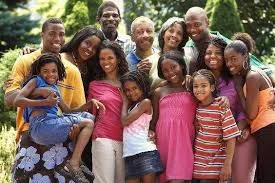
An extended family includes parents, children, grandparents, uncles, aunts, cousins, and other relatives.
Members of extended family:
- Father and mother
- Children
- Grandparents (grandfather and grandmother)
- Uncles and aunts
- Cousins
- Other relatives
Example: The Okafor family includes Mr. and Mrs. Okafor, their children, Mr. Okafor’s parents, his brother and sister, and their children all living together.
Characteristics:
- Large family size
- Many relatives together
- Three or more generations
- May live in the same house or compound
- SINGLE-PARENT FAMILY
What is a single-parent family?
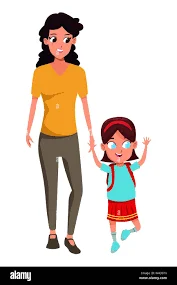
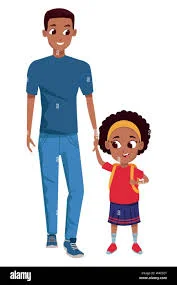
A single-parent family has only one parent (either father or mother) taking care of the children.
Types of single-parent families:
- Mother and children (when father is absent)
- Father and children (when mother is absent)
Reasons for single-parent families:
- Death of one parent
- Divorce or separation
- One parent travels for work
Example: Mrs. Bisi lives alone with her three children after her husband died. This is a single-parent family.
- COMPARISON OF FAMILY TYPES
Nuclear Family:
- Advantages: Easy to manage, less conflicts, faster decisions
- Challenges: Less help with childcare, fewer people to share expenses
Extended Family:
- Advantages: More help with children, shared expenses, cultural learning
- Challenges: More conflicts possible, crowded living space
Single-Parent Family:
- Advantages: Fewer conflicts, simpler decision-making
- Challenges: More work for one parent, financial difficulties
- ROLES IN THE FAMILY
Father’s roles:
- Provides for the family
- Protects the family
- Makes important decisions
- Teaches children good behavior
Mother’s roles:
- Takes care of children
- Manages the home
- Cooks and cleans
- Shows love and care
Children’s roles:
- Respect parents and elders
- Help with house chores
- Obey family rules
- Study hard in school
Grandparents’ roles:
- Give wisdom and advice
- Tell stories and share culture
- Help care for grandchildren
- Bless the family
CLASS EXERCISES
- Fill in the blanks:
- A _______ is a group of people who are related and care for each other
- A nuclear family has _______, _______, and _______
- An extended family includes grandparents, uncles, aunts, and _______
- True or False:
- A nuclear family is larger than an extended family: _____
- Single-parent families have only one parent: _____
- Families provide love and care for each other: _____
- Extended families include three generations: _____
- Match the family types:
- Father, mother, and 2 children → _______
- Mother and 3 children (father died) → _______
- Parents, children, grandparents, uncles, aunts → _______
- List three things families do together:
- Answer these questions:
- What type of family do you belong to? _______
- How many people are in your family? _______
- Who is the head of your family? _______
- Name two relatives in your extended family: _______ and _______
- Circle the correct answer:
- Which family type has the most members? (Nuclear / Extended / Single-parent)
- Who usually provides for the family? (Father / Mother / Children)
- What should children do in the family? (Make all decisions / Respect parents / Control everyone)
- Complete these sentences:
- In my family, my father _______
- In my family, my mother _______
- As a child, I should _______
- Identify the family type: Describe each family and write whether it is nuclear, extended, or single-parent:
- a) Ada lives with her mother and father. They have two children. Family type: _______
- b) Emeka lives with his mother, father, both grandparents, two uncles, and their children. Family type: _______
- c) Bola lives with only her mother after her father traveled abroad. Family type: _______
- Why is family important? Give three reasons:
- Draw and label your family: Draw a simple picture of your family members and write their names and relationship to you.
This term's Social Studies topics
Basic 3 First Term · 20 topics
- Marriage Practices in Nigeria
- Objects Used in Marriage
- Meaning of Drugs and Types of Drugs
- Identification of Modern Common Medicines or Drugs
- Identification of Local Herbs and Drugs
- Meaning and Types of Family
- Members of Nuclear and Extended Family
- Functions/Roles of Extended Family Members
- Meaning of Marriage
- Types of Marriage
- Marriage Practices in Nigeria
First Term Social Studies Lesson Notes for Other Topics
Meaning of Social Studies
Read the full lesson note.

Types of Family
Read the full lesson note.

Extended Family
Read the full lesson note.
Qualities of a Good Family
Read the full lesson note.
Culture
Read the full lesson note.
Values that Show Good Morals in Our Society
Read the full lesson note.
Meaning of a Family
Read the full lesson note.

Good Moral Values in Society II: Examples
Read the full lesson note.
Values that Show Bad Morals in our Society
Read the full lesson note.
Employment and Unemployment
Read the full lesson note.
Nigerian and Foreign-Made Goods
Read the full lesson note.

External Influence on Nigeria Life
Read the full lesson note.

The Influence of Working Parents on Nigeria Family Cont'd
Read the full lesson note.
Intermarriage
Read the full lesson note.
Marital Failure
Read the full lesson note.
Lesson Notes for Other Classes

Basic 1 Lesson Note
The complete lesson note to guide your studies.

Basic 2 Lesson Note
The complete lesson note to guide your studies.

Basic 4 Lesson Note
The complete lesson note to guide your studies.

Basic 5 Lesson Note
The complete lesson note to guide your studies.

Basic 6 Lesson Note
The complete lesson note to guide your studies.

JSS1 Lesson Note
The complete lesson note to guide your studies.

