External Influence on Nigeria Life – Basic 6 Social Studies Lesson Note (First Term)
Download this term · ₦1,000Lesson note at a glance
- Subject
- Social Studies
- Class
- Basic 6
- Term
- First Term
- Topic
- External Influence on Nigeria Life
- Order
- Topic 1 of 10 this term
- Reading time
- 5 min
LEARNING OBJECTIVES By the end of the lesson, pupils should be able to:
- Describe how external influences affect Nigerian family life (family system, language, behaviour, food, music, education)
- Explain how religion influences Nigerian family life (marriage pattern, relationships, general behaviour)
- Discuss the influence of working parents on Nigerian family life
External influences on Nigerian family life
- LANGUAGE
Traditional:

- Local languages (Yoruba, Igbo, Hausa, etc.)
- Proverbs and traditional greetings
- Respect language for elders
Modern/External Influence:
- English language dominance
- Children prefer speaking English
- Loss of local languages
- Foreign accents and slang
Impact:
- Some children can’t speak their native language
- Cultural disconnect
- But English helps national unity
- FAMILY SYSTEM
Traditional:

- Extended family (grandparents, uncles, aunts living together)
- Large families
- Community raising children
- Respect for elders
Modern/External Influence:

- Nuclear family (parents and children only)
- Smaller families
- Privacy valued
- Individual focus
Impact:
- Less family support
- Children miss grandparents’ wisdom
- But more independence
- BEHAVIOUR OF FAMILY MEMBERS

Traditional:
- Children kneel to greet elders
- Respect and obedience
- Communal living
- Sharing responsibilities
Modern/External Influence:

- Casual greetings (hi, hello)
- Children question authority
- More independence
- Individual rights emphasized
Impact:
- Some call it “disrespect”
- Others say it’s “confidence”
- Generation gap increases
- FOOD
Traditional:

- Local foods (fufu, pounded yam, jollof rice, egusi soup)
- Eating together from one plate
- Cooking at home
Modern/External Influence:

- Fast food (pizza, burgers, fried chicken)
- Foreign dishes (pasta, Chinese food)
- Eating separately
- Microwave meals
Impact:
- Less time cooking traditional meals
- Health issues (obesity from fast food)
- Loss of cooking skills
- But more variety
- MUSIC
Traditional:
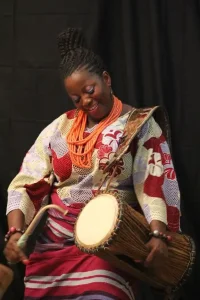
- Folk songs
- Traditional instruments (talking drum, flute)
- Cultural dances
Modern/External Influence:

- Hip hop, rap, pop music
- Foreign artists influence
- Modern instruments (guitar, keyboard)
Impact:
- Youth prefer foreign music
- Loss of traditional music knowledge
- But creates fusion (Afrobeats)
- EDUCATION
Traditional:
- Learning through apprenticeship
- Oral tradition
- Practical skills from parents
Modern/External Influence:
- Formal Western education
- Schools and universities
- Technology in learning
- Online education
Impact:
- Better literacy
- Career opportunities
- But less practical skills
- Expensive education
INFLUENCE OF RELIGION ON NIGERIAN FAMILY LIFE
Major Religions in Nigeria:
- Christianity
- Islam
- Traditional African Religion
- MARRIAGE PATTERN
Christian Influence:

- Church wedding (white wedding)
- Monogamy (one wife)
- Vows before God
- Marriage certificate
Islamic Influence:
- Mosque wedding (Nikkai)
- Polygamy allowed (up to 4 wives)
- Religious marriage contract
- Dowry (Mahr)
Traditional Influence:
- Traditional wedding
- Payment of bride price
- Family involvement
- Cultural ceremonies
Modern Reality:
- Many do all three ceremonies
- Court wedding added
- Expensive celebrations
- RELATIONSHIP BETWEEN FAMILY MEMBERS
Religious Influence:
- Respect for parents (all religions teach this)
- Love between siblings
- Care for elderly
- Forgiveness and peace
Christianity:
- “Honor thy father and mother”
- Husband as head of home
- Wife submits to husband
- Children obey parents
Islam:
- Paradise lies at mother’s feet
- Respect for parents mandatory
- Clear family roles
- Obedience to parents
Impact:
- Strong family bonds
- Defined roles
- Sometimes causes conflict when views differ
- GENERAL BEHAVIOUR OF FAMILY
Religious Values:
- Honesty
- Hard work
- Kindness
- Prayer/worship
- Charity
- Moral living
Impact:
- Shapes family values
- Influences decisions
- Affects lifestyle choices
- Creates moral foundation
INFLUENCE OF WORKING PARENTS ON NIGERIAN FAMILY LIFE
WORKING MOTHERS/PARENTS
Positive Effects:
- More Income:
- Better standard of living
- Can afford good education
- Better healthcare
- Nice home and comfort
- Role Model:
- Children see hardworking parents
- Career inspiration
- Gender equality demonstrated
- Independence shown
- Economic Security:
- Two incomes safer than one
- Bills are easier to pay
- Savings possible
- Less financial stress
Negative Effects:
- Inadequate Attention to Children:
- Parents too busy
- Less time for homework help
- Miss children’s school events
- Limited quality time
- Children feel neglected
- Use of Baby Sitters/House Help:
- Strangers raising children
- Risk of abuse
- Different values taught
- Less parental bonding
- Trust issues
- Putting Children in Daycare:
- Very young children in daycare
- Long hours away from parents
- Multiple caregivers
- Expensive
- Risk of infections
- Home Management Challenges:
- House often dirty
- No home-cooked meals
- Reliance on fast food
- Tired parents
- Stress in home
- Emotional Impact:
- Children feel abandoned
- Behavioral problems
- Seeking attention negatively
- Attachment to house help more than parents
SOLUTIONS/BALANCE:
- Quality Time:
- Weekends with family
- Evening family dinners
- Bedtime stories
- School involvement when possible
- Flexible Work:
- Work from home options
- Flexible hours
- Job sharing
- Part-time work
- Reliable Childcare:
- Trustworthy caregivers
- Family members help
- Good daycare centers
- Regular supervision
- Communication:
- Phone calls during day
- Video calls
- Notes in lunch boxes
- Constant reassurance of love
EVALUATION
- Name three external influences on Nigerian family life
- How has language been influenced by external factors?
- What are two positive effects of working parents?
- How does religion influence marriage patterns?
- What is the difference between traditional and modern family systems?
MULTIPLE CHOICE QUESTIONS
- The traditional Nigerian family system is ________
- a) Nuclear family
- b) Extended family
- c) Single parent
- d) No family
- Working parents provide ________
- a) Less money
- b) More income for family
- c) No benefits
- d) Only problems
- External influence on food includes ________
- a) Only local food
- b) Fast food and foreign dishes
- c) No food
- d) Traditional food only
- A negative effect of working parents is ________
- a) More money
- b) Inadequate attention to children
- c) Better life
- d) Good education
- Religion influences ________
- a) Nothing
- b) Marriage patterns and family behavior
- c) Only food
- d) Only clothes
ANSWERS: 1.b 2.b 3.b 4.b 5.b
HOMEWORK
- List five external influences on Nigerian family life
- Compare traditional and modern family systems (3 differences)
- Explain how religion affects Nigerian families
- Discuss two advantages and two disadvantages of working parents
- What solutions can help working parents care for their children better?
This term's Social Studies topics
Basic 6 First Term · 10 topics
Get Social Studies as PDF and Word
Every week of Basic 6 Social Studies, First Term, formatted and ready to print. Ad-free, and the copy lock comes off.
Get this term Card, bank transfer, USSD or OPay
First Term Social Studies Lesson Notes for Other Topics
Meaning of Social Studies
Read the full lesson note.

Types of Family
Read the full lesson note.

Extended Family
Read the full lesson note.

Qualities of a Good Family
Read the full lesson note.

Culture
Read the full lesson note.

Values that Show Good Morals in Our Society
Read the full lesson note.

Meaning of a Family
Read the full lesson note.

Good Moral Values in Society II: Examples
Read the full lesson note.

Values that Show Bad Morals in our Society
Read the full lesson note.

Employment and Unemployment
Read the full lesson note.

Nigerian and Foreign-Made Goods
Read the full lesson note.

The Influence of Working Parents on Nigeria Family Cont'd
Read the full lesson note.

Intermarriage
Read the full lesson note.

Marital Failure
Read the full lesson note.

Foreign Culture Affecting our Values
Read the full lesson note.
Lesson Notes for Other Classes

Basic 1 Lesson Note
The complete lesson note to guide your studies.

Basic 2 Lesson Note
The complete lesson note to guide your studies.

Basic 3 Lesson Note
The complete lesson note to guide your studies.

Basic 4 Lesson Note
The complete lesson note to guide your studies.

Basic 5 Lesson Note
The complete lesson note to guide your studies.

JSS1 Lesson Note
The complete lesson note to guide your studies.