
Museums and Art Galleries in Nigeria – SS1 Visual Arts Lesson Note (Third Term)
Download this term · ₦1,000Lesson note at a glance
- Subject
- Visual Arts
- Class
- SS1
- Term
- Third Term
- Topic
- Museums and Art Galleries in Nigeria
- Order
- Topic 4 of 4 this term
- Reading time
- 5 min
A museum is a building or institution that collects, preserves and displays artefacts, relics and other cultural objects that represent the history of a people.
Behavioural objectives
By the end of the lesson, students should be able to:
- define a museum and an art gallery;
- outline the history of museums in Nigeria;
- name and describe the types of museum;
- state the functions of a museum and of an art gallery;
- list some museums and art galleries in Nigeria and where they are located.
What is a museum?
A museum is a building, place or institution used for the collection, preservation and display of artefacts, relics or other valuable cultural objects representing the history of the people, past or present.
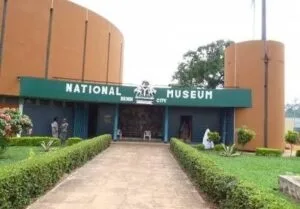
- Cultural heritage: the customs, arts and objects a people inherit from earlier generations.
- Artefact: an object made by people in the past, such as a pot, mask or tool.
- Relic: an old object that survives from an earlier time and has historical value.
- Antiquity: a very old object or work of art from ancient times.
What kinds of objects does a Nigerian museum hold?
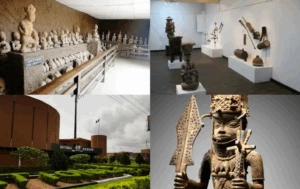
- Sculptures: Nok terracotta, Ife heads, Benin bronzes and the stone figurines at Esie.
- Masks and carvings: wooden objects used in festivals and traditional worship.
- Household and craft items: pottery, textiles, calabashes and local tools.
What is the history of museums in Nigeria?
Museums in Nigeria began in the 1940s, after attempts in the early 1930s failed.
| Period | Event |
|---|---|
| Early 1930s | Kenneth Cross Murray, an expatriate in Nigeria, first suggested setting up museums in the country. |
| 1933 | M.E.H. Duckworth made another attempt. These early efforts proved abortive until 1945. |
| 1945 | Kenneth Murray established the first museum, Esie Museum, which holds the largest collection of stone figurines. |
| 1952 | The first national museum was established in Jos, with Bernard Fagg as Director. |
| 1954 | The Ife National Museum was established. |
| 1958 | A museum was established in Lagos. |
| 1963 to 1967 | Kenneth Murray served as National Director. |
| 1980 to 1986 | Dr Ekpo served as Director. |
| Up to 1990 | Dr Ade Obayomi was appointed after Dr Ekpo and served until 1990. |
| 1991 | Dr Yaro Gella took over from Dr Obayomi. |
What are the types of museum?
There are ten types of museum: natural history, historical, war, industrial art, folk, aeronautic, zoological, general, modern arts and marine.
- Natural History Museum: holds objects from nature and biological specimens, such as animal parts, skeletons, plants and rocks.
- Historical Museum: holds items of historical value and collects artefacts.
- War Museum: collects military hardware used in warfare at particular periods, for example the Umuahia War Museum in Abia State.
- Industrial Art Museum: preserves the technology and industrial development of a country for future generations to study.
- Folk Museum: centres on the local ways, customs and ethics of the people of a particular place, for example legal tenders and garments.
- Aeronautic Museum: collects and preserves aircraft and space equipment, such as aeroplanes, rockets and satellites.
- Zoological Museum: collects, cares for and studies different types and species of animals in specific geographical locations.
- General Museum: holds mixed items from all the other types of museum.
- Museum of Modern Arts: collects and preserves recent art, including its modern concepts, current motifs, forms and ideas.
- Marine Museum: contains sea creatures of different species, for example sea shells, crabs and fish.
What are the functions of a museum?
A museum collects and protects cultural objects and makes them available for learning, research and enjoyment.
- Preservation: it keeps the cultural heritage of a people, that is, the country’s antiquities.
- Research: it is a good place for study and publishes journals on cultural activities, artworks and artists.
- Employment: it provides jobs for some people in the country.
- Unity: it encourages ethnic, national and international unity.
- Tourism: it serves as a tourist centre and earns foreign exchange for the nation.
- Promotion of culture: it promotes our cultural heritage.
- Education and pleasure: it spreads knowledge and enjoyment to individuals, communities and nations.
- Cultural pride: it inspires pride in people’s culture and keeps it going from generation to generation.
Where are the museums in Nigeria located?
Museums are found in many states, and the picture below shows some of them with their locations.
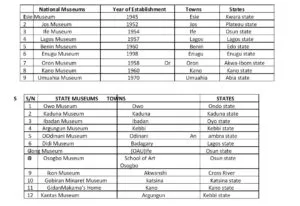
| Museum | Location |
|---|---|
| Esie Museum | Esie, Kwara State |
| National Museum, Jos | Jos, Plateau State |
| Ife National Museum | Ile-Ife, Osun State |
| National Museum, Lagos | Lagos State |
| National Museum, Benin | Benin City, Edo State |
| National War Museum | Umuahia, Abia State |
What is an art gallery?
An art gallery is a building or place where artworks are displayed, either temporarily or permanently, for sale.
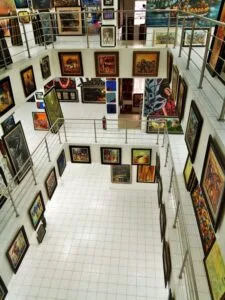
- Commercial centre: buyers and sellers meet there to trade artworks and cultural items.
- Display: works may be shown for a short time (an exhibition) or kept on show permanently.
What is the difference between a museum and an art gallery?
A museum keeps cultural objects for preservation and study, while an art gallery displays artworks mainly for sale.
| Point | Museum | Art gallery |
|---|---|---|
| Main purpose | Preserves and displays cultural objects | Displays and sells artworks |
| Items held | Artefacts, relics, specimens, antiquities | Paintings, sculptures and other artworks |
| Use of objects | Kept for research, learning and heritage | Offered to buyers |
| Nature | Mostly a heritage institution | A commercial centre |
What are the functions of an art gallery?
- Showroom: it displays different artworks.
- Commercial outlet: it sells artworks.
- Reference point: young artists see standards of good work there.
- Training ground: it helps upcoming artists to learn and grow.
- Promotion: it promotes art and creativity.
Where are the art galleries in Nigeria located?
Art galleries are found mainly in Lagos, Abuja and other large towns.
| No. | Art gallery | Location |
|---|---|---|
| 1 | Nike Gallery | Lagos State |
| 2 | National Art Theatre | Iganmu, Lagos |
| 3 | Terra Kulture | Victoria Island, Eti-Osa, Lagos |
| 4 | Beauty Wall | Central Area, Abuja Municipal, Abuja |
| 5 | Osas Art Gallery | Benin City, Ikpoba Okha, Edo State |
| 6 | Casalinda Hotel and Gallery Resort | Abuja Municipal, Abuja |
| 7 | Multipurpose Art Gallery | Moniya, Akinyele, Oyo State |
| 8 | Anyi Art Studio and Gallery | Umuahia North, Abia State |
| 9 | Kado Art Gallery | Abeokuta South, Ogun State |
| 10 | Simplart Gallery | Ikorodu, Lagos |
| 11 | Aecoblizz Art Gallery | Woji, Port Harcourt, Rivers State |
| 12 | De Grace Concept | Ifo, Ogun State |
| 13 | Armagric Concept | Ikot Ekpene, Akwa Ibom State |
Evaluation
- Define a museum.
- Name five types of museum and say what each one collects.
- State four functions of a museum.
- What is an art gallery, and how does it differ from a museum in the way it uses artworks?
- Which was the first museum established in Nigeria, and who established it?
Assignment
State any four functions of an art gallery, then name five art galleries in Nigeria and the state in which each is located.
This term's Visual Arts topics
SS1 Third Term · 4 topics
- Introduction to Molding
- Historical Foundation of Nigerian Arts
- Historical Foundation of Nigerian Arts II
- Museums and Art Galleries in Nigeria
Get Visual Arts as PDF and Word
Every week of SS1 Visual Arts, Third Term, formatted and ready to print. Ad-free, and the copy lock comes off.
Get this term Card, bank transfer, USSD or OPay
SS1 Visual Arts Lesson Notes for Other Topics
Introduction To Molding
Read the full lesson note.
Historical Foundation Of Nigerian Arts
Read the full lesson note.
Historical Foundation Of Nigerian Arts II
Read the full lesson note.

Introduction To Visual Arts
Read the full lesson note.
Visual Sense
Read the full lesson note.

Professions And Job Opportunities
Read the full lesson note.
Drawing Lines
Read the full lesson note.
Drawing Nature And Man-Made Objects
Read the full lesson note.
Drawing And Shading
Read the full lesson note.

Drawing Still-Life Objects
Read the full lesson note.

Drawing Human Figures
Read the full lesson note.
Introduction To Art Appreciation
Read the full lesson note.
Introduction To Graphics
Read the full lesson note.
Textile Designs
Read the full lesson note.
Introduction to Computer Graphics
Read the full lesson note.
Lesson Notes for Other Classes

SS2 Lesson Note
The complete lesson note to guide your studies.

SS3 Lesson Note
The complete lesson note to guide your studies.
