
Drawing and Shading – SS1 Visual Arts Lesson Note (First Term)
Download this term · ₦1,000Lesson note at a glance
- Subject
- Visual Arts
- Class
- SS1
- Term
- First Term
- Topic
- Drawing and Shading
- Order
- Topic 6 of 9 this term
- Reading time
- 6 min
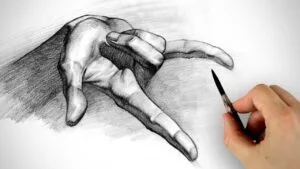
Drawing is the act of making images or lines on a surface, usually paper, with tools such as pencils, pens, markers or charcoal. Shading is a drawing technique that uses light and dark values to create the illusion of three-dimensional form on a flat surface.
Behavioural objectives
By the end of the lesson, students should be able to:
- define drawing and shading;
- name the main elements of drawing and the uses of drawing;
- list common styles and types of drawing;
- describe the methods of shading: hatching, cross-hatching, stippling and gradation;
- state what shading helps an artist to do;
- name the main types of shading and shade a simple object in order.
What is drawing?
Drawing is the act of making images or lines on a surface using tools such as pencils, pens, markers or charcoal.
- Purpose: it is a form of visual expression and communication.
- Content: it lets artists show ideas, feelings and observations.
- Skill: it improves with practice, patience and dedication.
What does drawing involve?
Drawing involves six main elements: line, shape, value, texture, proportion and perspective.
- Line: makes contours, outlines and shapes. Lines may be straight, curved or diagonal.
- Shape: defines forms and objects, using geometric or organic shapes.
- Value: the light and dark areas that show depth, volume and texture.
- Texture: suggests the surface quality of an object, for example through hatching or stippling.
- Proportion: keeps the correct size relationship between parts of a drawing.
- Perspective: gives a sense of space and distance.
What is drawing used for?
Drawing is used for artistic expression, communication, observation, design and storytelling.
- Artistic expression: showing personal ideas and feelings.
- Communication: technical drawings and illustrations pass on information.
- Observation: studies and sketches record what the artist sees.
- Design: planning and testing ideas before making a final product.
- Storytelling: comics and cartoons tell stories with pictures.
What are the styles of drawing?
Five common styles of drawing are realism, abstraction, cartooning, caricature and impressionism.
- Realism: shows subjects as they truly look.
- Abstraction: uses shape, line and form without copying real objects.
- Cartooning: uses simple, exaggerated forms for humour or stories.
- Caricature: exaggerates a person’s features, usually the face, for comic effect.
- Impressionism: uses loose marks to give the general impression of a scene and its light.
What are the types of drawing?
There are fifteen common types of drawing, grouped here by subject and by purpose or method.
Types based on subject
- Portrait drawing: focuses on the human face and expression.
- Landscape drawing: shows natural scenery and environments.
- Still life drawing: shows inanimate objects arranged together, such as fruit and bottles.
- Figure drawing: shows the human body and its anatomy.
- Imaginative drawing: comes from imagination, fantasy or creativity.
Types based on purpose or method
- Realistic drawing: accurate and detailed representation of subjects.
- Cartooning: exaggerated, simplified drawings for humour or storytelling.
- Caricature: distorted, comic drawings that stress facial features.
- Illustration: drawings made for publications, products or advertisements.
- Sketching: quick, informal drawings for practice or observation.
- Abstract drawing: non-representational drawings that focus on colour, shape and form.
- Technical drawing: precise drawings for engineering, architecture or design.
- Comic art: drawings for comics, graphic novels or manga.
- Concept art: drawings used to develop ideas for film, video games or animation.
- Gesture drawing: quick drawings that capture movement.
These types often overlap, and many artists use several in one work.
What is shading?
Shading is a drawing technique that uses a range of light and dark values to make a flat drawing look three-dimensional.
- Value: the lightness or darkness of an area.
- Effect: it suggests the shape, texture and depth of an object.
What are the methods of shading?
The main methods of shading are hatching, cross-hatching, stippling and gradation, with atmospheric perspective used for depth.
- Hatching: closely spaced parallel lines that follow the contours of the subject.
- Cross-hatching: layers of hatching lines at different angles, giving texture and darker values.
- Stippling: small dots that build texture and value. More dots make a darker area.
- Gradation: a smooth change from light to dark values.
- Atmospheric perspective: fading objects into the background to suggest depth and distance.
What is the difference between hatching and cross-hatching?
Hatching uses one set of parallel lines to shade an area.
Cross-hatching adds a second set of lines at a different angle over the first.
| Point | Hatching | Cross-hatching |
|---|---|---|
| Lines used | One set of parallel lines | Two or more sets at different angles |
| Value produced | Light to medium | Medium to dark |
| Effect | Simple tone and direction | Richer texture and depth |
What does shading help an artist to do?
Shading helps an artist to make a drawing look solid, textured and lit from a clear direction.
- Volume and form: makes objects look solid, not flat.
- Texture: suggests rough, smooth, shiny or soft surfaces.
- Light source: shows where the light comes from and its direction.
- Depth: gives a sense of space in the picture.
- Viewer’s eye: guides attention through the composition.
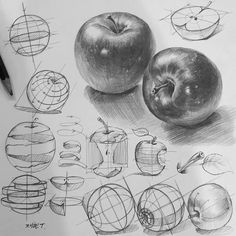
How do you shade an object step by step?
- Choose the direction of the light source and keep it the same throughout.
- Draw the outline of the object lightly.
- Mark the lightest area (highlight) and the darkest area (shadow).
- Shade the object in layers, starting light and building up the dark areas.
- Blend or space the marks so values change smoothly from light to dark.
- Add a cast shadow on the surface, on the side away from the light.
What are the types of shading?
There are three main types of shading in drawing: linear, tonal and colour shading.
- Linear shading: uses lines to shade, including hatching, cross-hatching and stippling.
- Tonal shading: uses values from light to dark, often with gradation.
- Colour shading: uses colours to shade, often with gradual changes from one colour to another.
What other named shading techniques are there?
- Flat shading: uses solid colours or one value to give a flat, two-dimensional look.
- Sfumato: very soft shading with no hard edges, giving a hazy effect.
- Cel shading: a stylised look made with bold lines and flat colours, as in cartoons.
- Gouraud shading: a smooth shading method used in computer graphics.
Shading types can be used alone or together to create different effects and moods.
Evaluation
- Define drawing and shading.
- List five uses of drawing.
- Name five types of drawing and say what each one is for.
- Explain the difference between hatching and cross-hatching.
- State four things shading helps an artist to do.
Assignment
Choose a simple object and draw it three times. Shade the first drawing with hatching, the second with cross-hatching and the third with stippling. Write one sentence under each drawing to say how the method changes the look of the object.
This term's Visual Arts topics
SS1 First Term · 9 topics
Get Visual Arts as PDF and Word
Every week of SS1 Visual Arts, First Term, formatted and ready to print. Ad-free, and the copy lock comes off.
Get this term Card, bank transfer, USSD or OPay
SS1 Visual Arts Lesson Notes for Other Topics

Introduction To Visual Arts
Read the full lesson note.
Visual Sense
Read the full lesson note.

Professions And Job Opportunities
Read the full lesson note.

Drawing Lines
Read the full lesson note.

Drawing Nature And Man-Made Objects
Read the full lesson note.

Drawing Still-Life Objects
Read the full lesson note.

Drawing Human Figures
Read the full lesson note.
Introduction To Art Appreciation
Read the full lesson note.
Introduction To Graphics
Read the full lesson note.
Textile Designs
Read the full lesson note.

Introduction to Computer Graphics
Read the full lesson note.

Terminologies In 2 dimensional Art
Read the full lesson note.
Terminologies In 3 dimensional Art
Read the full lesson note.

Introduction To Molding
Read the full lesson note.

Historical Foundation Of Nigerian Arts
Read the full lesson note.
Lesson Notes for Other Classes

SS2 Lesson Note
The complete lesson note to guide your studies.

SS3 Lesson Note
The complete lesson note to guide your studies.
