
Textile Designs – SS1 Visual Arts Lesson Note (Second Term)
Download Lesson NoteLesson note at a glance
- Subject
- Visual Arts
- Class
- SS1
- Term
- Second Term
- Topic
- Textile Designs
- Order
- Topic 2 of 5 this term
- Reading time
- 2 min
Textile design can be defined as the art and process of designing the structure and looks of fabrics or textiles. It is a branch of applied art.
Behavioural objectives
By the end of the lesson, students should be able to:
- define textile design;
- name some users of textile design products;
- define pattern, rhythm and motif;
- give examples of motifs taken from nature.
What is textile design?
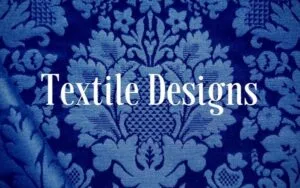
Textile design and its products supply fashion designers, interior designers, furniture makers, car interior finishers, life jacket makers and other users of textiles. Textiles come in a wide range of colours and patterns. The textile designer decides the type of design a fabric should have, depending on its use. To create patterns or designs on fabric, a designer may use several methods.
Pattern and motif in textile design
What is a pattern?
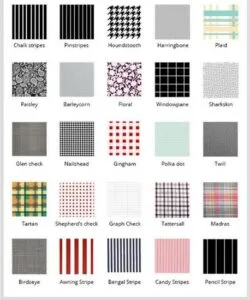
A pattern is a combination of elements or shapes in a regular, repeated arrangement. Patterns are dominant in textile designs and are seen in wallpapers, carpets, clothing and different fabrics.
What is rhythm?
Rhythm is similar to pattern because both share the elements of shape, line or object. It is achieved by repeating an element in an alternating arrangement throughout the composition.
What is a motif?
A motif is a dominant decorative image, shape or colour that may be repeated to form a pattern or design. It can be created from abstract ideas, nature, objects and figures.
In fabric design, textile designers use dominant decorative shapes or images, such as lines of various sizes, and arrange them creatively to give the desired look. Motifs can be taken from nature. For example, elephants, birds and butterflies can be used in a regular arrangement, depending on the pattern.
Evaluation
- Define textile design.
- Name four users of textile design products.
- What is a pattern? Where can patterns be seen?
- What is a motif? Give examples of motifs taken from nature.
Assignment
In your own words, explain how rhythm is achieved in a composition. Then name two motifs from nature that a designer can use to form a pattern on fabric.
This term's Visual Arts topics
SS1 Second Term · 5 topics
Second Term Visual Arts Lesson Notes for Other Topics

Terminologies In 2 dimensional Art
Read the full lesson note.

Terminologies In 3 dimensional Art
Read the full lesson note.

Introduction to Computer Graphics
Read the full lesson note.
Introduction To Graphics
Read the full lesson note.
Lesson Notes for Other Classes

Basic 1 Lesson Note
The complete lesson note to guide your studies.

Basic 2 Lesson Note
The complete lesson note to guide your studies.

Basic 3 Lesson Note
The complete lesson note to guide your studies.

Basic 4 Lesson Note
The complete lesson note to guide your studies.

Basic 5 Lesson Note
The complete lesson note to guide your studies.

Basic 6 Lesson Note
The complete lesson note to guide your studies.

