
ECOWAS – SS1 Geography Lesson Note (Third Term)
Download this term · ₦1,000Lesson note at a glance
- Subject
- Geography
- Class
- SS1
- Term
- Third Term
- Topic
- ECOWAS
- Order
- Topic 5 of 8 this term
- Reading time
- 6 min
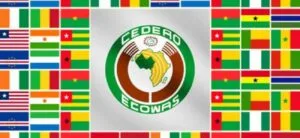
The Economic Community of West African States (ECOWAS) is a sub-regional organisation formed by West African countries to promote cooperation and development in all economic fields and to contribute to the progress of Africa.
Behavioural objectives
- State what ECOWAS is and how it began.
- List the member states of ECOWAS.
- Name the organs of ECOWAS and state their functions.
- State the achievements or benefits of ECOWAS.
- Identify the problems facing ECOWAS and suggest solutions.
What are the key terms used in the study of ECOWAS?
Key terms are the words a student must know before studying ECOWAS.
- Sub-region: a group of neighbouring countries within a larger region, such as West Africa within Africa.
- Treaty: a written agreement signed between countries.
- Member state: a country that belongs to the organisation.
- Head of state: the leader of a country, such as a president.
- Economic integration: the joining of the economies of several countries to work as one.
- Common market: a group of countries that allow goods, services and people to move freely among them.
- Trade liberalisation: the removal or reduction of barriers to trade between countries.
How did ECOWAS begin?
ECOWAS began with the Lagos Treaty, signed on 28 May 1975 in Lagos, Nigeria.
- Idea: conceived by the heads of state of Nigeria and Togo in 1973.
- Treaty: the Lagos Treaty was signed on 28 May 1975 in Lagos.
- Signatories: the heads of state and government of fifteen independent West African states signed it.
- Expansion: Cape Verde joined later, in 1977, making sixteen countries.
- Aim: to promote cooperation and development in all economic fields.
What are the aims of ECOWAS?
The aims of ECOWAS are to unite West African states economically and improve the lives of their people.
- Cooperation: to promote cooperation among member states in trade, industry, transport, agriculture and other fields.
- Development: to raise the standard of living of the people of the sub-region.
- Stability: to maintain and improve economic stability among members.
- Relations: to improve relations among member states.
- African progress: to contribute to the progress and development of the African continent.
Which countries are members of ECOWAS?
ECOWAS had sixteen members for many years, and it now has twelve after four countries left.
| Group | Current members | Former members |
|---|---|---|
| English-speaking | Nigeria, Ghana, Sierra Leone, Liberia, Gambia | None |
| French-speaking | Togo, Benin Republic, Côte d’Ivoire, Guinea, Senegal | Burkina Faso, Mali, Niger, Mauritania |
| Portuguese-speaking | Guinea Bissau, Cape Verde | None |
- Mauritania: left the community in 2000.
- Mali, Burkina Faso and Niger: announced their withdrawal, which took effect in January 2025.
- Older textbooks: they still list sixteen members, so know both lists for examinations.
Where is the ECOWAS secretariat?
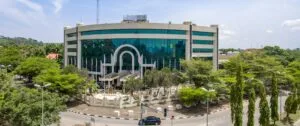
The administrative secretariat of ECOWAS is in Abuja, Nigeria.
- Administrative secretariat: located in Abuja, Nigeria.
- Financial headquarters: located in Lomé, Togo.
- Earlier location: the headquarters was formerly in Lagos before moving to Abuja.
What are the organs of ECOWAS?
There are five organs of ECOWAS under the Lagos Treaty: the Authority, the Council of Ministers, the Executive Secretariat, the Tribunal and the technical and specialised commissions.
Authority of Heads of State and Government
- Members: all the heads of state and government of the member states.
- Function: it is the highest decision-making body of the community.
Council of Ministers
- Members: two members from each member state.
- Function: monitors the functioning and development of the community.
- Function: makes recommendations to the Authority.
Executive Secretariat
- Function: performs the administrative functions of the community.
- Seat: Abuja, Nigeria.
Tribunal of the Community
- Function: interprets the treaty.
- Function: ensures the observance of law and justice.
Technical and specialised commissions
- Trade, Customs, Immigration, Monetary and Payment Commission: deals with trade, border rules and payments between members.
- Transport, Communication and Energy Commission: deals with roads, telecommunications and power.
- Industry, Agriculture and Natural Resources Commission: deals with production and resources.
- Social and Cultural Affairs Commission: deals with health, education, culture and sports.
- Defence Commission: deals with security and military cooperation.
Later changes to the organs
- Revised Treaty (1993): added new organs such as the Community Parliament and the Economic and Social Council.
- Community Court of Justice: it took the place of the Tribunal.
What are the achievements or benefits of ECOWAS?
The achievements of ECOWAS are the gains member states and their citizens have made through cooperation.
- Common market: a large market where goods move between member states.
- Free movement of people: citizens travel across member states without a visa for short stays.
- Trade liberalisation: reduced barriers to trade among members.
- Cultural integration: sharing of music, food, dress and festivals.
- Educational integration: members cooperate on school systems and exchange of ideas.
- Educational interaction: students and teachers study and work in other member states.
- Scientific and technical cooperation: sharing of research and skills.
- Military cooperation: joint efforts to keep peace and security in the sub-region.
- Promotion of unity: closer ties among West African peoples.
- Right to settle anywhere: citizens may live and work in any member state.
- International communication: better road and telecommunication links between countries.
- Promotion of sports: shared competitions that bring people together.
What problems does ECOWAS face?
ECOWAS faces eleven main problems, which slow down its work.
| Problem | Explanation |
|---|---|
| Similarity of products | Many members produce the same goods, such as cocoa and groundnuts, so they have little to trade with each other. |
| Fears of domination | Smaller countries fear that larger ones, such as Nigeria, will control the community. |
| Difference in political ideology | Members follow different political systems and policies. |
| Non-payment of dues | Some members fail to pay their contributions, so funds run short. |
| Non-implementation of programmes | Agreed decisions are not carried out by member states. |
| Language barriers | Members use English, French or Portuguese, which hinders communication. |
| Differences in currency | Members use different currencies, which makes payments difficult. |
| Allegiance to a former colonial master | Some members keep strong ties with the country that once ruled them. |
| Political instability | Coups and conflicts disrupt cooperation. |
| Problem of transportation | Poor roads, rail and air links limit trade between members. |
| Problem of debt burden | Heavy debts reduce what members can spend on community projects. |
What are the solutions to the problems of ECOWAS?
The problems of ECOWAS can be reduced when members act together on the points below.
- Diversification of production: members produce different goods so that they can trade with each other.
- Payment of dues: members pay their contributions on time.
- Resolutions and implementation of programmes: members carry out agreed decisions.
- Common currency: one currency makes trade and payments easier.
- Trade liberalisation: removing trade barriers increases trade and earnings.
- Teaching of modern languages: schools teach English, French and Portuguese to reduce language barriers.
- Free movement: citizens and goods move freely across borders.
- Political stability: peaceful and democratic governance keeps cooperation steady.
- Detaching from former colonial masters: members place regional interests first.
- Commitment: leaders show firm loyalty to the aims of the community, which also reduces fears of domination.
Evaluation
- What does ECOWAS stand for, and when was the Lagos Treaty signed?
- Name any eight member states of ECOWAS.
- State the functions of the Council of Ministers and the tribunal of the community.
- List five achievements or benefits of ECOWAS.
- State four problems of ECOWAS and a solution to each.
Assignment
Name the organs of ECOWAS and state the function of each.
This term's Geography topics
SS1 Third Term · 8 topics
Get Geography as PDF and Word
Every week of SS1 Geography, Third Term, formatted and ready to print. Ad-free, and the copy lock comes off.
Get this term Card, bank transfer, USSD or OPay
SS1 Geography Lesson Notes for Other Topics

Nigeria: Transportation
Read the full lesson note.
Nigeria: Communication
Read the full lesson note.
Manufacturing Industries In Nigeria
Read the full lesson note.
Nigeria: Commercial Activities
Read the full lesson note.
Map Reading And Measurements Of Distances On Maps
Read the full lesson note.
Conventional Symbols Direction And Bearing
Read the full lesson note.

Basic Concepts And Component Of GIS
Read the full lesson note.
Geography: An Introduction
Read the full lesson note.

The Earth's Rotation
Read the full lesson note.
The Earth's Revolution
Read the full lesson note.

Latitude & Longitude
Read the full lesson note.

The Earth's Structure
Read the full lesson note.
Rocks
Read the full lesson note.

Mountains
Read the full lesson note.
Lowlands
Read the full lesson note.
Lesson Notes for Other Classes

SS2 Lesson Note
The complete lesson note to guide your studies.

SS3 Lesson Note
The complete lesson note to guide your studies.
