
Reading: Observable Study of Butterflies – Basic 6 English Lesson Note (Second Term)
Download this term · ₦1,000Lesson note at a glance
- Subject
- English Studies
- Class
- Basic 6
- Term
- Second Term
- Topic
- Reading: Observable Study of Butterflies
- Order
- Topic 39 of 42 this term
- Reading time
- 2 min
A Week of Butterfly Observation
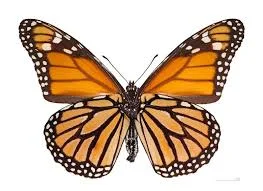
Day 1 – Monday, March 18th Today I began my scientific observation of butterflies in our school garden. I set up my observation post near the hibiscus flowers at 8:00 AM. Within the first hour, I recorded three different species visiting the red and yellow flowers.
The most common visitor was the Orange Tiger butterfly (scientific name: Danaus chrysippus). I observed five individuals during my 30-minute session. These butterflies moved gracefully from flower to flower, spending approximately 15-20 seconds on each bloom. They appeared to prefer the red hibiscus flowers over the yellow ones.
Day 3 – Wednesday, March 20th Weather conditions: Sunny, temperature approximately 28°C, light breeze. I noticed that butterfly activity increased significantly compared to Monday. The Blue Pansy butterfly (Junonia orithya) made its first appearance. This species has distinctive blue eyespots on its wings and moves more quickly than the Orange Tiger.
Behavioral observations: The Blue Pansy butterflies were more territorial. I witnessed two males chasing each other away from the same flower cluster. They performed a spiraling flight pattern that lasted about 45 seconds before one retreated.
Day 5 – Friday, March 22nd Today I focused on feeding behavior and timing patterns. Most butterfly activity occurred between 9:00 AM and 11:00 AM when the morning dew had evaporated but before the afternoon heat became intense.
Feeding Process Observed:
- Butterfly approaches flower slowly
- Hovers briefly (2-3 seconds) before landing
- Extends proboscis (feeding tube) into flower center
- Feeds for 15-30 seconds
- Withdraws proboscis and flies to next flower
Day 7 – Sunday, March 24th Final observation day revealed interesting weather-related patterns. Morning rainfall delayed butterfly activity until 10:30 AM. However, when they emerged, their behavior was more energetic, possibly due to increased nectar production in rain-washed flowers.
Conclusion: Over seven days, I recorded six different butterfly species, with Orange Tiger being most abundant (observed 23 times) and Blue Pansy showing the most complex social behaviors. Weather clearly influences both timing and intensity of butterfly activity.
Exercise I – Reading Comprehension
Answer these questions:
- What location did the observer choose for the study?
- Which butterfly species was most commonly seen?
- What time of day showed the highest butterfly activity?
- How long do butterflies typically spend feeding on each flower?
- What weather factor affected butterfly behavior?
- How many different species were recorded during the week?
Exercise J – Scientific Vocabulary
Match these scientific terms with their meanings:
- species a. tube butterflies use for feeding
- proboscis b. different types of animals
- territorial c. defending an area from others
- abundant d. existing in large numbers
- nectar e. sweet liquid in flowers
Exercise K – Observation Details
Find examples from the passage of:
- Specific time recording: _________________________________
- Measurement data: _________________________________
- Behavioral description: _________________________________
- Weather information: _________________________________
Scientific names: _________________________________
This term's English Studies topics
Basic 6 Second Term · 42 topics
- Dictation for the Week
- Structure: Use of Idiomatic Expressions
- Reading: A Telephone Conversation
- Dictation for the Week
- Writing: Dialogue
- Speech Work: Pronunciation Practice with Shifting Stresses
- Structure: Adverbs
- Reading: Observable Study of Butterflies
- Dictation for the Week
- Writing: Recording Observations
- Contrasting Vowels /e/ and /ᴣ:/
Get English Studies as PDF and Word
Every week of Basic 6 English Studies, Second Term, formatted and ready to print. Ad-free, and the copy lock comes off.
Get this term Card, bank transfer, USSD or OPay
Basic 6 English Studies Lesson Notes for Other Topics

Reading: Vocabulary Development Passage
Read the full lesson note.

Structure: Word Formation - Adjectives from Nouns (Revision)
Read the full lesson note.

Dictation for the Week
Read the full lesson note.

Writing: Informal Letter on Last Holiday
Read the full lesson note.

Writing: Technical Manual - Keeping a Diary
Read the full lesson note.

Speech Work: Pronunciation of Mono and Bi-syllable Words
Read the full lesson note.

Reading: A Play
Read the full lesson note.

Structure: Word Formation - Nouns from Adjectives
Read the full lesson note.
Dictation for the Week
Read the full lesson note.

Writing: A Play
Read the full lesson note.

Speech Work: Participating in a Short Play
Read the full lesson note.

Structure: Homonyms
Read the full lesson note.

Reading: Argumentative Passage
Read the full lesson note.
Dictation for the Week
Read the full lesson note.

Writing: Argumentative Essay
Read the full lesson note.
Lesson Notes for Other Classes

Basic 1 Lesson Note
The complete lesson note to guide your studies.

Basic 2 Lesson Note
The complete lesson note to guide your studies.

Basic 3 Lesson Note
The complete lesson note to guide your studies.

Basic 4 Lesson Note
The complete lesson note to guide your studies.
Basic 5 Lesson Note
The complete lesson note to guide your studies.
