Game (Basketball Court) – Basic 4 Physical & Health Education Lesson Note (Second Term)
Download this term · ₦1,000Lesson note at a glance
- Subject
- Physical & Health Education
- Class
- Basic 4
- Term
- Second Term
- Topic
- Game (Basketball Court)
- Order
- Topic 5 of 8 this term
- Reading time
- 5 min
LEARNING AREA
- Introductory Activities
- Basketball Court Layout
- Basic Basketball Rules
- Simple Basketball Regulations
- Basketball Officials
PERFORMANCE OBJECTIVES
By the end of this lesson, pupils should be able to:
- Know the parts of a basketball court.
- Understand basic basketball rules.
- Follow simple basketball regulations.
- Know who the basketball officials are.
TEACHING AND LEARNING MATERIALS
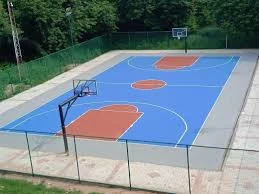
- Basketball court (or drawn diagram)
- Basketball

- Pictures of basketball court
- Whistle

- Charts showing rules
TEACHING AND LEARNING METHOD
- Simple explanation
- Visual demonstration
- Discussion
- Practical examples
REFERENCE MATERIALS
- Primary Physical Education Textbook
- Basic Basketball Rules for Kids
ENTRY BEHAVIOUR/ PREVIOUS LESSON
Students know basic basketball skills like dribbling, passing, and shooting.
WORD FILE
Court, rules, regulations, officials, referee, fair, play.
CONTENT
LESSON 1 – BASKETBALL COURT LAYOUT
WHAT IS A BASKETBALL COURT?
A basketball court is the special place where basketball games are played.
PARTS OF A BASKETBALL COURT:
THE BASKET:
- High ring with net
- Two baskets (one for each team)
- Players try to put ball through basket
- Worth points when ball goes in
THE COURT LINES:
- Sidelines – lines on the sides
- Baseline – lines at the ends
- Center line – line in the middle
- Free throw line – for special shots
SPECIAL AREAS:
- Center circle – where game starts
- Free throw area – for penalty shots
- Three-point line – for bonus points
- Key area – rectangle near basket
COURT SIZE:
- Big rectangle shape
- Much bigger than classroom
- Has smooth, flat surface
- Usually made of wood or concrete
LESSON 2 – BASIC BASKETBALL RULES
SIMPLE BASKETBALL RULES:
HOW TO PLAY:
- Two teams play against each other
- Five players on each team at one time
- Put ball in opponent’s basket to score points
- Team with most points wins
BASIC RULES:
USING THE BALL:
- Use hands only (no feet)
- Cannot run while holding ball
- Must dribble (bounce) when moving
- Can pass ball to teammates
- Can shoot ball at basket
MOVING WITH THE BALL:
- Dribbling – bounce ball while walking/running
- Passing – give ball to teammate
- Shooting – throw ball at basket
- No walking – cannot walk without dribbling
SCORING POINTS:
- 2 points – for normal basket
- 3 points – for long-distance shot
- 1 point – for free throw shot
WHAT YOU CANNOT DO:
- No kicking the ball
- No hitting other players
- No pushing or shoving
- No running without dribbling ball
- No going out of bounds
LESSON 3 – SIMPLE BASKETBALL REGULATIONS
GAME REGULATIONS:
TIME RULES:
- Game time – usually 4 periods (quarters)
- Each period – 10-12 minutes for kids
- Break time – rest between periods
- Overtime – extra time if game is tied
PLAYER RULES:
- 5 players on court per team
- Substitutions – players can be replaced
- Team captain – one leader per team
- All players must wear same color shirts
FOULS (RULE BREAKING):
- Personal foul – hitting or pushing opponent
- Technical foul – arguing with referee
- Team foul – when team breaks rules too much
- Consequences – other team gets free throws
OUT OF BOUNDS:
- Ball goes outside court lines
- Game stops
- Other team gets the ball
- Play starts again from sideline
VIOLATIONS:
- Traveling – running without dribbling
- Double dribble – dribbling with both hands
- Time violations – taking too long
- Ball returns to other team
LESSON 4 – BASKETBALL OFFICIALS
WHO ARE BASKETBALL OFFICIALS?
Basketball officials are people who make sure the game is played fairly and safely.
THE REFEREE:
- Main official who controls the game
- Wears striped shirt (black and white)
- Has a whistle to stop play
- Makes decisions about rules
- Keeps game fair for both teams
WHAT THE REFEREE DOES:
- Starts the game with jump ball
- Calls fouls when players break rules
- Stops play when someone gets hurt
- Counts points when baskets are made
- Makes sure everyone follows rules
THE SCORER:
- Keeps track of points for each team
- Records fouls for each player
- Times the game with clock
- Sits at special table beside court
THE TIMEKEEPER:
- Watches the game clock
- Stops time when referee says
- Sounds buzzer when time is up
- Helps with substitutions
SIGNALS REFEREES USE:
- Whistle blow – stop play
- Hand signals – show what happened
- Pointing – show direction of play
- Arms up – basket is good
RESPECTING OFFICIALS:
- Listen to what they say
- Follow their decisions
- Don’t argue with them
- Say “yes sir/ma’am” politely
- Accept their calls even if we disagree
LESSON 5 – FAIR PLAY AND SPORTSMANSHIP
HOW TO PLAY FAIRLY:
GOOD SPORTSMANSHIP:
- Follow all rules even when no one is watching
- Respect opponents – they are not enemies
- Help injured players from any team
- Shake hands after the game
- Accept winning and losing gracefully
TEAM BEHAVIOR:
- Support teammates when they make mistakes
- Encourage rather than criticize
- Share the ball with everyone
- Work together as a team
- Listen to coach and follow instructions
DEALING WITH PROBLEMS:
- Tell the referee about rule violations
- Don’t fight or argue with opponents
- Stay calm when calls go against you
- Ask coach if you don’t understand something
- Focus on playing your best
WHY RULES ARE IMPORTANT:
- Keep everyone safe
- Make game fair for all
- Help everyone have fun
- Teach us to follow instructions
- Prepare us for life skills
SIMPLE GAME RULES TO REMEMBER:
- Play fair and be kind
- Follow what the referee says
- Keep trying your best
- Help your teammates
- Have fun while playing
PRESENTATION
- Teacher shows basketball court diagram and explains each part
- Teacher demonstrates basic rules using basketball
- Teacher explains what referees do using whistle and hand signals
- Teacher discusses fair play and good sportsmanship
- Teacher leads discussion about following rules
STUDENT ACTIVITIES
Students practice:
- Identifying parts of basketball court
- Following simple basketball rules in practice game
- Recognizing referee signals
- Demonstrating good sportsmanship
- Playing mini-games with rules
EVALUATIVE ACTIVITIES
- Name three parts of basketball court
- Explain one basic basketball rule
- Show respect for officials
- Demonstrate good sportsmanship
- Follow game rules during practice
LESSON EVALUATION/ASSIGNMENT
Students will:
- Draw a simple basketball court and label parts
- Practice following rules during recess games
- Show good sportsmanship in all games
- Ask family about sports rules they follow
WORKBOOK
WEEKLY ASSESSMENT (TEST)
- A basketball court has _______ baskets. A. One B. Two
- Each team has _______ players on the court at one time. A. Five B. Ten
- The _______ makes sure the game is played fairly. A. Coach B. Referee
- You cannot _______ while holding the basketball. A. Stand B. Run
- Good sportsmanship means being _______ to everyone. A. Mean B. Kind
This term's Physical & Health Education topics
Basic 4 Second Term · 8 topics
Get Physical & Health Education as PDF and Word
Every week of Basic 4 Physical & Health Education, Second Term, formatted and ready to print. Ad-free, and the copy lock comes off.
Get this term Card, bank transfer, USSD or OPay
Second Term Physical & Health Education Lesson Notes for Other Topics
Games - Basic Skills in Ball Games
Read the full lesson note.
Games (Local Games)
Read the full lesson note.
Safety Rules in Football Games
Read the full lesson note.
Swimming (Aquatic)
Read the full lesson note.
Revision
Read the full lesson note.
Revision II
Read the full lesson note.
Safety Rules in Swimming
Read the full lesson note.
Ball Games - Basketball
Read the full lesson note.

Ball Games - Football
Read the full lesson note.
Ball Games - Safety Rules in Football
Read the full lesson note.

Tennis
Read the full lesson note.

Recreation
Read the full lesson note.

Gymnastics with Apparatus
Read the full lesson note.
Gymnastics
Read the full lesson note.

Physical Fitness Cont'd
Read the full lesson note.
Lesson Notes for Other Classes
Basic 1 Lesson Note
The complete lesson note to guide your studies.
Basic 2 Lesson Note
The complete lesson note to guide your studies.
Basic 3 Lesson Note
The complete lesson note to guide your studies.
Basic 5 Lesson Note
The complete lesson note to guide your studies.

Basic 6 Lesson Note
The complete lesson note to guide your studies.
JSS1 Lesson Note
The complete lesson note to guide your studies.