
Concept of Security II – Basic 1 Security Education Lesson Note (First Term)
Download this term · ₦1,000Lesson note at a glance
- Subject
- Security Education
- Class
- Basic 1
- Term
- First Term
- Topic
- Concept of Security II
- Order
- Topic 2 of 8 this term
- Reading time
- 3 min
Stranger danger means knowing how to stay safe around people you do not know. A stranger is someone you do not know, even if they seem nice. Not all strangers are bad, but children must be careful. They should not take things from strangers, follow them or get into their cars, and should tell a trusted adult.
Behavioural objectives
By the end of the lesson, students should be able to:
- say who a stranger is
- state the safety rules to follow around strangers
- describe the tricks strangers may use
- say what to do if a stranger approaches them
- name strangers who can help when they are lost
Why do we need safety rules?
Today we will learn very important rules about staying safe, especially around people we don’t know.
Who is a stranger?
A stranger is someone you do not know. Even if they seem nice, if you don’t know them, they are strangers.
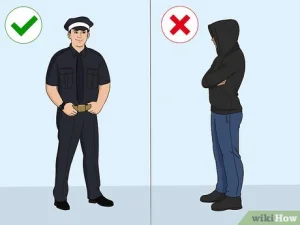
Important: Not all strangers are bad, but we must be careful!
What are the safety rules?
- Do not take anything from a stranger
- No sweets, biscuits or toys
- No gifts or money
- Even if it looks nice, say NO!
- Do not follow a stranger
- Even if they say they know your parents
- Even if they say your parent sent them
- Stay where you are and shout for help
- Do not talk to strangers when you are alone
- If someone you don’t know talks to you, move away
- Find a trusted adult quickly
- Don’t answer their questions
- Always stay close to your parents or teacher
- Don’t wander away in the market
- Don’t go to another place without telling them
- Hold their hand in crowded places
- Never get into a stranger’s car
- Even if they say they will take you home
- Even if they say your parent is sick
- Scream and run away!
What tricks may strangers use?
Strangers may try to trick you by:
- Offering treats: “Come, I have sweets for you”
- Pretending to know your family: “Your daddy sent me to pick you”
- Asking for help: “Can you help me find my puppy?”
- Showing you something exciting: “Come and see my new toy”
- Using emergency lies: “Your mummy is in the hospital, follow me”
What should you do if a stranger approaches you?
- Say “NO” loudly.
- Run away quickly.
- Find a trusted adult (teacher, police, security guard).
- Tell your parents immediately.
- Don’t keep it a secret.
Which strangers can help you?
Some strangers can help you when you’re lost:
- Police officers in uniform
- Security guards at your school
- Shop workers (if you’re in a shop)
- Other parents with children
Class activities
Class discussion
- What would you do if a stranger offers you chocolate?
- Who should you tell if a stranger talks to you?
Role play
Let’s practise! The teacher acts as a stranger. Students practise saying NO and running away.
Evaluation
- Should you take sweets from a stranger?
- a) Yes
- b) No
- c) Maybe
- A stranger is someone you _____
- a) know well
- b) don’t know
- c) live with
- If a stranger asks you to follow them, you should _____
- a) follow them
- b) say NO and run away
- c) hide
- If a stranger says “Your mummy sent me,” you should _____
- a) believe them and follow
- b) say NO and tell a teacher
- c) give them your toys
- When in a crowded place, you should _____
- a) run away alone
- b) stay close to your parents
- c) talk to strangers
Answers: 1-b, 2-b, 3-b, 4-b, 5-b
Assignment
- Tell your parents two safety rules you learned today.
- Draw yourself saying NO to a stranger.
- Practise with your parents: What will you do if a stranger offers you sweets?
This term's Security Education topics
Basic 1 First Term · 8 topics
Get Security Education as PDF and Word
Every week of Basic 1 Security Education, First Term, formatted and ready to print. Ad-free, and the copy lock comes off.
Get this term Card, bank transfer, USSD or OPay
First Term Security Education Lesson Notes for Other Topics
Personal Security
Read the full lesson note.
Office Security
Read the full lesson note.
Home Security
Read the full lesson note.
Security Gadgets
Read the full lesson note.
Security Colours
Read the full lesson note.
Security Alert Signs
Read the full lesson note.
Concept of Security
Read the full lesson note.
Personal Security
Read the full lesson note.
Types of Personal Security
Read the full lesson note.
Importance of Personal Security
Read the full lesson note.
Precautionary Measures on Personal Security
Read the full lesson note.

Personnel to Contact during Emergency
Read the full lesson note.
Emergency Phone Numbers
Read the full lesson note.
Acting Properly in the Face of Danger
Read the full lesson note.
Revision - Final Review and Assessment
Read the full lesson note.
Lesson Notes for Other Classes

Basic 2 Lesson Note
The complete lesson note to guide your studies.

Basic 3 Lesson Note
The complete lesson note to guide your studies.

Basic 4 Lesson Note
The complete lesson note to guide your studies.

Basic 5 Lesson Note
The complete lesson note to guide your studies.

Basic 6 Lesson Note
The complete lesson note to guide your studies.
JSS1 Lesson Note
The complete lesson note to guide your studies.

