
Environmental Problems – SS2 Geography Lesson Note (First Term)
Lesson note at a glance
- Class
- SS2
- Subject
- Geography
- Term
- First Term
- Reading time
- 5 min
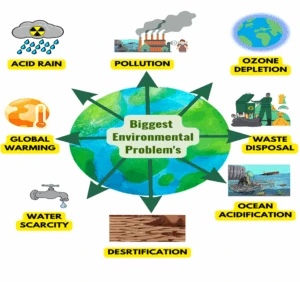
Environmental problems are harmful changes to the natural world that damage ecosystems, living organisms and human wellbeing.
- Examples: pollution (air, water and soil), deforestation, climate change, loss of biodiversity and depletion of natural resources.
- Main source: human activities such as industrialisation, overconsumption and improper waste disposal.
- Result: long-term ecological imbalance and threats to people and the environment.
Behavioural objectives
By the end of the lesson, students should be able to:
- Define environmental problems.
- Describe the main types of environmental problems and state their causes.
- State the effects of environmental problems on people, animals and ecosystems.
- Suggest remedies for environmental problems.
What are the types of environmental problems?
There are eight main types of environmental problems: air pollution, water pollution, soil degradation, deforestation, climate change, waste management issues, ozone layer depletion and ocean pollution.
1. Air pollution
Air pollution is the release of harmful substances into the air.
- Industrial emissions: smoke and gases from factories and power plants.
- Vehicle exhaust: fumes from cars, buses, lorries and generators.
- Burning fossil fuels: coal, oil and natural gas release harmful gases.
- Agricultural practices: bush burning and chemical spraying add pollutants.
- Indoor activities: cooking with solid fuels such as firewood and charcoal.
2. Water pollution
Water pollution is the contamination of water bodies by chemicals, heavy metals, plastics and other pollutants.
- Industrial discharges: factories release chemical waste into rivers.
- Agricultural runoff: rain washes pesticides and fertilisers into streams.
- Household waste: refuse dumped in drains and rivers.
- Untreated sewage: human waste released into water without treatment.
3. Soil degradation
Soil degradation is the loss of soil fertility and quality, so the soil can no longer support good crop growth.
- Deforestation: removing trees leaves soil bare and open to erosion.
- Overgrazing: too many livestock strip the grass cover.
- Monoculture: growing one crop repeatedly drains the same nutrients.
- Excess chemicals: heavy use of chemical fertilisers and pesticides harms the soil.
- Urbanisation: buildings and roads cover and damage good soil.
4. Deforestation
Deforestation is the large-scale removal of forests.
- Clear-cutting for agriculture: forests are cleared for farmland.
- Logging: trees are cut for timber and firewood.
- Urban expansion: forests give way to towns and housing.
- Infrastructure development: roads, dams and industries take up forest land.
- Effects: habitat loss, disrupted ecosystems and fewer plant and animal species.
5. Climate change
Climate change is the long-term alteration of Earth’s climate patterns, mainly through global warming.
- Burning fossil fuels: coal, oil and natural gas release greenhouse gases.
- Deforestation: fewer trees remain to absorb carbon dioxide.
- Industrial processes: factories release greenhouse gases.
- Agriculture: farming activities add greenhouse gases to the air.
- Results: global warming, sea level rise and extreme weather events.
6. Waste management issues
Waste management issues arise from the improper disposal of solid and hazardous waste.
- Inadequate disposal practices: open dumping and roadside refuse heaps.
- Poor landfill management: waste sites that leak or burn.
- No recycling facilities: reusable materials end up as waste.
7. Ozone layer depletion
Ozone layer depletion is the thinning of the ozone layer by human-made chemicals, which lets more harmful ultraviolet (UV) radiation reach Earth.
- Chlorofluorocarbons (CFCs): used in refrigerators, air conditioners and aerosol sprays.
- Halons: used in some fire extinguishers.
- Effects of more UV radiation: skin cancer, eye problems and damage to crops.
8. Ocean pollution
Ocean pollution is the contamination of oceans and seas, which harms marine life and ecosystems.
- Oil spills: crude oil leaks from tankers, pipelines and drilling sites.
- Plastic waste: improperly discarded plastics are carried into the sea.
- Industrial discharges: factories release chemicals into waterways that flow to the sea.
- Agricultural runoff: pesticides and fertilisers reach the sea through rivers.
What are some environmental problems in Nigeria?
Nigeria faces environmental problems that match the types above.
- Oil spills: pollute land and water in the Niger Delta.
- Gas flaring: burning of waste gas at oil wells pollutes the air.
- Gully erosion: washes away land in parts of the South-East.
- Desertification: the desert spreads southwards in the far north.
- Flooding: blocked drains and refuse dumping worsen floods in many cities.
- Indiscriminate refuse dumping: waste heaps build up in cities and towns.
What are the effects of environmental problems?
Environmental problems harm human health, wildlife, food production and the economy.
- Health problems: air and water pollution cause respiratory diseases and waterborne illnesses in humans and animals.
- Loss of species: habitat destruction and pollution cause extinction and disrupt ecosystems.
- Climate effects: rising temperatures, extreme weather and sea level rise harm ecosystems, agriculture and vulnerable communities.
- Resource shortages: depletion of freshwater, minerals and fossil fuels can lead to shortages and conflicts.
- Economic burden: healthcare costs, reduced farm output and damage to infrastructure.
- Displacement: climate-related events and land degradation force communities to relocate.
What are the remedies for environmental problems?
Remedies for environmental problems are actions that reduce pollution, protect resources and restore damaged ecosystems.
- Renewable energy: use solar, wind and hydropower to reduce fossil fuel use and greenhouse gas emissions.
- Sustainable agriculture: practise organic farming, agroforestry and sustainable water management.
- Waste management: reduce waste, recycle and dispose of refuse responsibly.
- Tree planting: plant trees and restore degraded ecosystems to combat deforestation and protect biodiversity.
- Regulations: enforce laws on industrial emissions, waste disposal and resource extraction.
- Protected areas: set up and expand game reserves and national parks to conserve biodiversity.
- Education: raise awareness and promote sustainable practices through outreach programmes.
- Climate adaptation: build resilience in communities that are vulnerable to environmental threats.
Evaluation
- What are environmental problems?
- List four types of environmental problems.
- State three causes of water pollution.
- Name two substances that deplete the ozone layer and state where they are used.
- Mention three effects of environmental problems.
Assignment
- State four causes of climate change and explain any four remedies for environmental problems.
This term's Geography topics
SS2 First Term · 10 topics
SS2 Geography Lesson Notes for Other Topics

Action Of Running Water
Read the full lesson note.
Action Of Wind
Read the full lesson note.
Glacial Action
Read the full lesson note.
Action Of Wave
Read the full lesson note.
Climate & Climate Classification
Read the full lesson note.
Climate & Climate Classification II
Read the full lesson note.

Vegetation
Read the full lesson note.
Environmental Resources
Read the full lesson note.
Renewable And Non-Refundable Resources
Read the full lesson note.
Environmental Conservation
Read the full lesson note.
Transportation In Nigeria
Read the full lesson note.

Manufacturing Companies In Nigeria
Read the full lesson note.

Commercial Activities In Nigeria
Read the full lesson note.

World Population I
Read the full lesson note.
World Population II
Read the full lesson note.
Lesson Notes for Other Classes

SS1 Lesson Note
The complete lesson note to guide your studies.

SS3 Lesson Note
The complete lesson note to guide your studies.
