
Commercial Activities in Nigeria – SS2 Geography Lesson Note (Second Term)
Lesson note at a glance
- Class
- SS2
- Subject
- Geography
- Term
- Second Term
- Reading time
- 10 min
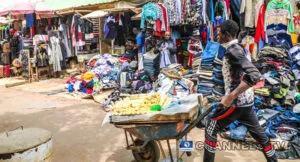
Trade is the buying and selling, or exchange, of goods and services between people, regions or countries.
- Internal trade: trade between one region and another in the same country.
- International trade: trade between one country and another.
Behavioural objectives
- Define trade and distinguish between internal and international trade.
- State the factors that favour internal trade.
- Explain the importance of international trade.
- Identify the factors that affect and limit the volume of international trade.
- Explain why the volume of trade is high between Nigeria and developed countries, and low between Nigeria and the rest of Africa.
- Describe the major ocean routes and Nigeria’s trading partners.
What is the difference between internal and international trade?
Internal trade is trade within one country, while international trade is trade between countries.
| Point | Internal trade | International trade |
|---|---|---|
| Area covered | Between regions of one country | Between two or more countries |
| Also called | Home trade | Foreign trade |
| Currency | One common currency | Different currencies, so foreign exchange is needed |
| Import and export duties | Not charged | Charged on goods crossing borders |
| Example | Yams from Benue sold in Lagos | Cocoa from Nigeria sold to Europe |
What factors favour internal trade?
Internal trade grows when regions of a country differ in what they produce and can move goods easily.
- Differences in products: each region produces different goods, so regions need one another.
- Differences in climate: climate decides which crops grow where, so regions exchange farm produce.
- Fertile soil: fertile areas produce a surplus of food and crops to sell to other regions.
- Wide market: a large population gives producers many buyers.
- Common currency: buyers and sellers in all regions use the same money, so payment is simple.
What is international trade?
International trade is the exchange of goods and services between one country and another.
What are the divisions of international trade?
International trade has two divisions: import trade and export trade.
- Import trade: buying goods and services from another country into your own country.
- Export trade: selling goods and services produced in your country to another country.
Why is international trade important?
International trade is important because it supplies goods a country lacks and brings income, jobs and revenue.
- International cooperation: nations that trade with one another work together.
- Provision of new products: goods that a country could not otherwise get become available.
- Provision of foreign exchange: a country earns foreign money from the export of its goods.
- Provision of employment: jobs are created in the export and import of goods and services.
- Growth of ancillary services: supporting services develop, such as trade banking and the Export Processing Zones (EPZ) in Nigeria.
- Diffusion of ideas: people from different parts of the world meet and exchange ideas.
- Production of exportable goods: the source region increases its output of goods for export.
- Growth of industries: exporting or importing raw materials helps industries to grow.
- Improved living standard: imported goods can lower prices and make goods more affordable.
- Generation of revenue: government earns money from import and export duties.
- Exchange of skills and expertise: nations share skills and know-how.
What factors affect the volume of international trade?
The volume of trade between two countries depends on how much they differ and on the policies they follow.
- Differences in natural resources: the greater the difference in resources such as minerals, the greater the trade, and the reverse.
- Differences in technology: the greater the difference in technology (comparative advantage of specialisation), the greater the trade.
- Differences in import duties: the higher the duties on imports, the fewer the goods imported.
- Differences in prices of goods: the greater the price difference, the greater the trade.
- Colonial ties: former colonies tend to trade more with their former rulers, for example Nigeria and Britain.
- The need to earn foreign exchange: a country that needs foreign money will export more.
- Political consideration: a country may choose its trading partners for political reasons, for example the enthronement of democracy in a nation may lead to trade relations.
- Comparative cost advantage: a country that produces certain goods at lower cost trades with one that produces them at higher cost.
What factors may limit international trade?
Trade is limited by anything that makes buying, selling or paying across borders difficult.
- Strained international relations: poor relations between two countries can stop the import or export of goods.
- Inadequate production of goods: too little output in the importing or exporting country limits trade.
- Low demand for products: sales fall when the other country wants few of the goods.
- Inadequate foreign exchange: a shortage of foreign money seriously reduces the volume of trade.
- High tariffs on goods: heavy duties reduce the import or export of goods to that country.
- Political instability: unrest in either country limits trade, and often stops it completely.
Why is the volume of trade high between Nigeria and developed countries?
The volume of trade is high between Nigeria and developed countries such as Britain, the U.S.A. and Japan because their economies differ widely.
- Non-similarity of products: the two sides produce goods and services that are not alike.
- High level of technology: developed countries have advanced technology that Nigeria needs.
- High level of savings: large savings make production cheaper, so developed countries can export easily.
- Colonial ties: the link of some developing countries to their former rulers increases trade.
- Differences in import duties: import duties differ widely between the two sides.
- Differences in prices of goods: foreign goods are often cheaper than local ones.
- Preference for imported goods: Nigerians often prefer goods made in advanced countries.
- Absence of trade unions: there are no regional trade unions between developing and advanced nations to hold back trade.
- Differences in climate: different climates give different farm products.
- Industrial requirements: factories in developed countries need Nigeria’s raw materials.
- Favourable market: Nigeria is a large market for goods such as computers and electronics.
How can trade between Nigeria and developed countries be improved?
- International cooperation: increase cooperation between both countries.
- Technical cooperation: share skills and equipment.
- Common membership: belong to the same international economic organisation.
- Loans: provide loans to increase production.
- Simpler procedures: liberalise and simplify import and export procedures in both countries.
Why is the volume of trade low between Nigeria and the rest of Africa?
The volume of trade between Nigeria and other African countries is low because their economies are alike.
- Similarity in products: Nigeria and other African countries produce similar goods.
- Low level of technology: they are at the same low level, so they operate at the same low level of production.
- Low level of savings: low savings reduce purchasing power.
- Preference for imported goods: African buyers often neglect locally produced goods.
- Colonial ties: many African countries still trade mainly with their former rulers instead of with one another.
- Trade restrictions and high tariffs: many restrictions within Africa reduce trade.
- Similarity in climate: most African countries grow almost the same crops.
- Existence of regional trade unions: many regional unions can act as barriers to trade among African countries.
How can trade between Nigeria and the rest of Africa be improved?
- Specialisation: encourage each country to specialise in production.
- African Economic Community: form a community for the whole continent.
- Better technology: improve the level of technology.
- Patronage of local goods: encourage African countries to buy one another’s goods.
- Protection: shield young industries from foreign competition.
- Transport network: build a trans-continental transport network.
- Higher savings: improve people’s capacity to save through salaries and wages.
How does Nigeria’s trade with developed countries compare with its trade with Africa?
| Point | Nigeria and developed countries | Nigeria and the rest of Africa |
|---|---|---|
| Products | Not similar | Similar |
| Technology | Wide gap | Same low level |
| Savings | High in developed countries | Low |
| Climate | Different | Almost the same |
| Volume of trade | High | Low |
What are the problems of international trade and their solutions?
The problems of international trade are mainly shortage of money, weak management and unfavourable policies.
What are the problems facing international trade?
- Inadequate capital: too little capital among the countries involved limits trade.
- Export of raw materials: most exports to European markets are in raw form, which is a major problem for developing countries.
- Colonial history: colonial ties between developed and developing countries have caused some trade problems.
- Unfavourable balance of trade: it can lead to low production in the country affected.
- Low value of currency: a country with a weak currency finds it hard to trade meaningfully.
- High cost of transportation: it raises the final cost of goods, so consumers find them hard to buy.
- Port congestion: weak management of imports and exports leaves ports congested.
- Government policies: deliberate policies can cause problems between two nations.
What are the solutions to the problems of international trade?
- Political stability: keep the country politically stable.
- Treaties: sign treaties and peace accords.
- Lower tariffs: reduce tariffs.
- Proper policies: make sound government policies on trade restrictions.
- Trained port staff: employ well-trained personnel for port management.
- Loans: grant loans to facilitate trade.
- Processing facilities: process raw materials into finished goods before export.
What is the balance of trade and how can an unfavourable balance be remedied?
The balance of trade is the difference between the value of a country’s exports and the value of its imports.
- Favourable balance: exports are worth more than imports.
- Unfavourable balance: imports are worth more than exports.
A country with an unfavourable balance of trade can take these steps:
- Import restriction: limit the quantity of foreign goods allowed in.
- Tax relief for young industries: reduce their taxes so they can grow.
- Bilateral trade agreements: agree trade terms between two countries.
- Exporting semi-finished goods: sell partly processed goods, which earn more than raw materials.
- Creation of export processing zones: set up areas where firms produce goods mainly for export.
- Loans to indigenous entrepreneurs: help local business people to produce more.
- Import substitution: make at home the goods that were imported.
What are the world’s major ocean (shipping) routes?
Ocean routes are the sea paths along which ships carry goods in international trade.
- The North Atlantic route: the busiest and most important route, linking Western Europe and the eastern part of North America, two heavily populated and industrialised regions.
- The Panama Canal route: links the Atlantic and Pacific oceans, serving the east and west coasts of the Americas.
- The Trans-Pacific route: the longest route in distance, linking countries such as the U.S.A., China, Japan and Australia.
- The South African or Cape route: goes round southern Africa and links Western Europe with Asia, for example Colombo.
- The South Atlantic route: an east-west route linking South America, Europe, West Africa and South Africa.
- The Mediterranean-Asiatic route (Suez Canal route): links Europe with Asia through the Mediterranean Sea and the Suez Canal.
- The North Pacific route: links the west coast of North America with East Asia.
Who are Nigeria’s trading partners?
Nigeria’s trading partners are mainly advanced countries in Western Europe and the Americas.
- Western Europe: Britain, Germany, France, Italy, the Netherlands (Holland), Spain, Portugal and Belgium. Britain is Nigeria’s first and most important partner. Trade passes through the North Atlantic route.
- North and South America: the U.S.A., Canada, Brazil, Venezuela and Argentina. Trade passes through the South Atlantic route.
Evaluation
- Define trade and distinguish between internal and international trade.
- State five reasons why countries engage in international trade.
- List four factors that affect the volume of trade between two countries.
- Give four reasons for the low volume of trade between Nigeria and the rest of Africa.
- State three steps a country can take to improve an unfavourable balance of trade.
Assignment
Explain five reasons why the volume of trade is high between Nigeria and developed countries, and state three ways to improve trade between Nigeria and the rest of Africa.
This term's Geography topics
SS2 Second Term · 9 topics
SS2 Geography Lesson Notes for Other Topics

Environmental Conservation
Read the full lesson note.
Transportation In Nigeria
Read the full lesson note.

Manufacturing Companies In Nigeria
Read the full lesson note.

World Population I
Read the full lesson note.
World Population II
Read the full lesson note.

Settlement
Read the full lesson note.

Soil
Read the full lesson note.
Geo- Political Issues (Land Reclamation)
Read the full lesson note.

Action Of Running Water
Read the full lesson note.

Action Of Wind
Read the full lesson note.

Glacial Action
Read the full lesson note.

Action Of Wave
Read the full lesson note.

Climate & Climate Classification
Read the full lesson note.

Climate & Climate Classification II
Read the full lesson note.

Vegetation
Read the full lesson note.
Lesson Notes for Other Classes

SS1 Lesson Note
The complete lesson note to guide your studies.

SS3 Lesson Note
The complete lesson note to guide your studies.
