
Fruit Farming in the Mediterranean Regions of Africa – SS2 Geography Lesson Note (Third Term)
Lesson note at a glance
- Class
- SS2
- Subject
- Geography
- Term
- Third Term
- Reading time
- 5 min
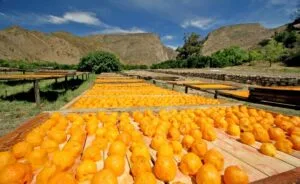
Fruit farming is the type of farming in which farmers cultivate mainly fruit crops for domestic, industrial or commercial purposes. It is sometimes called orchard farming.
Behavioural objectives
- Define fruit farming.
- State the factors that favour fruit farming in the Mediterranean regions of Africa.
- Name the fruits produced in North-West Africa and South Africa.
- State the importance and major problems of fruit farming.
- Explain why fruit farming is more popular and lucrative in South Africa than in North-West Africa.
What are the key terms in fruit farming?
Key terms are the words a student must know before studying fruit farming.
- Orchard: a piece of land planted with fruit trees.
- Viticulture: the cultivation of grapes.
- Citrus fruits: fruits such as oranges, lemons, limes and tangerines.
- Irrigation: supplying water to crops by artificial means.
- Wine: a drink made from fermented grape juice.
- Foreign exchange: money a country earns from selling goods to other countries.
What is the Mediterranean climate?
The Mediterranean climate is a climate with hot, dry summers and mild, wet winters.
- Summer: hot, dry and sunny, with temperatures of about 21°C to 27°C.
- Winter: mild and wet, with rainfall of about 25 to 75 cm per annum.
- Location in Africa: the north-western coastal lands and the south-western part of South Africa.
- Effect on farming: fruit trees ripen their fruits in the long, bright summer, and winter rain supplies water.
What factors favour fruit farming?
The factors that favour fruit farming in the Mediterranean regions of Africa are climatic, soil, economic and human factors.
Climatic factors
- Mediterranean climate: it suits fruits such as grapes, olives and citrus.
- Bright, sunny weather: hot, dry summers help fruits to ripen well.
- Summer temperature: warm conditions of 21°C to 27°C favour fruit growth.
- Winter rainfall: 25 to 75 cm per annum supplies water to the trees.
Soil factor
- Fertile soils: good soils, such as terra rossa, encourage fruit farming.
Economic and human factors
- Markets: there are local and foreign markets for the products.
- Irrigation schemes: they supply water where rainfall is not enough.
- Government assistance: governments support fruit farmers.
- Modern methods: advanced methods and technology are used to cultivate fruits.
What types of fruits are produced?
North-West Africa and South Africa each grow a different mix of Mediterranean fruits.
| Region | Fruits grown |
|---|---|
| North-West Africa | Apricots, grapes, oranges, olives, lemons, limes and tangerines. |
| South Africa | Grapes, apples, pears, oranges, pineapples, peaches and apricots. |
Main groups of fruits
- Citrus fruits: oranges, lemons, limes and tangerines.
- Grapes: eaten fresh or used to make wine.
- Olives: eaten or pressed to make olive oil.
- Tree fruits: apples, pears, peaches and apricots.
How is fruit farmed in the Mediterranean regions?
Fruit farming follows a series of steps from preparing the land to selling the fruit.
- Clear and prepare the land, often on gentle slopes with good drainage.
- Plant young fruit trees or vines in rows to form an orchard or vineyard.
- Irrigate the trees where winter rain is not enough.
- Prune the trees and spray against pests and diseases.
- Harvest the fruits in the long, bright summer when they are ripe.
- Sort, pack, can, process or export the fruits.
What is the importance of fruit farming?
Fruit farming earns money, creates jobs and supplies food and raw materials.
- Foreign exchange: the export of wine and fruits earns money for the country.
- Employment: it gives jobs to many people on farms and in factories.
- Raw materials: it supplies fruit canning and processing industries.
- Wine: it provides wine that is consumed locally and sold abroad.
- Specialisation: viticulture lets farmers and regions specialise in grapes and wine.
- Food: fruits are a source of vitamins for the people.
Where are the major areas of fruit farming?
The major fruit-farming areas lie in the Mediterranean parts of North-West Africa and South Africa.
| Region | Major areas |
|---|---|
| South Africa | Elgin near Cape Town, in the south-western Cape. |
| North-West Africa | Tunisia, Algeria, Libya and Morocco. |
What are the major problems of fruit farming?
The major problems of fruit farming are unreliable rainfall, poor storage, competition, soil erosion and perishable produce.
- Unreliable rainfall: rain in the Mediterranean region varies from year to year and affects fruit growth.
- Poor storage and processing: these lower the quality of fruit products.
- Competition: African wines compete in quality with wines produced in Europe.
- Soil erosion: it removes topsoil from sloping farmland.
- Perishable fruits: overproduction can lead to spoilage and loss.
How can the problems of fruit farming be reduced?
Better water supply, storage and land care reduce the problems of fruit farming.
- Irrigation: it supplies water in dry years.
- Cold storage and canning: they keep fruits fresh and reduce waste.
- Quality control: better wine-making and grading help products compete in Europe.
- Soil conservation: planting along the contour and using cover crops reduce erosion.
Why is fruit farming more popular in South Africa than in North-West Africa?
Fruit farming is more popular in South Africa because its harvest reaches Europe when Europe has few fruits, and the government supports farmers.
Reasons
- Government assistance: South Africa receives massive government support for fruit farming.
- Opposite seasons: South Africa is in the southern hemisphere, so its summer harvest falls in the European winter.
- European demand: Europe cannot produce fruits in winter, so it buys South African fruits at good prices.
Comparison
- South Africa: harvests in the European winter, so its fruits meet little competition.
- North-West Africa: harvests at the same time as Europe, so its fruits meet strong competition.
| Point | South Africa | North-West Africa |
|---|---|---|
| Harvest time | During the European winter. | At the same time as European harvests. |
| Competition in Europe | Little, because Europe has few fruits then. | Greater, because Europe is also producing fruits. |
| Government support | Massive. | Less than in South Africa. |
Evaluation
- Define fruit farming.
- State four factors that favour fruit farming in the Mediterranean regions of Africa.
- Name four fruits grown in North-West Africa.
- State three ways in which fruit farming is important.
- Give two reasons why fruit farming is more lucrative in South Africa than in North-West Africa.
Assignment
Explain four major problems of fruit farming in the Mediterranean regions of Africa.
This term's Geography topics
SS2 Third Term · 8 topics
SS2 Geography Lesson Notes for Other Topics

Geographic Information System (GIS)
Read the full lesson note.

Location, Size, Position And Political Division Of Africa
Read the full lesson note.

Africa: Relief And Drainage
Read the full lesson note.

Climate And Vegetation
Read the full lesson note.

Irrigation Agriculture In Nile Basin And The Niger Basin
Read the full lesson note.

Hydrosphere (Oceanic Basins)
Read the full lesson note.

Earthquakes
Read the full lesson note.

Action Of Running Water
Read the full lesson note.

Action Of Wind
Read the full lesson note.

Glacial Action
Read the full lesson note.

Action Of Wave
Read the full lesson note.

Climate & Climate Classification
Read the full lesson note.

Climate & Climate Classification II
Read the full lesson note.

Vegetation
Read the full lesson note.

Environmental Resources
Read the full lesson note.
Lesson Notes for Other Classes

SS1 Lesson Note
The complete lesson note to guide your studies.

SS3 Lesson Note
The complete lesson note to guide your studies.
