
Pasture, Forage Crops and Range Management – SS2 Agricultural Science Lesson Note (Second Term)
Download this term · ₦1,000Lesson note at a glance
- Subject
- Agricultural Science
- Class
- SS2
- Term
- Second Term
- Topic
- Pasture, Forage Crops and Range Management
- Order
- Topic 6 of 6 this term
- Reading time
- 8 min
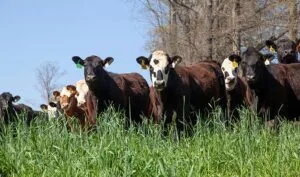
Pasture is a piece of land on which forage crops grow.
Behavioural objectives
By the end of the lesson, students should be able to:
- define pasture and forage crops and state the uses of forage crops;
- distinguish between natural and artificial pastures;
- list the qualities of a good pasture plant and name common pasture grasses and legumes;
- explain the factors that affect the distribution and productivity of pastures;
- state the steps in establishing a pasture and the management practices used on it;
- define range management and state its main practices.
What are pasture and forage crops?
Pasture is land on which forage crops grow, and forage crops are the plants that livestock feed on.
- Pasture: a piece of land on which forage crops grow.
- Forage crops: plants, cultivated or growing naturally, whose leaves and stems are eaten by livestock.
- Livestock: farm animals such as cattle, sheep and goats that graze on pasture.
What are the uses of forage crops?
- Livestock feed: they are the main food of grazing animals.
- Cover crops: they cover the soil and conserve soil moisture.
- Weed control: they discourage weed growth.
- Soil enrichment: leguminous forage crops add nutrients to the soil.
- Erosion control: their roots and leaves protect the soil from being washed away.
- Green manure: they can be ploughed into the soil to add organic matter.
- Roofing: some grasses are used to thatch farm buildings.
- Bedding: dry forage is used as bedding for animals.
What are the types of pasture?
There are two types of pasture: natural pasture and artificial pasture.
What is natural pasture?
Natural pasture, also called natural grassland or rangeland, is land on which grasses and legumes grow on their own and are eaten by farm animals.
Characteristics of natural pasture
- Plant quality: it contains poor-quality grasses and legumes.
- Soil: the soil is low in fertility and nutrients.
- Variety: it has many kinds of grasses and legumes, and livestock may not eat some of them.
- Regrowth: it has good regenerative ability.
- Trampling: the plants can withstand trampling.
What is artificial pasture?
Artificial pasture, also called established or sown pasture, is land where grasses and legumes are planted and managed by people for livestock.
Characteristics of artificial pasture
- Plant quality: it contains high-quality grasses and legumes.
- Weeds: it has few or no weeds.
- Species mix: selected grasses and legumes are grown in adequate proportion.
- Regrowth: it has high regenerative ability.
- Trampling: the plants can withstand trampling by farm animals.
What is the difference between natural and artificial pasture?
| Feature | Natural pasture | Artificial pasture |
|---|---|---|
| Origin | Grows on its own | Planted and managed by people |
| Plant quality | Poor | High |
| Species | Wide variety, some not eaten | Selected species in adequate proportion |
| Weeds | Many unwanted plants | Few or none |
| Regrowth | Good | High |
What are the qualities of a good pasture plant?
A good pasture plant grows back fast, feeds animals well and survives grazing.
- Fast regrowth: it regenerates quickly after being grazed.
- Trampling resistance: it withstands trampling.
- Palatability: animals eat it readily.
- High nutrient value: it supplies the nutrients animals need.
- Hardiness: it withstands extreme climatic conditions.
- Succulence: it has moderate moisture content and is tender.
- High leaf-to-stem ratio: it has more leaves than stems, since leaves are more nutritious.
Which grasses and legumes are used as pasture?
Pasture plants are mainly grasses and legumes.
Pasture grasses
| SN | Common name | Botanical name |
|---|---|---|
| i | Elephant grass | Pennisetum purpureum |
| ii | Guinea grass | Panicum maximum |
| iii | Giant star grass | Cynodon plectostachyus |
| iv | Carpet grass | Axonopus compressus |
| v | Speargrass | Imperata cylindrica |
| vi | Bahama grass | Cynodon dactylon |
| vii | Northern gamba | Andropogon gayanus |
| viii | Southern gamba | Andropogon tectorum |
Pasture legumes
Legumes add nitrogen to the soil and give livestock protein-rich feed.
| SN | Common name | Botanical name |
|---|---|---|
| 1 | Centro | Centrosema pubescens |
| 2 | Stylo | Stylosanthes gracilis |
| 3 | Kudzu or Puero | Pueraria phaseoloides |
| 4 | Calopo | Calopogonium mucunoides |
| 5 | Mucuna | Mucuna utilis |
| 6 | Sun hemp | Crotalaria juncea |
What factors affect the distribution of pasture?
Three groups of factors affect where pastures grow: climatic factors, soil (edaphic) factors and biotic factors.
What are climatic factors?
Climatic factors are the elements of weather and climate that decide which plants can grow in an area.
- Climate type: the Sudan type of climate favours grasses and legumes, while the equatorial climate does not.
- Rainfall: it supplies water, and its amount and spread affect pasture growth.
- Wind: it dries out plants and soil.
- Temperature: it affects germination and the rate of growth.
- Relative humidity: it affects water loss from plants and the spread of diseases.
What are edaphic factors?
Edaphic factors are soil factors, and they decide the fertility of the land.
- Fertility: fertile soil improves pasture growth, and infertile soil does the opposite.
- Soil pH: it affects how well plants take up nutrients.
- Soil texture: it affects how much water and nutrient the soil holds.
- Soil structure: it affects drainage, aeration and root growth.
- Topography: the slope of the land affects drainage and erosion.
What are biotic factors?
Biotic factors are the living things and their activities that affect pasture.
- Diseases and pests: they damage or kill pasture plants.
- Parasites and predators: they harm grazing animals and so affect how pasture is used.
- Bush burning: it destroys plants and leaves the soil bare.
- Overgrazing: too many animals strip the plant cover and weaken the pasture.
What factors affect the productivity of pastures?
Pasture productivity is the amount of good forage a pasture yields, and these factors control it.
- Persistence: ability to survive and spread by vegetative means.
- Aggressiveness: ability to compete favourably with weeds.
- Resistance to trampling: plants stay alive under the feet of animals.
- Seed viability: seeds germinate well and propagate easily.
- Resistance to drought: plants survive the dry season.
- Absence of pests and diseases: healthy plants give more forage.
- Good management: the farmer cares for the pasture properly.
- Adequate stocking: the number of animals matches what the pasture can feed.
How is a pasture established?
Establishing a pasture means choosing suitable plants, then preparing the land and planting them in order.
What factors should be considered before establishing a pasture?
- Adaptation of species: the plants must suit the local climate and soil.
- Palatability: animals must like to eat the plants.
- Compatibility: the grasses and legumes must grow well together.
- Time of maturity: this should be short.
- Lifestyle of the species: whether the plant lives for one season (annual) or many years (perennial).
What are the steps in establishing a pasture?
- Site selection: choose suitable land.
- Clearing of land: remove trees, bush and stumps.
- Removal of debris: carry away cut materials and stones.
- Land preparation: cultivate the site to loosen the soil.
- Planting: sow seeds or plant stem cuttings or roots of the pasture crops.
- Supplying: re-plant where the pasture fails to germinate.
- Promotion of tillers: encourage more points of growth.
- Weeding: remove unwanted plants.
- Fertiliser application: add nutrients to the soil.
- Irrigation: supply water in the dry season.
- Paddocking: divide the land into fenced sections called paddocks.
What are the management practices in pasture?
Pasture management is the care given to a pasture to keep it productive.
- Burning: done when forage becomes fibrous, to ensure regrowth of lush forage.
- Fencing: it discourages overgrazing and makes rotational grazing possible.
- Fertiliser application or manuring: it restores soil nutrients.
- Regular weed control: it reduces competition for the pasture plants.
- Pest and disease control: it protects the plants from damage.
- Irrigation: it keeps the pasture growing in the dry season.
- Adequate stocking: it prevents overgrazing.
What is range management?
Range management is the care and use of rangeland so that it stays productive for grazing animals.
- Rangeland: large natural grassland used for grazing, such as the savanna areas of northern Nigeria.
- Stocking rate: the number of animals kept on a given area of land.
- Overgrazing: keeping more animals on land than it can feed, which damages the plant cover.
- Rotational grazing: moving animals from one paddock to another so each section can regrow.
What are the practices in range management?
- Controlled stocking: keep only the number of animals the range can feed.
- Rotational grazing: fence the range into paddocks and graze them in turn.
- Controlled burning: burn at the right time to remove old fibrous grass and encourage new growth.
- Reseeding: plant improved grasses and legumes on bare or poor patches.
- Weed and bush control: remove unwanted plants that crowd out good forage.
- Pest and disease control: protect both the plants and the animals.
Evaluation
- Define pasture and forage crops.
- State five uses of forage crops.
- Differentiate between natural pasture and artificial pasture.
- List four qualities of a good pasture plant.
- Name the three groups of factors that affect the distribution of pasture.
Assignment
Answer the following questions in your exercise book.
- Which of the following is not a climatic factor affecting pasture distribution? A. Temperature B. Rainfall C. Humidity D. Soil pH
- The following are edaphic factors except A. soil pH B. soil texture C. soil structure D. relative humidity
- Diseases, pests, predators and parasites are ____ factors. A. biotic B. abiotic C. edaphic D. climatic
- The act of re-planting pastures that fail to germinate is ______. A. thinning B. supplying C. weeding D. mulching
- The following are legumes except _____. A. centro B. stylo C. calopo D. gamba
This term's Agricultural Science topics
SS2 Second Term · 6 topics
- Forest Management
- Floriculture and Ornamental Plants
- Diseases in Crops
- General Effects of Diseases on Crop Production
- Pest of Crops
- Pasture, Forage Crops and Range Management
Get Agricultural Science as PDF and Word
Every week of SS2 Agricultural Science, Second Term, formatted and ready to print. Ad-free, and the copy lock comes off.
Get this term Card, bank transfer, USSD or OPay
SS2 Agricultural Science Lesson Notes for Other Topics

Forest Management
Read the full lesson note.

Floriculture And Ornamental Plants
Read the full lesson note.

Diseases In Crops
Read the full lesson note.
General Effects Of Diseases On Crop Production
Read the full lesson note.
Pest Of Crops
Read the full lesson note.

Environmental Physiology
Read the full lesson note.

Surveying And Planning Of Farmstead
Read the full lesson note.

Irrigation And Drainage
Read the full lesson note.

Factors Affecting Nutrient Availability In The Soil
Read the full lesson note.
Environmental Factors Affecting Agricultural Productivity And Distribution
Read the full lesson note.

Plant Nutrient And Nutrient Cycle
Read the full lesson note.

Surveying And Planning Of Farmstead II
Read the full lesson note.

Common Weeds Found On The Farm
Read the full lesson note.

Crop Improvement
Read the full lesson note.

Basic Economic Principles - Law of Demand, Supply & Diminishing Returns
Read the full lesson note.
Lesson Notes for Other Classes

SS1 Lesson Note
The complete lesson note to guide your studies.

SS3 Lesson Note
The complete lesson note to guide your studies.
