
Crop Improvement – SS2 Agricultural Science Lesson Note (Third Term)
Download this term · ₦1,000Lesson note at a glance
- Subject
- Agricultural Science
- Class
- SS2
- Term
- Third Term
- Topic
- Crop Improvement
- Order
- Topic 2 of 7 this term
- Reading time
- 7 min
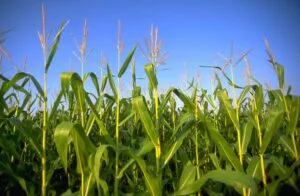
Crop improvement is the science of developing new crop varieties with better quality and higher yield.
Behavioural objectives
- State the aims of crop improvement.
- Define the common genetic terms.
- State Mendel’s first and second laws.
- Describe introduction, selection and breeding, with their advantages and disadvantages.
- List methods of improving crop productivity.
What are the aims of crop improvement?
The main aim of crop improvement is to produce crop varieties that give higher yield and better quality.
- Higher yield: to increase the quantity harvested from each plant or hectare.
- Better quality: to improve the look, taste and storage life of the produce.
- Climatic adaptation: to produce crops that suit the rainfall and temperature of an area.
- Disease resistance: to produce crops that are not easily damaged by diseases.
- Pest resistance: to produce crops that are not easily damaged by pests.
- Uniformity: to produce crops with the same agronomic characteristics, such as height and ripening time.
- Early maturity: to produce crops that are ready for harvest sooner.
- Nutrient value: to improve the food value of the produce.
- Needs of growers and consumers: to give farmers crops that are easy to grow and give buyers produce they want.
What are the genetic terms used in crop improvement?
Genetic terms are the words used to describe how characters pass from parents to offspring.
Units of inheritance
- Gene: the hereditary unit, or basic unit of inheritance.
- Chromosome: a rod-like or thread-like body in the nucleus of a cell that carries genes.
- Character (trait): an inherited feature of an organism, e.g. seed colour.
- Allelomorphs (alleles): a pair of genes at the same position on a pair of chromosomes that control one character.
- Mutation: a change in the genetic makeup of an organism that gives a new, inheritable characteristic.
Cells formed in reproduction
- Gamete: a mature sex cell.
- Zygote: the single cell formed when a male gamete unites with a female gamete.
Appearance and gene makeup
- Phenotype: the observable features of an organism, such as height, weight and skin colour.
- Genotype: the genes an organism inherits from its parents.
- Dominant character: the trait that shows in the offspring when parents with contrasting traits are crossed.
- Recessive character: the trait that does not show when the dominant trait is present.
- Homozygous: having two identical genes for a character, e.g. TT (tall) or tt (short).
- Heterozygous: having two different genes for a character, e.g. Tt, where T is tall and t is short.
Offspring and crossing
- Filial generation: the offspring of a cross. The first, second and third are written F1, F2 and F3.
- Hybrid: the offspring of parents that are genetically different but of the same species.
- Hybridisation: the crossing of plants with contrasting characters.
- Monohybridisation: crossing pure-breeding plants that differ in one pair of contrasting characters.
- Dihybridisation: crossing plants that differ in two pairs of contrasting characters.
How do homozygous and heterozygous individuals differ?
A homozygous individual carries two identical genes for a character. A heterozygous individual carries two different genes.
| Point | Homozygous | Heterozygous |
|---|---|---|
| Genes for the character | Identical | Different |
| Examples | TT, tt | Tt |
| Gametes produced | One kind (all T or all t) | Two kinds (T and t) |
| Breeding | Breeds true | Does not breed true |
What are Mendel’s laws?
Mendel’s laws are two rules, from Gregor Mendel’s work on peas, that explain how characters pass from parents to offspring.
What is Mendel’s first law?
The first law, the law of segregation, states that the two alleles for a character separate during gamete formation.
- Result: each gamete carries only one allele for the character.
- Passing on: the alleles pass to the next generation unchanged.
- Seen in: monohybrid crosses.
Steps in the monohybrid cross
- Cross a pure tall plant (TT) with a pure short plant (tt).
- All F1 plants are Tt and look tall, because T is dominant.
- Cross two F1 plants (Tt × Tt).
- The F2 genotypes are 1 TT : 2 Tt : 1 tt.
- The F2 phenotypes are 3 tall : 1 short.
| Gametes | T | t |
|---|---|---|
| T | TT (tall) | Tt (tall) |
| t | Tt (tall) | tt (short) |
What is Mendel’s second law?
The second law, the law of independent assortment, states that each character is inherited independently of other characters.
- Result: alleles for different characters sort into gametes separately.
- Seen in: dihybrid crosses.
- Example: a pure round, yellow pea (RRYY) crossed with a pure wrinkled, green pea (rryy).
- F1: all round and yellow (RrYy).
- F2: four kinds of plant in the ratio shown below.
| F2 phenotype | Ratio |
|---|---|
| Round, yellow | 9 |
| Round, green | 3 |
| Wrinkled, yellow | 3 |
| Wrinkled, green | 1 |
What are the processes of crop improvement?
There are three processes of crop improvement: introduction, selection and breeding (hybridisation).
What is introduction?
Introduction is the bringing of crop varieties with desirable characteristics into an area where they have not grown before.
- Example: maize and cassava were brought to Africa from the Americas.
Advantages of introduction
- New varieties: it brings new crop varieties to new areas.
- Higher productivity: the crop may yield more.
- Better climate: the crop may do better where conditions suit it more.
- Fewer pests: the pests of the crop are usually absent in the new area.
Disadvantages of introduction
- New diseases: the crop may bring in diseases.
- Poor climatic adaptation: the crop may not suit the climate of the new area.
- New pests: the crop may bring pests into the area.
- Poor soil adaptation: the crop may not suit the soil of the area.
What is selection?
Selection is the picking of crop plants with desirable characteristics that the environment favours.
- Natural selection: the crops best suited to the environment survive and reproduce, while weaker ones die out.
- Artificial selection: the farmer or breeder keeps plants with desired traits for planting.
What are the methods of artificial selection?
There are four methods of artificial selection: mass, pure line, pedigree and progeny selection.
- Mass selection: plants with desirable characteristics are picked from the general stand.
- Pure line selection: one plant with good characteristics is picked and its offspring multiplied.
- Pedigree selection: plants are picked based on the performance of their ancestors.
- Progeny selection: plants are picked based on the performance of their offspring.
Advantages of selection
- Best crops: only the best available crop is grown.
- Desired qualities: crops with wanted traits are kept.
- Seed supply: seeds from the best stands are multiplied for distribution.
- Less spread of pests and diseases: weak or affected plants are removed.
Disadvantages of selection
- Slow work: it is tedious and takes a long time.
- High cost: it is expensive in time and money.
- Skill needed: it requires expertise.
- Loss of traits: some desirable traits of the parent stock may be lost.
What is breeding (hybridisation)?
Breeding is the production of offspring by crossing two different plant varieties of the same species.
What are the types of breeding?
There are two types of breeding: inbreeding and cross-breeding.
- Inbreeding: pollination and fertilisation of closely related plants. It can give a pure line.
- Cross-breeding: pollination and fertilisation of unrelated plants of different breeds. It gives hybrids.
- Pure line: a line got by self-fertilising, or crossing closely related plants, for many generations, so that its qualities stay the same.
| Point | Inbreeding | Cross-breeding |
|---|---|---|
| Parents | Closely related | Unrelated, from different breeds |
| Product | Pure line | Hybrid |
| Vigour | May fall (inbreeding depression) | May rise (hybrid vigour) |
What are the steps in artificial hybridisation?
- Choose two parent plants with the desired traits.
- Remove the anthers from the flower of the female parent (emasculation).
- Cover the flower to keep out unwanted pollen.
- Collect pollen from the male parent.
- Dust the pollen on the stigma of the female flower.
- Cover and label the flower.
- Harvest the seeds when ripe and plant them to study the F1.
Advantages of breeding
- Superior offspring: it can give hybrid vigour, also called heterosis.
- Fast growth: offspring of cross-breeding grow more quickly.
- Hardiness: offspring can withstand changes in the environment.
Disadvantages of breeding
- Inbreeding depression: offspring lose vigour and performance.
- Lower output: inbreeding reduces the quantity and quality of produce.
- Weak resistance: inbred plants may resist diseases poorly.
What are the methods of improving crop productivity?
Crop productivity is improved by better varieties and better farm practices.
- Crop improvement: introduction, selection and breeding.
- Proper planting time: plant when conditions suit the crop.
- Better cultivation methods: adopt improved ways of tilling, spacing and weeding.
- Manures and fertilisers: add nutrients to the soil.
- Pest control: protect crops from pests.
- Disease control: protect crops from diseases.
- Resistant varieties: plant varieties that resist pests and diseases.
- Good crop varieties: plant high-yielding, good-quality varieties.
Evaluation
- Define crop improvement and state four of its aims.
- Differentiate between homozygous and heterozygous, giving one example of each.
- State Mendel’s first and second laws.
- List the four methods of artificial selection.
- Distinguish between inbreeding and cross-breeding.
Assignment
State three advantages and three disadvantages of introducing a crop variety into a new area.
This term's Agricultural Science topics
SS2 Third Term · 7 topics
Get Agricultural Science as PDF and Word
Every week of SS2 Agricultural Science, Third Term, formatted and ready to print. Ad-free, and the copy lock comes off.
Get this term Card, bank transfer, USSD or OPay
SS2 Agricultural Science Lesson Notes for Other Topics

Common Weeds Found On The Farm
Read the full lesson note.
Basic Economic Principles - Law of Demand, Supply & Diminishing Returns
Read the full lesson note.
Farm Records
Read the full lesson note.
Agricultural Pollution
Read the full lesson note.
Farm Accounts
Read the full lesson note.

Animal Nutrition
Read the full lesson note.
Environmental Physiology
Read the full lesson note.

Surveying And Planning Of Farmstead
Read the full lesson note.
Irrigation And Drainage
Read the full lesson note.
Factors Affecting Nutrient Availability In The Soil
Read the full lesson note.
Environmental Factors Affecting Agricultural Productivity And Distribution
Read the full lesson note.
Plant Nutrient And Nutrient Cycle
Read the full lesson note.

Surveying And Planning Of Farmstead II
Read the full lesson note.
Forest Management
Read the full lesson note.

Floriculture And Ornamental Plants
Read the full lesson note.
Lesson Notes for Other Classes

SS1 Lesson Note
The complete lesson note to guide your studies.

SS3 Lesson Note
The complete lesson note to guide your studies.
