
Environmental Physiology SS2 Agricultural Science Lesson Note
Download Lesson NoteTopic: Environmental Physiology
Environmental physiology refers to the effects of the environment on the growth and performance of farm animals. It is the study of the environment about the response of farm animals. The effects could be high or low. Moderation is the target for optimum growth and performance.
CLIMATE
Climate refers to the atmospheric condition of a place over some time. It is marked by rainfall, wind, temperature, humidity, sunlight etc.
i. Rainfall

Effects of rainfall are:
i. High rainfall increases pests like tsetse flies and diseases ii. ii. High rainfall causes chilling of young ones
iii. High rainfall does favour the rearing of dairy animals
iv. Extremes of rainfall do not favour the growth of grasses for foods
Control Of Rainfall
i. Shelter
ii. Rain break
iii. Drainage channels
iv. Building orientation
- Wind
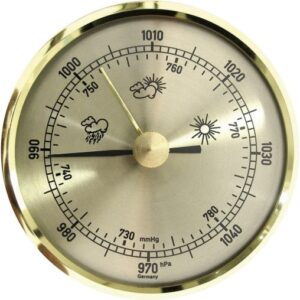
the instrument used to measure wind
Effects of wind include:
i. Wind aids the spread of air-borne diseases e.g. tuberculosis; and death eventually.
ii. Moderate wind velocity promotes good ventilation.
iii. Scares animals producing undesirable levels of growth hormones.
Control Of Wind
i. Shelter
ii. Windbreak
iii. Openings
iv. Building orientation
- Temperature: Effects are temperature are:
i. High temperature causes a reduction in food intake; low temperature encourages more feed intake.
ii. High temperature reduces spermatogenesis and libido in males
iii. High temperature causes heat stress and reduced activity.
iv. It may result in the death of animals; in adult animals e.g birds, young animals e.g chicks and in production animals e.g layers
v. It increases water intake in hot weather and reduces water intake in cold weather.
vi. It is necessary for incubation of eggs
vii. It lowers yield e.g. lower egg production
viii. It affects product storage period under high climatic conditions
ix. High temperature affects the young ones e.g. hatching of eggs is reduced.
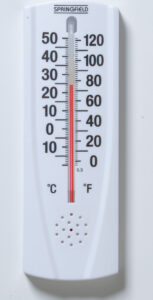
an instrument for measuring temperature
Control Of Heat And Temperature
i. Introduce fans or air conditioners to animal houses.
ii. Provide enough windows or openings for ventilation
iii. Cover windows with cloth materials to conserve heat
iv. Provide vents at the rooftops;
v. Use poor conductors of heat for roofing/sun-reflecting sheets or paint the roof with a reflecting colour e.g. white. Pens should also have ceiling boards under the roof
vi. Use room heaters or lanterns to warm the building when it is cold
- Relative Humidity
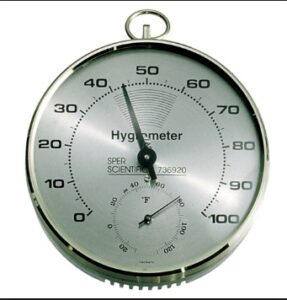
instrument for measuring humidity (hygrometer)
i. It is very important in physiological processes e.g. incubation.
ii. High humidity compounds stress.
iii. Low humidity induces rapid water loss from animal bodies and thus increases their water intake
iv. High humidity encourages the spread of diseases
v. High humidity causes feeds to go mouldy
vi. Causes chilling of young ones
Control Of Humidity
i. Fixing humidifiers or open trays filled with water to increase humidity
ii. Allowing free ventilation when the humidity is high
iii. Avoidance spilling of water to reduce humidity or dampness e.g. in the poultry house
- Light
i. Controls egg laying in hens
ii. Duration of lightning controls time spent at feeding which regulates growth and the rate of feathering, and furring.
iii. Direct light of high intensity causes stress to the eyes
iv. Bright light makes the animals active e.g. birds
v. Light makes objects visible to animals’ eyes
Control Of Light
i. In short daylight, provide extra illumination
ii. There should be openings to promote lighting e.g. use of wire meshing and glass as reasonable parts of building construction.
iii. Cover up windows with dark cloth to reduce light intensity.
EFFECT OF CHANGES IN CLIMATE ON GROWTH
The effect of climate on growth could be economically positive or negative to the farmer in that if they are extreme (excessively hot or cold) animals will not eat well and thus not grow well or more and still not grow well. Other instances include:
- Wind aids the spread of disease.
- High rainfall causes more incidence and multiplication of Tsetse fly and other pest
- High humidity favours mold growth in pens and also in feed which could cause diseases.
A favourable climate should give room for farmers to make optimum gains from their enterprise. To this end, farmers ought to keep things in check such as:
- Installing fans and air conditioners.
- Plan for good ventilation when constructing an animal house
- Used building materials that are poor conductors of heat
- Painting walls of animal house white to reflect sun rays
- Construct farmhouses in an east-west direction
- Use mesh in place of brick walls at some heights
- Install humidifiers or open trays filled with water to increase or reduce humidity.
- And try to control all they can to ensure their investment does not go to waste.
EFFECT OF CHANGES IN CLIMATE ON MILK PRODUCTION
Excess sunlight brings about heat stress, high humidity favours the growth of pathogens, and milk will spoil at a temperature higher than 37°C. All these cause a reduction in milk yield
EFFECT OF CHANGES IN CLIMATE ON EGG PRODUCTION
High temperature reduces shelf life for eggs, hatchability, and feed intake, and decreases in quantity of eggs produced. Light length increases feeding time for birds which may not translate into extra yield.
ASSIGNMENT
- The instrument used to measure the relative humidity is A.thermometer B.anemometer C.hygrometer D.hydrometer
- Which of the climate factors is likely to have the greatest effect on animal production in Nigeria? temperature air movement C. rainfall pressure
- The factors that can predispose animals to diseases include the following except poor housing B. malnutrition C. immunity D. physical injuries
- The effects of high environmental temperature on dairy cows include the following except fever high feed intake high water intake low milk production
- The equatorial rainforest belt is not usually used for cattle production because of the low relative humidity absence of natural grasslands C.incidence of Tsetse flies D.dense vegetation
First Term Agricultural Science Lesson Notes for Other Topics

Preservation of Farm Produce
Explore lesson notes covering all topics.

Factors that may Hinder Preservation
Explore lesson notes covering all topics.
Methods of Preserving the Farm Produce; Sun Drying, Smoking
Explore lesson notes covering all topics.

Preservation of Grains and Cereals Crops
Explore lesson notes covering all topics.

Preservation of Roots and Tubers Crops
Explore lesson notes covering all topics.
Preservation of Fruits: Orange, Banana, Tomatoes, Pawpaw...
Explore lesson notes covering all topics.
Conservation of Oil Crops: Soya Bean, Oil Palm, Groundnut
Explore lesson notes covering all topics.
Preservation of Vegetables
Explore lesson notes covering all topics.

Health And Safety
Explore lesson notes covering all topics.

Procedures For Crop Production
Explore lesson notes covering all topics.
Crop Production
Explore lesson notes covering all topics.

Planting Activities
Explore lesson notes covering all topics.
Post-Planting Activities
Explore lesson notes covering all topics.

Post-Harvesting Activities; Sorting, Grading, And Storage
Explore lesson notes covering all topics.

Harvesting Activities
Explore lesson notes covering all topics.


Lesson Notes for Other Classes

Basic 1 Lesson Note
The complete lesson note to guide your studies.

Basic 2 Lesson Note
The complete lesson note to guide your studies.

Basic 3 Lesson Note
The complete lesson note to guide your studies.

Basic 4 Lesson Note
The complete lesson note to guide your studies.

Basic 5 Lesson Note
The complete lesson note to guide your studies.

Basic 6 Lesson Note
The complete lesson note to guide your studies.