Historical Sites in Nigeria-Nok – JSS1 Nigerian History Lesson Note (Second Term)
Download Lesson NoteLesson note at a glance
- Subject
- Nigerian History
- Class
- JSS1
- Term
- Second Term
- Topic
- Historical Sites in Nigeria-Nok
- Order
- Topic 1 of 3 this term
- Reading time
- 10 min
The Nok culture was one of the earliest known civilisations in Nigeria and West Africa, existing from around 1500 BCE to about 500 CE. It is named after Nok village in present-day Kaduna State. The Nok people are famous for their terracotta (baked clay) sculptures and for early ironworking.
Behavioural objectives
By the end of the lesson, students should be able to:
- Say where and when the Nok culture existed and how it got its name.
- Explain how the Nok culture was discovered.
- Name the major Nok archaeological sites.
- Describe Nok terracotta sculptures and name some important Nok artefacts.
- Describe the occupations, beliefs and social life of the Nok people.
- State why the Nok culture is important and how its artefacts can be protected.
What was the Nok culture?
The Nok culture was one of the earliest known civilisations in Nigeria and West Africa. It existed from around 1500 BCE (Before Common Era) to about 500 CE (Common Era). This ancient culture is named after the village of Nok in present-day Kaduna State, Nigeria, where the first discoveries of its unique artwork were made.
The Nok culture is especially important because it represents one of Africa’s earliest known centres of ironworking and advanced artistic expression. The people of Nok created sophisticated terracotta (baked clay) sculptures that show remarkable skill and creativity. These sculptures have become famous worldwide as important examples of early African art.
The Nok culture flourished in a region that covers parts of present-day central Nigeria, including areas in Kaduna, Plateau, Nasarawa and Benue states. This civilisation existed during what archaeologists call the Early Iron Age, when people were first learning to make and use iron tools in this part of Africa.
How was the Nok culture discovered?
The Nok culture remained unknown to the modern world until 1928, when tin miners made an accidental discovery. While mining for tin near the village of Nok, workers uncovered several unusual terracotta figures buried in the ground. This chance finding eventually led to one of the most important archaeological discoveries in West African history.
Colonel J. Dent Young, a British officer and amateur archaeologist, became aware of these findings and collected some of the terracotta pieces. Later, more systematic archaeological work was done by Bernard Fagg, a British archaeologist who worked in Nigeria. Fagg recognised the importance of these artefacts and began collecting and studying them in the 1940s.
As more discoveries were made, archaeologists realised they had found evidence of a previously unknown ancient civilisation. Since then, hundreds of Nok terracotta sculptures have been uncovered, providing valuable insights into this early Nigerian culture.
What are the major Nok archaeological sites?
Four main archaeological sites have provided most of our knowledge about the Nok culture:
- Nok village in Kaduna State: This is the original site where the first terracotta figures were discovered in 1928. It gave its name to the entire culture and continues to be an important archaeological area.
- Jemaa in Kaduna State: This site has yielded numerous terracotta sculptures and other artefacts that help us understand Nok artistic traditions.
- Taruga in the Federal Capital Territory: Excavations at Taruga have revealed important evidence of early ironworking, including iron smelting furnaces dating back to around 500 BCE. This makes it one of the earliest known ironworking sites in sub-Saharan Africa.
- Katsina Ala in Benue State: This site marks the southern extent of the Nok culture area and has provided additional terracotta figures and artefacts.
Together, these sites and others in the region form what archaeologists call the “Nok Culture Area.” This area covers approximately 30,000 square kilometres (11,600 square miles) in central Nigeria, mainly on the Jos Plateau and in the Benue River valley.
What are Nok terracotta sculptures?
The most famous aspect of the Nok culture is its terracotta sculptures. These sculptures show that the Nok people had developed sophisticated artistic skills thousands of years ago.
Key features of Nok terracotta sculptures include:
- Human figures: Most sculptures represent human figures, often with elaborate hairstyles, jewellery and clothing that provide clues about Nok fashion and social status.
- Distinctive style: Nok figures have a distinctive appearance with triangular or round eyes, perforated pupils and nostrils, and detailed lips. This unique style makes Nok art easily recognisable.
- Size range: The sculptures range from small figurines just a few inches tall to nearly life-sized statues. Many are fragmented, with the heads being the most commonly preserved parts.
- Technical skill: The sculptures show remarkable technical skill. They were made by hand without the use of a potter’s wheel, which makes their refined details even more impressive.
- Variety of subjects: Besides human figures, Nok artists created sculptures of animals, such as elephants and monkeys, as well as figures showing humans riding horses or engaged in various activities.
The terracotta sculptures were created by carefully modelling clay, allowing it to dry, and then firing it at high temperatures to make it hard and durable. This process required significant skill and knowledge of materials. The reddish-orange colour of the sculptures comes from the iron-rich clay and the firing process.
What are the significant Nok artefacts?
Among the many artefacts discovered from the Nok culture, several stand out as particularly important:
- Nok figures: These are complete or nearly complete human figures showing the full body. They typically depict seated or standing people with detailed features and ornamentation.

- Nok heads: Often the best-preserved parts of larger sculptures, these detailed heads show elaborate hairstyles and facial features. The expressive faces with their distinctive eyes and lips are among the most recognisable aspects of Nok art.

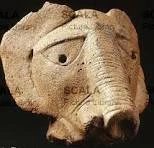
- Elephant head: This rare sculpture shows that Nok artists were skilled at depicting animals as well as humans. It suggests that elephants were important in Nok culture, either practically or symbolically.
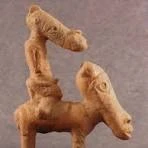
- Man riding a horse: This significant sculpture provides evidence that the Nok people were familiar with horses and horseback riding. This is important for understanding trade connections and transportation in ancient Nigeria.
- Grinding stones: These everyday tools show that the Nok people processed grains as part of their diet. Grinding stones were used to crush grains like millet and sorghum into flour for making food.
- Iron tools from Taruga
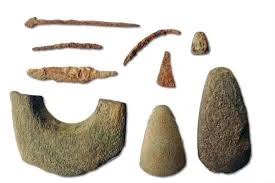
Other artefacts found at Nok sites include iron tools, pottery for everyday use, stone tools, and evidence of structures and settlements. Together, these findings help archaeologists piece together how the Nok people lived.
How did the Nok people live?
Much is not known about the Nok people. From their remains, it can be deduced that they were a group of people who had a good means of livelihood and a good system of government. Archaeological evidence gives us some insights into how they lived.
Farming
The Nok people were primarily farmers. They cultivated crops such as:
- Millet
- Sorghum
- Cowpeas
- Other native grains and vegetables
Farming provided the food base that allowed the Nok culture to develop and sustain itself over many generations. The grinding stones found at Nok sites were used to process these crops into edible forms.
Ironworking
One of the most important technological achievements of the Nok culture was ironworking. The Nok people were among the earliest iron producers in sub-Saharan Africa, with evidence of iron smelting dating back to at least 500 BCE.
Iron production involved several steps:
- Mining iron ore from the ground
- Building clay furnaces that could reach very high temperatures
- Using charcoal as fuel to heat the furnaces
- Smelting the ore to extract the iron
- Forging the iron into tools and weapons
Iron tools gave the Nok people important advantages in farming, hunting and construction. Iron axes, hoes, knives and other tools were stronger and more durable than earlier stone tools.
Pottery making
The famous terracotta sculptures show that the Nok people were highly skilled potters. Besides the artistic terracotta figures, they also made practical pottery for everyday use:
- Cooking pots
- Storage containers
- Serving vessels
This pottery was essential for storing food, cooking meals and carrying water.
Hunting and gathering
While farming was their main food source, the Nok people also hunted animals and gathered wild plants to supplement their diet. Hunting provided meat, hides and bones that could be used for various purposes.
Trade and exchange
The Nok culture likely engaged in trade with neighbouring regions. The presence of certain materials that were not available locally suggests that trade networks existed. The “man riding a horse” sculpture indicates possible connections to North African trade routes, as horses were introduced to West Africa from the north.
What do the sculptures tell us about Nok society and beliefs?
The detailed terracotta sculptures provide some clues about Nok society and beliefs.
Social structure
The variety of hairstyles, ornaments and postures shown in Nok sculptures suggests a society with social differentiation:
- Elaborate hairstyles and jewellery might indicate high status or specific social roles.
- Different poses might represent various occupations or positions in society.
- The resources needed to produce such artwork suggest that some people were specialised artists supported by the wider community.
Religious and ceremonial life
The purpose of the terracotta sculptures remains somewhat mysterious, but many archaeologists believe they had religious or ceremonial significance:
- Some figures may represent ancestors who were honoured in religious practices.
- Others might depict deities or spiritual beings important to Nok beliefs.
- The sculptures may have been used in rituals related to fertility, harvests or other important aspects of life.
The care and skill put into creating these figures suggest they were highly valued and had important cultural meaning.
Why is the Nok culture important?
The Nok culture holds great importance for several reasons.
Early African civilisation
The Nok culture provides clear evidence that complex societies with advanced technologies and artistic traditions existed in West Africa thousands of years ago. This challenges outdated views that sophisticated civilisations did not develop in sub-Saharan Africa before outside contact.
Early ironworking
The Nok people were among the earliest ironworkers in sub-Saharan Africa. Their mastery of iron technology represents a major technological achievement that transformed life in ancient Nigeria.
Artistic achievement
The terracotta sculptures of the Nok culture represent one of Africa’s oldest and most sophisticated artistic traditions. They show remarkable skill and creativity, demonstrating the artistic capabilities of early West African peoples.
Cultural heritage
For modern Nigerians, the Nok culture represents an important part of national heritage and identity. It provides a tangible connection to the deep history of the region and the achievements of ancient Nigerian peoples.
Archaeological importance
Nok sites continue to be valuable for archaeological research. Ongoing studies help improve our understanding of early West African history and the development of technology, art and society in the region.
What challenges affect the preservation of Nok artefacts?
Many Nok artefacts have been lost to illegal excavation and international art trafficking. These important cultural items have been removed from their archaeological context, making it harder for scientists to study them properly and for Nigerians to preserve their heritage.
Efforts are now being made to:
- Better protect known Nok sites
- Properly document and preserve Nok artefacts
- Return looted items to Nigeria
- Educate people about the importance of preserving archaeological heritage
Museums in Nigeria, particularly the National Museum in Jos, play an important role in preserving and displaying Nok artefacts for public education and enjoyment.
Evaluation
- Where did the Nok culture get its name?
- Who made the accidental discovery of the first Nok terracotta figures, and in which year?
- Name the four major Nok archaeological sites.
- List three features of Nok terracotta sculptures.
- State the steps involved in Nok iron production.
Assignment
- Write short notes on any three occupations of the Nok people.
- Give three reasons why the Nok culture is important to Nigerians today.
This term's Nigerian History topics
JSS1 Second Term · 3 topics
- Historical Sites in Nigeria-Nok
- Historical Sites in Nigeria: Ile Ife
- Historical Sites in Nigeria-Benin
Second Term Nigerian History Lesson Notes for Other Topics

The Geography Of Major Towns In Lagos
Read the full lesson note.

The Earliest Settlers Of The Major Towns In Lagos
Read the full lesson note.

Major Towns In Lagos State
Read the full lesson note.

Heroines In Lagos State : Madam Efunroye Tinubu And Others
Read the full lesson note.

Social And Political Development Of The Major Towns In Lagos
Read the full lesson note.

Heroes In Lagos State: Ogunfunminire, Kandido, Da Rocha e.t.c
Read the full lesson note.

Notable Female Nigerian
Read the full lesson note.

Southern Nigerians And Their Nationalist
Read the full lesson note.

Some Nigerian Nationalists -Northern Nigeria
Read the full lesson note.

Some Nigerian Nationalists- Herbert Macaulay
Read the full lesson note.

Nationalist And Nationalism In Nigeria
Read the full lesson note.

State Creation in Nigeria 1967
Read the full lesson note.

State Creation in Nigeria 1976 Till Date
Read the full lesson note.

Federal Capital
Read the full lesson note.

Nigeria's Federal Capital Territories - Federal Capital II
Read the full lesson note.
Lesson Notes for Other Classes

Basic 1 Lesson Note
The complete lesson note to guide your studies.

Basic 2 Lesson Note
The complete lesson note to guide your studies.

Basic 3 Lesson Note
The complete lesson note to guide your studies.

Basic 4 Lesson Note
The complete lesson note to guide your studies.

Basic 5 Lesson Note
The complete lesson note to guide your studies.

Basic 6 Lesson Note
The complete lesson note to guide your studies.