
Federal Capital Basic 4 Nigerian History Lesson Note
Download Lesson NoteTopic: Federal Capital
What is a Federal Capital?
A Federal Capital is:
- The main city of a country
- Where the President lives and works
- Where the National Assembly (law makers) meet
- Where the Supreme Court is located
- The center of government for the whole country
- Where important decisions are made for Nigeria
Think of it as the “headquarters” of Nigeria!
Features of a Federal Capital
- Government Buildings
- Presidential Villa (President’s house and office)
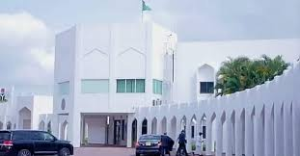
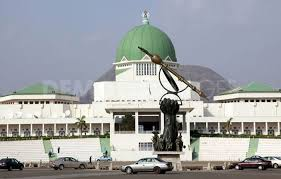
- National Assembly Complex (where senators and representatives meet)
- Supreme Court (highest court in Nigeria)

- Ministries (government departments)
- Central Bank of Nigeria

- Important Institutions
- Foreign embassies (offices of other countries)
- National University and schools
- National Hospital and clinics
- National Museum and libraries
- National Stadium for sports
- Infrastructure
- Good roads and transportation
- Airport for local and international flights
- Modern buildings and offices
- Electricity and water supply
- Communication systems
- Neutral Location
- Does not belong to any particular ethnic group
- Fair to all regions of Nigeria
- Central location easy to reach from anywhere
- Represents the whole country
Areas in Nigeria That Have Been Federal Capital
- Lagos (1960-1991)
When: From Independence in 1960 to 1991
Why Lagos was chosen:
- Already developed city with infrastructure
- Economic center of Nigeria
- Good seaport for international trade
- Had government buildings from colonial times
Problems with Lagos:
- Too crowded and congested
- Belonged to Yoruba people (not neutral)
- Located at the edge of Nigeria (not central)
- Traffic and pollution problems
- Limited space for expansion
- Abuja (1991-Present)
When: From December 12, 1991 till today
Who decided: General Ibrahim Babangida’s government
Why Abuja was chosen:
- Central location in Nigeria
- Neutral territory – doesn’t belong to any ethnic group
- Good climate and environment
- Plenty of space for development
- Strategic location accessible from all regions
Development of Abuja:
- Started planning in the 1970s
- Construction began in the 1980s
- Officially became capital in 1991
- Continuous development still ongoing
Why the Capital Was Moved from Lagos to Abuja
- Central Location
- Lagos was at the far south-west
- Abuja is in the center of Nigeria
- Easier access from all parts of Nigeria
- Fair to all regions
- Neutrality
- Lagos belonged to Yoruba people
- Abuja is neutral – no ethnic ownership
- Reduces ethnic tensions
- Symbol of national unity
- Space for Growth
- Lagos was overcrowded
- Abuja had vast empty land
- Room for modern planning
- Better infrastructure development
- Security Reasons
- Abuja more secure location
- Away from coast (safer from attacks)
- Better for national defense
- Controlled environment
- Administrative Efficiency
- Modern city planning
- Better government facilities
- Improved services
- More organized layout
Abuja Today
Full Name: Federal Capital Territory (FCT)
Status: Not a state but a special territory
Administrator: Minister of FCT (not a governor)
Area Councils: 6 (Abuja Municipal, Gwagwalada, Kuje, Abaji, Kwali, Bwari)
Important Places in Abuja:
- Aso Rock (Presidential Villa)
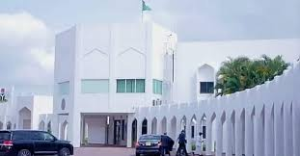
- Three Arms Zone (Presidency, National Assembly, Supreme Court)
- Nnamdi Azikiwe International Airport
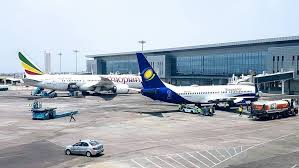
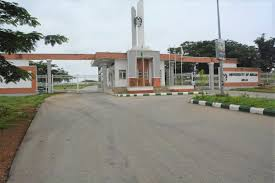
- University of Abuja
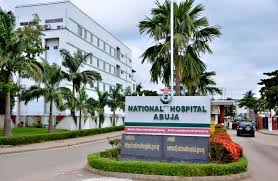
- National Hospital Abuja
Exercises
- Fill in the blanks:
- A Federal Capital is the _______ city of a country
- _______ was Nigeria’s first Federal Capital
- _______ became the Federal Capital in 1991
- The President lives in _______ Villa in Abuja
- True or False:
- Lagos is still Nigeria’s Federal Capital ( )
- Abuja became capital in 1991 ( )
- The Federal Capital belongs to one ethnic group ( )
- General Babangida moved the capital to Abuja ( )
- Match the feature with the capital:
- Good seaport → Lagos
- Central location → Abuja
- Aso Rock → Abuja
- Economic center → Lagos
- Circle the reasons for moving capital to Abuja:
- Central location
- Better beaches
- Neutrality
- More space
- Cooler weather
- Security reasons
- What does FCT stand for?
- a) Federal Capital Town
- b) Federal Capital Territory
- c) Federal Central Territory
- d) Federal Capital State
- Put these in order of when they were Federal Capital:
- ( ) Abuja
- ( ) Lagos
- Complete the timeline:
- Lagos was Federal Capital: _______ to _______
- Abuja became Federal Capital: _______ till _______
- Short Answer:
- What is a Federal Capital?
- Why was Lagos chosen as the first Federal Capital?
- Name 3 reasons why the capital was moved to Abuja
- What is special about Abuja’s location?
- Name these important places:
- Where the President lives: _______
- Where lawmakers meet: _______
- Highest court in Nigeria: _______
- Abuja’s international airport: _______
Answer Key:
- main, Lagos, Abuja, Aso Rock
- False, True, False, True
- Matching as shown above
- Circle: Central location, Neutrality, More space, Security reasons
- b) Federal Capital Territory
- 2, 1 (Lagos first, then Abuja)
- 1960, 1991, 1991, present/today
- Main city where government is located / Already developed with infrastructure / Central location, neutrality, more space / Located in center of Nigeria
- Aso Rock/Presidential Villa, National Assembly, Supreme Court, Nnamdi Azikiwe Airport
Second Term Nigerian History Lesson Notes for Other Topics

The Earliest Settlers Of The Major Towns In Lagos
Explore lesson notes covering all topics.

The Geography Of Major Towns In Lagos
Explore lesson notes covering all topics.

Major Towns In Lagos State
Explore lesson notes covering all topics.
Heroines In Lagos State : Madam Efunroye Tinubu And Others
Explore lesson notes covering all topics.

Social And Political Development Of The Major Towns In Lagos
Explore lesson notes covering all topics.

Heroes In Lagos State: Ogunfunminire, Kandido, Da Rocha e.t.c
Explore lesson notes covering all topics.
Notable Female Nigerian
Explore lesson notes covering all topics.
Southern Nigerians And Their Nationalist
Explore lesson notes covering all topics.
Some Nigerian Nationalists -Northern Nigeria
Explore lesson notes covering all topics.

Some Nigerian Nationalists- Herbert Macaulay
Explore lesson notes covering all topics.

Nationalist And Nationalism In Nigeria
Explore lesson notes covering all topics.
State Creation in Nigeria 1967
Explore lesson notes covering all topics.

State Creation in Nigeria 1976 Till Date
Explore lesson notes covering all topics.
Nigeria's Federal Capital Territories - Federal Capital II
Explore lesson notes covering all topics.

Historical Sites In Nigeria-Benin
Explore lesson notes covering all topics.
Lesson Notes for Other Classes

Basic 1 Lesson Note
The complete lesson note to guide your studies.

Basic 2 Lesson Note
The complete lesson note to guide your studies.

Basic 3 Lesson Note
The complete lesson note to guide your studies.
Basic 5 Lesson Note
The complete lesson note to guide your studies.

Basic 6 Lesson Note
The complete lesson note to guide your studies.

JSS1 Lesson Note
The complete lesson note to guide your studies.