Food Contamination – Basic 5 Home Economics Lesson Note (Third Term)
Download Lesson NoteLesson note at a glance
- Subject
- Home Economics
- Class
- Basic 5
- Term
- Third Term
- Topic
- Food Contamination
- Order
- Topic 4 of 8 this term
- Reading time
- 7 min

Learning objectives
By the end of the lesson, pupils should be able to: i. explain the meaning of food contamination ii. recognize contaminated food iii. examine types of food contamination iv. discuss the risk factor in raw food items
Previous knowledge
Pupils understand food safety and have observed spoiled food.
Lesson content
A. meaning of food contamination
Food contamination occurs when harmful substances or microorganisms get into food, making it unsafe to eat. These contaminants can cause illness, disease, or even death when consumed. Contamination can happen at any stage from food production to consumption.
B. recognizing contaminated food
- Visual Signs of Contamination
- Mold growth – fuzzy, colored patches on food surface
- Color changes – unusual discoloration from normal appearance
- Texture changes – slimy, sticky, or mushy when should be firm
- Visible pests – insects, worms, or droppings on or near food
- Foreign objects – dirt, hair, glass, metal, or other non-food items
- Swelling – canned goods with bulging lids or sides
- Smell Signs of Contamination
- Sour odors – from foods that should not smell sour
- Rotten smells – decomposition odors from spoiled food
- Chemical odors – unusual chemical or metallic smells
- Strong unusual smells – any odor that doesn’t belong to that food type
- No smell when there should be – loss of normal food aroma
- Taste Signs of Contamination
- Sour taste – in foods that should not be sour
- Bitter taste – unusual bitterness in normally sweet or mild foods
- Metallic taste – chemical or metallic flavors
- Off flavors – any taste that seems wrong for that food
- Note: Never taste food if you suspect it’s contaminated
- Physical Signs of Contamination
- Temperature – food that should be cold feels warm
- Texture – unexpected softness, sliminess, or hardness
- Consistency – separation of ingredients that should be mixed
- Packaging damage – torn, punctured, or swollen packages
C. types of food contamination
- Biological Contamination This is contamination by living organisms or their products.
Bacterial Contamination:
- Sources: Raw meat, poultry, eggs, unwashed vegetables, contaminated water
- Examples: Salmonella, E. coli, Staphylococcus
- Effects: Food poisoning, diarrhea, vomiting, fever
- Prevention: Proper cooking, refrigeration, hand washing
Viral Contamination:
- Sources: Infected food handlers, contaminated water, shellfish
- Examples: Hepatitis A, Norovirus
- Effects: Stomach flu, liver problems, severe illness
- Prevention: Good personal hygiene, safe water, proper sanitation
Parasitic Contamination:
- Sources: Undercooked meat, contaminated water, unwashed produce
- Examples: Tapeworms, roundworms, protozoa
- Effects: Intestinal problems, malnutrition, organ damage
- Prevention: Thorough cooking, clean water, washing produce
Fungal Contamination (Mold):
- Sources: Moisture, warm temperatures, poor storage
- Examples: Bread mold, fruit mold, grain mold
- Effects: Allergic reactions, respiratory problems, toxin poisoning
- Prevention: Proper storage, dry conditions, prompt use
- Chemical Contamination This is contamination by harmful chemicals.
Pesticide Contamination:
- Sources: Fruits and vegetables treated with pesticides
- Effects: Nervous system damage, cancer, reproductive problems
- Prevention: Washing produce thoroughly, buying organic when possible
Cleaning Product Contamination:
- Sources: Improper storage, accidental mixing with food
- Effects: Poisoning, chemical burns, organ damage
- Prevention: Separate storage, proper labeling, careful handling
Heavy Metal Contamination:
- Sources: Lead pipes, contaminated soil, industrial pollution
- Examples: Lead, mercury, cadmium
- Effects: Brain damage, kidney problems, developmental delays
- Prevention: Safe water sources, testing, avoiding contaminated areas
Food Additive Contamination:
- Sources: Excessive use of preservatives, colors, flavors
- Effects: Allergic reactions, hyperactivity, long-term health problems
- Prevention: Reading labels, limiting processed foods
- Physical Contamination This is contamination by physical objects that don’t belong in food.
Common Physical Contaminants:
- Glass pieces – from broken containers or windows
- Metal fragments – from equipment, cans, or utensils
- Plastic pieces – from packaging or equipment
- Hair – from food handlers or consumers
- Dirt and stones – from improper washing or processing
- Insects – whole insects or parts in food
- Wood splinters – from wooden utensils or cutting boards
- Jewelry – rings, earrings, or other personal items
Effects of Physical Contamination:
- Choking hazards – especially for children
- Cuts and injuries – from glass or metal pieces
- Broken teeth – from hard objects like stones
- Infection – from contaminated foreign objects
D. risk factors in raw food items
- High-Risk Raw Foods
Raw Meat and Poultry:
- Risk factors: Salmonella, E. coli, Campylobacter bacteria
- Danger level: Very high – can cause severe food poisoning
- Safe handling: Keep refrigerated, cook thoroughly, avoid cross-contamination
- Temperature control: Store below 40°F (4°C), cook to at least 165°F (74°C)
Raw Fish and Seafood:
- Risk factors: Vibrio bacteria, parasites, toxins from pollution
- Danger level: High – especially shellfish from contaminated water
- Safe handling: Buy from reputable sources, keep very cold, cook thoroughly
- Special concerns: Pregnant women and children should avoid raw fish
Raw Eggs:
- Risk factors: Salmonella bacteria inside and outside shell
- Danger level: Moderate to high, especially for vulnerable groups
- Safe handling: Refrigerate promptly, cook until yolks are firm
- Avoid: Raw cookie dough, homemade mayonnaise, raw cake batter
Raw Dairy Products:
- Risk factors: Listeria, Salmonella, E. coli, tuberculosis bacteria
- Danger level: High for unpasteurized products
- Safe handling: Choose pasteurized products, refrigerate properly
- Special risk: Soft cheeses, unpasteurized milk
- Medium-Risk Raw Foods
Raw Fruits and Vegetables:
- Risk factors: E. coli, Salmonella from contaminated water or soil
- Danger level: Moderate – higher for leafy greens and sprouts
- Safe handling: Wash thoroughly under running water, store properly
- Special attention: Sprouts, lettuce, tomatoes, melons
Raw Nuts and Seeds:
- Risk factors: Salmonella, mold toxins
- Danger level: Low to moderate
- Safe handling: Buy from reputable sources, store in dry conditions
- Check for: Rancid smell, mold, insect damage
- Factors That Increase Risk in Raw Foods
Temperature Abuse:
- Danger zone – temperatures between 40°F and 140°F (4°C to 60°C)
- Bacterial growth – doubles every 20 minutes in danger zone
- Time limits – don’t leave raw foods at room temperature over 2 hours
- Cold chain – maintain refrigeration from store to home
Cross-Contamination:
- Raw to cooked – bacteria from raw foods transfer to ready-to-eat foods
- Equipment sharing – same cutting boards, knives, plates for raw and cooked
- Hand contamination – not washing hands between handling different foods
- Storage contamination – raw foods dripping onto other foods
Poor Hygiene:
- Unwashed hands – transferring bacteria from person to food
- Dirty surfaces – contaminated cutting boards and counters
- Contaminated water – using unsafe water for washing or preparation
- Sick food handlers – people with infections handling food
Age and Source:
- Older foods – longer storage increases contamination risk
- Unknown sources – foods from unreliable or unregulated sources
- Wild foods – hunted game, foraged plants, wild mushrooms
- Home-preserved foods – improper canning or preservation methods
E. prevention strategies for raw food contamination
- Safe Purchasing
- Buy from reputable, licensed vendors
- Check expiration dates and packaging integrity
- Choose pasteurized dairy products
- Select fresh-looking produce without damage
- Transport perishables in coolers or insulated bags
- Proper Storage
- Refrigerate perishables promptly
- Store raw meats on bottom shelf of refrigerator
- Use separate containers for different food types
- Label foods with purchase or preparation dates
- Follow “first in, first out” rotation system
- Safe Preparation
- Wash hands thoroughly before and after handling raw foods
- Use separate cutting boards for raw meats and other foods
- Clean and sanitize all surfaces and utensils
- Don’t rinse raw poultry (spreads bacteria)
- Thaw frozen foods safely in refrigerator
- Temperature Control
- Cook raw foods to safe internal temperatures
- Use food thermometer to check doneness
- Don’t leave foods in danger zone temperatures
- Reheat leftovers to 165°F (74°C)
- Keep hot foods hot and cold foods cold
F. special considerations for vulnerable groups
- High-Risk Individuals
- Children under 5 – developing immune systems
- Adults over 65 – weakened immune systems
- Pregnant women – risk to mother and baby
- People with chronic illnesses – diabetes, kidney disease, HIV
- Immunocompromised individuals – cancer patients, organ transplant recipients
- Extra Precautions for High-Risk Groups
- Avoid high-risk raw foods completely
- Be extra careful with food safety practices
- Seek medical attention quickly if food poisoning suspected
- Follow healthcare provider’s specific dietary recommendations
- Consider avoiding restaurant foods during high-risk periods
Practical activity
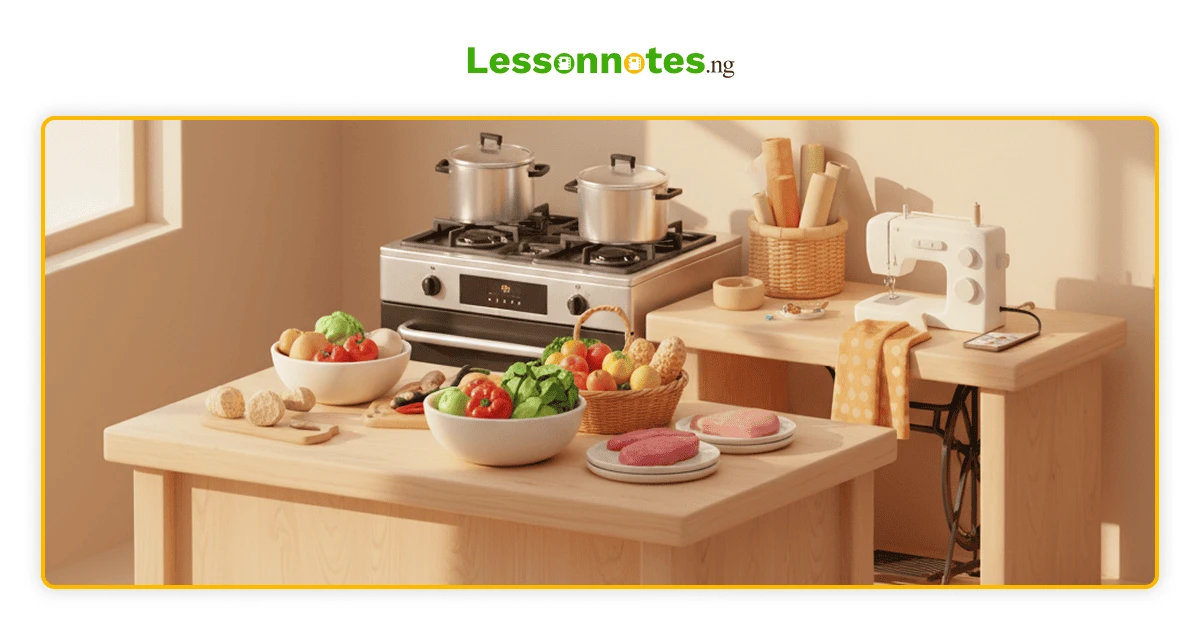
Students will examine food samples to identify signs of contamination and practice safe handling procedures for raw foods.
Teaching AIDS
Examples of contaminated and fresh foods, magnifying glasses for examination, food safety posters, temperature guides
Evaluation questions
- What is food contamination?
- Name 3 types of food contamination with examples
- List 5 signs that food may be contaminated
- Why are raw foods considered high-risk?
- How can we prevent contamination in raw foods?
This term's Home Economics topics
Basic 5 Third Term · 8 topics
Third Term Home Economics Lesson Notes for Other Topics

Home Accidents II
Read the full lesson note.

Home Accidents I
Read the full lesson note.

Marketing of Petroleum Jelly
Read the full lesson note.

Making of Liquid Soap
Read the full lesson note.

How to make Disinfectant Dettol
Read the full lesson note.

Cooking Methods
Read the full lesson note.

Cooking Methods Baking, Roasting, Frying 2
Read the full lesson note.

Cooking Methods Baking, Roasting, Frying
Read the full lesson note.

Cooking Of Food
Read the full lesson note.

Food Safety
Read the full lesson note.

Care Of Personal Belongings
Read the full lesson note.

Uses Of Personal And Family Resources
Read the full lesson note.
Laundry Agent Tools and Equipment
Read the full lesson note.

Basic Stitches - Temporary Stitches
Read the full lesson note.

Snacks and Fruit Drinks
Read the full lesson note.
Lesson Notes for Other Classes

Basic 1 Lesson Note
The complete lesson note to guide your studies.

Basic 2 Lesson Note
The complete lesson note to guide your studies.

Basic 3 Lesson Note
The complete lesson note to guide your studies.

Basic 4 Lesson Note
The complete lesson note to guide your studies.

Basic 6 Lesson Note
The complete lesson note to guide your studies.
JSS1 Lesson Note
The complete lesson note to guide your studies.