Cooking Methods – Basic 5 Home Economics Lesson Note (Third Term)
Download Lesson NoteLesson note at a glance
- Subject
- Home Economics
- Class
- Basic 5
- Term
- Third Term
- Topic
- Cooking Methods
- Order
- Topic 8 of 8 this term
- Reading time
- 6 min
Learning objectives
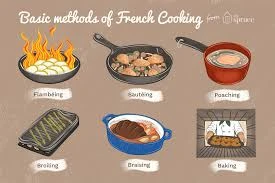
By the end of the lesson, pupils should be able to: i. experiment each method of cooking ii. evaluate the outcome of each cooking method iii. recommend method of cooking suitable for particular food
Previous knowledge
Pupils understand different cooking methods and their characteristics from previous lessons.
Lesson content
A. experimental approach to cooking methods
- Setting Up Cooking Experiments
Controlled Variables:
- Same food item: Use identical pieces of the same food (e.g., chicken pieces, potato slices)
- Same seasoning: Apply identical seasonings to all test pieces
- Same cooking time: Cook for equal time periods when possible
- Same temperature: Use comparable temperatures across methods
- Same portion size: Ensure all test pieces are similar size
Variable to Test:
- Cooking method: The only thing that changes between samples
- Different techniques: Baking vs. roasting vs. frying the same food
- Safety Considerations for Experiments
- Adult supervision: Always have teacher or adult present
- Safety equipment: Use appropriate protective gear
- Clean workspace: Maintain sanitary conditions
- Proper tools: Use correct equipment for each method
- Emergency procedures: Know what to do if accidents occur
B. experimental procedures
- Experiment 1: Potato Cooking Methods
Materials Needed:
- 3 medium potatoes of similar size
- Salt and pepper for seasoning
- Oil for frying
- Oven for baking and roasting
- Frying pan for frying
- Timer and thermometer
Procedure: Preparation:
- Wash and peel all potatoes
- Cut into similar-sized pieces (about 2-inch cubes)
- Season all pieces equally with salt and pepper
- Preheat oven to 400°F (200°C)
Baking Method:
- Place potato pieces on baking sheet
- Bake for 25-30 minutes
- Turn once halfway through
- Check for doneness with fork
Roasting Method:
- Place potato pieces in roasting pan
- Add small amount of oil
- Roast at 425°F (220°C) for 25-30 minutes
- Turn occasionally for even browning
Frying Method:
- Heat oil in frying pan to 350°F (175°C)
- Fry potato pieces for 8-10 minutes
- Turn frequently for even cooking
- Drain on paper towels
- Experiment 2: Chicken Cooking Methods
Materials Needed:
- 3 similar chicken breast pieces
- Seasoning (salt, pepper, herbs)
- Oil for frying
- Meat thermometer
- Oven and frying pan
Procedure: Preparation:
- Clean and trim chicken pieces to similar size
- Season all pieces identically
- Let stand for 10 minutes to absorb seasoning
Baking Method:
- Place in baking dish
- Bake at 375°F (190°C) for 25-30 minutes
- Check internal temperature reaches 165°F (74°C)
Roasting Method:
- Place on roasting rack
- Roast at 400°F (200°C) for 20-25 minutes
- Baste once during cooking
- Check internal temperature
Frying Method:
- Heat oil to 350°F (175°C)
- Fry for 6-8 minutes per side
- Check internal temperature reaches 165°F (74°C)
C. evaluation criteria and methods
- Sensory Evaluation
Appearance Assessment:
- Color: Rate golden brown development (1-5 scale)
- Surface texture: Evaluate crispiness or softness
- Overall visual appeal: How appetizing does it look?
- Uniformity: How evenly cooked does it appear?
Texture Evaluation:
- Exterior texture: Crispy, soft, chewy, tough
- Interior texture: Tender, moist, dry, fluffy
- Contrast: Difference between outside and inside texture
- Mouthfeel: How does it feel when chewing?
Flavor Assessment:
- Taste intensity: Mild, moderate, strong
- Flavor quality: Natural, enhanced, altered
- Seasoning distribution: Even or uneven
- Overall palatability: How good does it taste?
Aroma Evaluation:
- Cooking aroma: Pleasant, strong, weak
- Final aroma: Appetizing, neutral, off-putting
- Flavor indication: Does smell match taste?
- Objective Measurements
Temperature Measurements:
- Internal temperature: Use meat thermometer for accuracy
- Surface temperature: Measure with infrared thermometer
- Serving temperature: Ideal temperature for eating
Texture Measurements:
- Firmness test: Gentle pressure with fork or finger
- Moisture content: Visual and tactile assessment
- Structural integrity: Does food hold together well?
Time and Efficiency:
- Total cooking time: From start to finish
- Active cooking time: Time requiring attention
- Energy usage: Estimate based on equipment and time
- Preparation ease: How difficult was the process?
- Nutritional Considerations
Fat Content Assessment:
- Added fat: How much oil was absorbed or added?
- Visual fat content: Oil visible on surface or interior
- Healthiness rating: Subjective health assessment
Nutrient Retention:
- Color preservation: Indicator of vitamin retention
- Texture maintenance: Sign of nutrient preservation
- Moisture retention: Important for water-soluble vitamins
D. evaluation results and analysis
- Expected Results for Potato Experiment
Baking Results:
- Appearance: Evenly golden, somewhat dry surface
- Texture: Fluffy interior, soft exterior
- Flavor: Natural potato taste, mild
- Time: 25-30 minutes
- Health: Lowest fat content
Roasting Results:
- Appearance: Deep golden brown, attractive
- Texture: Crispy exterior, fluffy interior
- Flavor: Rich, concentrated potato flavor
- Time: 25-30 minutes
- Health: Moderate fat content
Frying Results:
- Appearance: Golden brown, glossy surface
- Texture: Very crispy exterior, soft interior
- Flavor: Rich, oil-enhanced flavor
- Time: 8-10 minutes
- Health: Highest fat content
- Expected Results for Chicken Experiment
Baking Results:
- Appearance: Pale golden, moist appearance
- Texture: Tender, moist throughout
- Flavor: Natural chicken flavor preserved
- Time: 25-30 minutes
- Health: No added fat
Roasting Results:
- Appearance: Golden brown, appetizing
- Texture: Slightly crispy skin, moist interior
- Flavor: Enhanced, concentrated chicken flavor
- Time: 20-25 minutes
- Health: Minimal added fat
Frying Results:
- Appearance: Deep golden brown, glossy
- Texture: Very crispy exterior, tender interior
- Flavor: Rich, complex flavors
- Time: 12-16 minutes total
- Health: Significant added fat
E. making recommendations
- Food-Specific Recommendations Based on Experiments
For Potatoes:
- Best for health: Baking (no added fat, natural flavors)
- Best for flavor: Roasting (good balance of taste and health)
- Best for speed: Frying (fastest cooking time)
- Best for texture contrast: Roasting or frying (crispy outside, fluffy inside)
- Overall recommendation: Roasting for best balance of all factors
For Chicken:
- Best for health: Baking (retains moisture without added fat)
- Best for presentation: Roasting (attractive appearance)
- Best for speed: Frying (quickest cooking method)
- Best for flavor: Roasting (good flavor development)
- Overall recommendation: Roasting for most situations, baking for health focus
- Situational Recommendations
Quick Weekday Meals:
- First choice: Frying (fastest results)
- Consideration: Pre-cut foods into smaller pieces for even faster cooking
- Health modification: Use minimal oil, drain well
Weekend Family Meals:
- First choice: Roasting (impressive results, good flavors)
- Consideration: Start early to allow proper cooking time
- Variation: Combine with baked side dishes
Health-Conscious Cooking:
- First choice: Baking (lowest fat addition)
- Enhancement: Use herbs and spices for flavor
- Modification: Light roasting with minimal oil
Special Occasions:
- First choice: Roasting (best presentation and flavor)
- Planning: Allow extra time for proper cooking
- Enhancement: Use premium ingredients and careful seasoning
- General Recommendation Framework
Decision Priority Ranking:
- Safety first: Always ensure food reaches safe internal temperatures
- Time available: Choose method that fits available time
- Health goals: Consider nutritional impact of method choice
- Equipment available: Work with tools and appliances on hand
- Desired outcome: Match method to expected results
- Skill level: Choose method within cook’s ability level
Method Selection Guide:
- When time is limited: Frying
- When health is priority: Baking
- When flavor is key: Roasting
- When cooking for many: Baking (large capacity)
- When learning to cook: Start with baking (most forgiving)
F. practical application of results
- Creating Personal Cooking Guidelines Students should develop their own cooking method preferences based on:
- Family preferences: What does family enjoy most?
- Available equipment: What tools are accessible at home?
- Time constraints: What fits into daily schedule?
- Health goals: What supports family’s health objectives?
- Menu Planning Applications
- Daily meals: Use quick methods for busy days
- Weekly meal prep: Use efficient methods for batch cooking
- Special occasions: Choose methods that create impressive results
- Seasonal adjustments: Adapt methods to weather and available ingredients
Practical activity
Students will conduct simplified cooking experiments, observe and record results, then make recommendations for different cooking scenarios.
Teaching AIDS
Cooking equipment for demonstrations, evaluation sheets, thermometers, timers, comparison charts
Evaluation questions
- What factors should you evaluate when comparing cooking methods?
- Based on experiments, which method would you recommend for cooking chicken quickly while maintaining health benefits?
- How do you measure the success of a cooking method?
- What cooking method would you choose for a family dinner and why?
- Create a recommendation for cooking potatoes for different situations (quick snack, healthy meal, special occasion)
This term's Home Economics topics
Basic 5 Third Term · 8 topics
Third Term Home Economics Lesson Notes for Other Topics

Home Accidents II
Read the full lesson note.

Home Accidents I
Read the full lesson note.

Marketing of Petroleum Jelly
Read the full lesson note.

Making of Liquid Soap
Read the full lesson note.

How to make Disinfectant Dettol
Read the full lesson note.
Cooking Methods Baking, Roasting, Frying 2
Read the full lesson note.
Cooking Methods Baking, Roasting, Frying
Read the full lesson note.

Cooking Of Food
Read the full lesson note.
Food Contamination
Read the full lesson note.

Food Safety
Read the full lesson note.

Care Of Personal Belongings
Read the full lesson note.

Uses Of Personal And Family Resources
Read the full lesson note.
Laundry Agent Tools and Equipment
Read the full lesson note.

Basic Stitches - Temporary Stitches
Read the full lesson note.

Snacks and Fruit Drinks
Read the full lesson note.
Lesson Notes for Other Classes

Basic 1 Lesson Note
The complete lesson note to guide your studies.
Basic 2 Lesson Note
The complete lesson note to guide your studies.

Basic 3 Lesson Note
The complete lesson note to guide your studies.

Basic 4 Lesson Note
The complete lesson note to guide your studies.

Basic 6 Lesson Note
The complete lesson note to guide your studies.

JSS1 Lesson Note
The complete lesson note to guide your studies.