Supplementary Reading: Poetry – Basic 2 English Lesson Note (Second Term)
Download Lesson NoteLesson note at a glance
- Subject
- English Studies
- Class
- Basic 2
- Term
- Second Term
- Topic
- Supplementary Reading: Poetry
- Order
- Topic 23 of 32 this term
- Reading time
- 9 min
Learning Objectives
By the end of the lesson, pupils should be able to:
- Share with other pupils the poems read
- Discuss lessons learnt from the poems
- Relate events in the poems to their personal lives
Content
What is Poetry?
Poetry is a special kind of writing that uses beautiful words, rhythm, and often rhymes to express feelings, tell stories, or paint pictures with words. Poems are like songs without music – they have a special beat and flow.
Why Do We Read Poetry?
- To enjoy beautiful language – Poets choose words carefully
- To learn about feelings – Poems express emotions well
- To use our imagination – Poems create pictures in our minds
- To hear rhythm and music – Poems have a special beat
- To learn lessons – Many poems teach us important things
- To connect with others – Poems share human experiences
Poem 1: “My Family Tree”
In my family tree so tall and wide,
Are people I love who stand by my side.
My mother is strong like the trunk so true,
My father gives shade when skies are blue.
My sister is like a dancing leaf,
My brother brings joy and sweet relief.
Grandma and Grandpa are roots below,
They help our family love to grow.
Like branches reaching for the sky,
We help each other reach up high.
In storms or sunshine, rain or snow,
Together our family love will grow.
Understanding “My Family Tree”
Main Theme: Family love and support
Metaphor Explanation:
- Family = Tree – Families are like trees with different parts
- Parents = Trunk – Strong foundation of the family
- Children = Leaves/Branches – Growing and reaching up
- Grandparents = Roots – Foundation and history of family
Vocabulary Words:
- trunk – main stem of a tree; strong center
- shade – cool area under tree; protection
- relief – feeling better; comfort
- branches – parts of tree that grow out from trunk
- storms – bad weather; difficult times
Lessons from the Poem:
Family members support each other – like parts of a tree working together
Everyone has a special role – mother, father, children,
Everyone has a special role – mother, father, children, grandparents all contribute
Love helps families grow strong – just like water and sunlight help trees grow
Families stay together through good and bad times – “storms or sunshine”
Older generations provide wisdom – grandparents are the roots with deep knowledge
Personal Connection Questions:
- How is your family like a tree?
- Who in your family is like the strong trunk?
- What “storms” has your family weathered together?
- How do you help your family “grow”?
Poem 2: “The Little Seed”
A little seed fell to the ground one day,
So small and brown in every way.
It wondered if it could ever be
Something as grand as a mighty tree.
The rain came down with gentle drops,
The sun shone bright from way up tops.
The little seed began to grow,
First its roots went down below.
A tiny green shoot pushed up high,
Reaching toward the bright blue sky.
Day by day it grew much more,
Taller than it was before.
Now the tree stands proud and tall,
Giving shade and joy to all.
From one small seed, so much can grow,
This is something we should know.
Understanding “The Little Seed”
Main Theme: Growth, potential, and perseverance
Story Sequence:
- Beginning: Small seed falls to ground, feels uncertain
- Middle: Rain and sun help seed start growing
- Development: Roots grow down, shoot grows up
- End: Seed becomes tall tree that helps others
Vocabulary Words:
- mighty – very strong and powerful
- gentle – soft and kind
- shoot – new growth from a plant
- perseverance – not giving up, keeping trying
- potential – ability to become something great
Lessons from the Poem:
- Small beginnings can lead to great things – even tiny seeds become big trees
- Growth takes time and patience – trees don’t grow overnight
- We need help to grow – seed needed rain and sunshine
- Everyone has potential – the seed doubted itself but became great
- When we grow strong, we can help others – tree gives shade to others
Personal Connection Questions:
- How are you like the little seed?
- What helps you “grow” as a person? (family, teachers, friends)
- What did you used to doubt about yourself?
- How can you help others when you grow up?
Poem 3: “Kindness Matters”
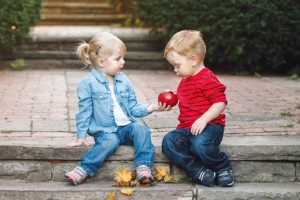
A smile can brighten someone’s day,
Kind words can chase the clouds away.
When someone falls, we help them stand,
We offer them our helping hand.
Sharing toys and sharing snacks,
Helping friends who need us back.
When we’re kind to those around,
Happiness is always found.
Like a pebble in a pond,
Kindness spreads to those beyond.
Every act of love we do
Comes back to me and comes back to you.
So let us choose to be kind each day,
In every word and every way.
The world becomes a better place
When kindness shows in every face.
Understanding “Kindness Matters”
Main Theme: The power and importance of kindness
Metaphor Explanation:
- Smile brightening day – kindness makes people feel better
- Kind words chase clouds away – good words remove sadness
- Pebble in pond – kindness spreads outward like ripples in water
Vocabulary Words:
- brighten – make lighter or happier
- chase away – make something go away
- pebble – small, smooth stone
- ripples – circles that spread out in water
- beyond – farther than; to other places
Examples of Kindness from the Poem:
- Smiling at others
- Saying kind words
- Helping someone who falls
- Offering a helping hand
- Sharing toys and snacks
- Being there for friends
Lessons from the Poem:
- Small acts of kindness make big differences – even a smile matters
- Kindness spreads to others – like ripples in water
- What we give comes back to us – kindness returns to kind people
- We can choose to be kind – kindness is a decision we make
- Kindness makes the world better – everyone benefits
Personal Connection Questions:
- When has someone’s kindness made your day better?
- How do you show kindness at school? At home?
- Have you seen kindness “spread” like ripples?
- How does it feel when you help someone?
Poem 4: “The Brave Little Mouse”
In a corner of the house so neat,
Lived a mouse with tiny feet.
All the other mice would say,
“You’re too small to save the day.”
But when the cat came creeping near,
And all the mice were filled with fear,
The little mouse stood brave and true,
“I know exactly what to do!”
He rang the bell with all his might,
Which woke the dog up in the night.
The dog chased the cat away so far,
Now all the mice think he’s a star.
“Size doesn’t matter,” said the mouse,
“Courage lives in every house.
No matter if you’re big or small,
Brave hearts can overcome it all.”
Understanding “The Brave Little Mouse”
Main Theme: Courage comes in all sizes; being brave despite being small
Story Elements:
- Character: Little mouse who others think is too small
- Problem: Dangerous cat threatens all the mice
- Solution: Mouse uses cleverness and courage to save everyone
- Lesson: Size doesn’t determine bravery
Vocabulary Words:
- creeping – moving slowly and quietly
- courage – bravery; not being afraid to do the right thing
- overcome – to defeat or succeed despite difficulties
- might – strength or power
Lessons from the Poem:
- Don’t judge by size or appearance – small mouse was the hero
- Courage is more important than size – bravery comes from the heart
- Everyone has something valuable to offer – even the “smallest” can help
- Use your brain along with your bravery – mouse was clever, not just brave
- Stand up for others even when you’re scared – mouse saved all the other mice
Personal Connection Questions:
- Have you ever felt “too small” to help?
- When have you been brave despite being scared?
- How can you use your cleverness to solve problems?
- Who in your life is like the brave little mouse?
Poetry Reading and Sharing Activities
Activity 1: Choral Reading
All students read poems together:
- Benefits: Builds confidence, improves rhythm, creates unity
- Method: Teacher leads, students follow the rhythm and expression
- Focus: Clear pronunciation, appropriate pace, emotional expression
Activity 2: Individual Recitation
Students take turns reading poems aloud:
- Skills Developed: Confidence, clear speech, interpretation
- Preparation: Practice at home, understand meaning first
- Performance Tips: Stand straight, speak clearly, show emotion
Activity 3: Poetry Circle Sharing
Students sit in circle and share favorite lines:
- “My favorite line is… because…”
- “This reminds me of…”
- “I like how the poet said…”
- “This makes me feel…”
Activity 4: Illustration and Poetry
Students draw pictures to match poems:
- Draw family tree with family members as different parts
- Illustrate the journey from seed to tree
- Show acts of kindness in pictures
- Draw the brave mouse story sequence
Connecting Poems to Personal Life
Discussion Prompts for “My Family Tree”
- Draw your own family tree – Who are the different parts?
- Share family traditions – How does your family stay connected?
- Discuss family roles – How does each person contribute?
- Weather the storms together – How does your family handle difficult times?
Discussion Prompts for “The Little Seed”
- Personal growth stories – How have you grown or changed?
- Dreams and goals – What do you want to become when you grow up?
- Patience with growth – What are you learning that takes time?
- Helping others grow – How do you encourage friends or siblings?
Discussion Prompts for “Kindness Matters”
- Acts of kindness experienced – When has someone been kind to you?
- Kindness in action – How do you show kindness daily?
- Spreading kindness – Have you seen kindness “ripple” to others?
- Making a difference – How can we make our school/community kinder?
Discussion Prompts for “The Brave Little Mouse”
- Times you’ve been brave – When have you done something scary but right?
- Overcoming challenges – What difficulties have you faced and overcome?
- Being underestimated – When has someone thought you couldn’t do something?
- Helping others – How have you stood up for friends or family?
Learning Lessons from Poetry
Poem Lessons Summary Table
| Poem | Main Lesson | How to Apply |
| My Family Tree | Family support is important | Appreciate and help family members |
| The Little Seed | Everyone has potential to grow | Be patient with yourself, keep trying |
| Kindness Matters | Small acts of kindness matter | Choose to be kind every day |
| The Brave Little Mouse | Courage comes in all sizes | Stand up for what’s right, regardless of size |
Creative Response Activities
Activity 1: Write Your Own Family Poem Using “My Family Tree” as inspiration:
In my family ____________,
Are people who ____________.
My _______ is like ______,
My _______ brings ______.
Activity 2: Create a Kindness Chain
- Each student writes one act of kindness on a paper strip
- Link strips together to show how kindness connects us all
- Display in classroom as reminder
Activity 3: Growth Journal
- Students write about something they want to grow in (like the seed)
- Include what “sunshine and rain” (help) they need
- Check progress weekly
Activity 4: Courage Stories
- Students share or write about times they were brave
- Discuss how being brave helped others
- Create a class book of courage stories
Poetry Performance and Presentation
Tips for Reading Poetry Aloud
- Understand the meaning first – know what the poem is about
- Practice pronunciation – be clear with difficult words
- Use appropriate pace – not too fast, not too slow
- Show emotion – let your voice express the feeling
- Make eye contact – connect with your audience
- Use gestures – simple hand movements can enhance meaning
Poetry Presentation Ideas
- Costume simple characters – mouse ears for “Brave Little Mouse”
- Use props – toy trees for “Family Tree,” seeds for “Little Seed”
- Create background music – simple rhythm with hands or instruments
- Group performances – different students read different verses
This term's English Studies topics
Basic 2 Second Term · 32 topics
- Reading on Effects of Harmful Herbal Medicine
- Introducing Individuals Using (I Am, You Are, My Name Is, We Are, This Is My, Etc.)
- Grammar: Nouns
- Oral and Written Comprehension Passage
- Spelling: Four Letter Words (Tail, Food, Root, Four, Pink, Etc.)
- Supplementary Reading: Poetry
- Fluency Reading
- Oral Composition: My School
- Grammar: Using Pronouns in Sentences (My, His, Her, Our, Their, Yours, Etc.)
- Supplementary Reading: A Play
- Oral and Written Comprehension
Second Term English Studies Lesson Notes for Other Topics
Vocabulary: Basic Word Categories
Read the full lesson note.
Reading: Poem Recitation
Read the full lesson note.

Writing: Six Letter Words
Read the full lesson note.

Phonics: Pronunciation Practice III
Read the full lesson note.

Vocabulary: Synonyms, Antonyms & Homonyms
Read the full lesson note.
Reading: Simple Text & Questions
Read the full lesson note.
Writing: Making Strokes to Form Letters
Read the full lesson note.

Phonics: M-P Words Pronunciation
Read the full lesson note.
Structure: Asking Questions
Read the full lesson note.

Vocabulary: New Words IV
Read the full lesson note.
Reading: Simple Text & Questions
Read the full lesson note.
Writing: (Complete Sentences Using M-P Words)
Read the full lesson note.
Supplementary Reading: Parts of a Book
Read the full lesson note.
Structure: Further Practice on Asking Questions
Read the full lesson note.
Vocabulary: New Words V
Read the full lesson note.
Lesson Notes for Other Classes

Basic 1 Lesson Note
The complete lesson note to guide your studies.

Basic 3 Lesson Note
The complete lesson note to guide your studies.

Basic 4 Lesson Note
The complete lesson note to guide your studies.

Basic 5 Lesson Note
The complete lesson note to guide your studies.

Basic 6 Lesson Note
The complete lesson note to guide your studies.
JSS1 Lesson Note
The complete lesson note to guide your studies.