Oral and Written Comprehension Passage – Basic 2 English Lesson Note (Second Term)
Download Lesson NoteLesson note at a glance
- Subject
- English Studies
- Class
- Basic 2
- Term
- Second Term
- Topic
- Oral and Written Comprehension Passage
- Order
- Topic 21 of 32 this term
- Reading time
- 7 min
Learning Objectives
By the end of the lesson, pupils should be able to:
- Examine and label pictures in the given passage
- List and identify comprehension strategies in the given passage
- Apply comprehension strategies to the given passage
Content
Comprehension Passage: “The Village Market Day”
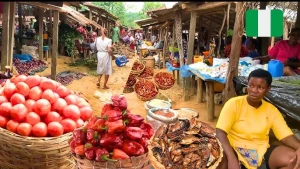
Every Saturday morning, the village of Ojota comes alive with the sounds and colors of market day. People from neighboring villages travel by bus, bicycle, and on foot to sell their goods and buy what they need for the week.
Mama Kemi arrives early with her fresh vegetables. She carefully arranges bright red tomatoes, green peppers, and purple eggplants on her wooden table. The colorful display attracts many customers who come to buy ingredients for their family meals.
Near Mama Kemi’s stall, Baba Tunde spreads out beautiful traditional fabrics. The cloths have patterns in blue, yellow, and red – the colors that represent different Nigerian cultures. Women examine the fabrics carefully, feeling the texture and imagining the lovely dresses they will make.
In the center of the market, children gather around the sweet vendor who sells roasted groundnuts, coconut candy, and cold drinks. Their excited voices mix with the calls of traders announcing their goods: “Fresh fish! Fresh fish!” and “Sweet oranges! Very sweet!”
Young Adunni helps her mother sell clay pots and bowls. She learns how to count money and speak politely to customers. “Good morning, madam. These pots are made by my grandmother. They cook rice perfectly and last for many years,” she says with a proud smile.
As the sun climbs higher in the sky, more people arrive. The narrow paths between stalls become crowded with shoppers carrying baskets and bags. The air fills with the aroma of spices, fried plantains, and fresh bread from the bakery.
An old storyteller sits under a large mango tree, surrounded by curious children. He tells ancient tales about brave warriors and clever animals while their parents shop nearby. His weathered hands move dramatically as he describes exciting adventures.
By midday, most people have finished their shopping. Traders begin packing their remaining goods, and the busy market slowly becomes quiet again. But everyone knows that next Saturday, the village will once again transform into this wonderful, bustling marketplace.
Market day brings the community together, creating friendships, sharing news, and keeping traditions alive. It is much more than just buying and selling – it is the heartbeat of village life.
Picture Analysis and Labeling
Picture 1: Market Overview Labels to Add:
- People: vendors, customers, children, elderly people
- Objects: stalls, tables, baskets, goods, money
- Buildings: shops, storage areas, shade structures
- Transportation: bicycles, buses, motorcycles
- Activities: selling, buying, talking, walking
Picture 2: Vegetable Stall Labels to Add:
- Vegetables: tomatoes, peppers, eggplants, onions
- People: Mama Kemi (vendor), customers
- Objects: wooden table, scales, money box, bags
- Colors: red tomatoes, green peppers, purple eggplants
- Actions: arranging, selecting, weighing, paying
Picture 3: Fabric Section Labels to Add:
- Items: traditional fabrics, patterns, colors
- People: Baba Tunde, women customers
- Actions: examining, feeling, choosing, negotiating
- Details: blue fabric, yellow designs, red patterns
Picture 4: Children’s Area Labels to Add:
- People: children, sweet vendor, storyteller
- Food: groundnuts, candy, drinks, snacks
- Activities: listening, eating, laughing, learning
- Setting: under mango tree, gathering circle
Comprehension Strategies Application
Strategy 1: PREVIEWING
Before Reading:
- Title Analysis: “The Village Market Day” suggests a story about community and commerce
- Predict Content: Likely about people selling and buying things in a traditional market
- Prior Knowledge: What do I know about markets? Have I been to one?
- Picture Clues: Look at illustrations to predict story content
Strategy 2: VOCABULARY STRATEGIES
New/Difficult Words from Passage:
aroma – pleasant smell
- Context Clues: “fills with the aroma of spices, fried plantains”
- Strategy: Picture smells of food cooking
texture – how something feels when touched
- Context Clues: “feeling the texture” of fabrics
- Strategy: Think about touching different materials
vendor – person who sells things
- Context Clues: “sweet vendor who sells roasted groundnuts”
- Strategy: Someone who “vends” or sells
bustling – very busy and full of activity
- Context Clues: “wonderful, bustling marketplace”
- Strategy: Picture lots of people moving around
weathered – worn by weather and age
- Context Clues: describing old storyteller’s “weathered hands”
- Strategy: Think of things left outside for long time
Strategy 3: QUESTIONING WHILE READING
Questions to Ask:
- Who: Who are the main people in this market?
- What: What items are being sold?
- Where: Where does this market take place?
- When: When does the market happen?
- Why: Why is market day important to the village?
- How: How do people get to the market?
Strategy 4: MAKING CONNECTIONS
Text-to-Self Connections:
- Have I ever been to a market like this?
- What markets or stores do I visit with my family?
- Do I help my parents when they shop?
Text-to-World Connections:
- How are markets important in communities?
- What role do markets play in Nigerian culture?
- How do markets bring people together?
Strategy 5: VISUALIZATION
Creating Mental Pictures:
- Visual Details: Bright colored vegetables, patterned fabrics, crowded pathways
- Sound Details: Voices calling, children laughing, general noise
- Smell Details: Spices, fried food, fresh bread
- Activity Details: People moving, examining goods, counting money
Strategy 6: SUMMARIZING
Main Ideas:
- Saturday is market day in Ojota village
- Many vendors sell different items (vegetables, fabrics, sweets)
- People come from neighboring villages to shop
- Children learn by helping and listening to stories
- Market brings community together
Story Structure:
- Beginning: Market day starts, people arrive
- Middle: Description of different vendors and activities
- End: Market day ends, but will happen again next week
Strategy 7: INFERENCING
Reading Between the Lines:
- Mama Kemi arrives early → She wants the best spot and fresh goods
- Children gather around storyteller → They enjoy traditional tales
- Adunni learns to count money → Parents teach children through work
- Market becomes quiet by midday → People finish shopping when it gets hot
Detailed Comprehension Questions
Literal Comprehension (Information Directly Stated)
- What day of the week is market day? Answer: Saturday
- Name three types of vegetables Mama Kemi sells. Answer: Tomatoes, peppers, and eggplants
- What does Baba Tunde sell? Answer: Traditional fabrics with patterns
- Where does the storyteller sit? Answer: Under a large mango tree
- What time of day do people finish shopping? Answer: By midday
Inferential Comprehension (Reading Between the Lines)
- Why do you think Mama Kemi arrives early? Possible answers: To get the best location, to set up properly, to catch early customers
- How do you think Adunni feels about helping her mother? Evidence: “she says with a proud smile” Answer: Proud and happy to help
- Why do children listen to the storyteller? Answer: They enjoy the stories and it entertains them while parents shop
- What makes this market special compared to regular stores? Answer: It brings community together, keeps traditions alive, allows personal interaction
Critical Comprehension (Thinking and Evaluating)
- Do you think market day is important for the village? Why? Answer: Yes, because it brings people together, helps economy, preserves culture
- What are the advantages of shopping at this traditional market? Possible answers: Fresh goods, personal service, community connection, cultural experience
- How does this market help children learn? Answer: They learn about money, customer service, traditional stories, and community values
- What might happen if there was no market day? Answer: Less community connection, people would travel farther to shop, traditions might be lost
Applying Comprehension Strategies – Student Practice
Practice Activity 1: Strategy Identification
Read this sentence and identify which comprehension strategy you would use:
“The narrow paths between stalls become crowded with shoppers carrying baskets and bags.”
Strategies you could use:
- Visualization: Picture crowded pathways in your mind
- Context Clues: Use “crowded” and “carrying” to understand the busy scene
- Connection: Think about times you’ve been in crowded places
Practice Activity 2: Question Generation
Create your own questions about this sentence: “Young Adunni helps her mother sell clay pots and bowls.”
Student Questions:
- Who is Adunni?
- How old might Adunni be?
- Why is she helping her mother?
- What are clay pots used for?
- How does helping teach her important skills?
Practice Activity 3: Making Predictions
After reading the first paragraph, predict what might happen next: Prediction: The passage will describe different vendors and what they sell, showing the variety and excitement of market day.
Check: Was your prediction correct after reading the whole passage?
This term's English Studies topics
Basic 2 Second Term · 32 topics
- Vocabulary Building: New Words and Reading
- Literature: Rhyming Words
- Reading on Effects of Harmful Herbal Medicine
- Introducing Individuals Using (I Am, You Are, My Name Is, We Are, This Is My, Etc.)
- Grammar: Nouns
- Oral and Written Comprehension Passage
- Spelling: Four Letter Words (Tail, Food, Root, Four, Pink, Etc.)
- Supplementary Reading: Poetry
- Fluency Reading
- Oral Composition: My School
- Grammar: Using Pronouns in Sentences (My, His, Her, Our, Their, Yours, Etc.)
Second Term English Studies Lesson Notes for Other Topics
Vocabulary: Basic Word Categories
Read the full lesson note.
Reading: Poem Recitation
Read the full lesson note.

Writing: Six Letter Words
Read the full lesson note.

Phonics: Pronunciation Practice III
Read the full lesson note.

Vocabulary: Synonyms, Antonyms & Homonyms
Read the full lesson note.
Reading: Simple Text & Questions
Read the full lesson note.
Writing: Making Strokes to Form Letters
Read the full lesson note.

Phonics: M-P Words Pronunciation
Read the full lesson note.
Structure: Asking Questions
Read the full lesson note.

Vocabulary: New Words IV
Read the full lesson note.
Reading: Simple Text & Questions
Read the full lesson note.
Writing: (Complete Sentences Using M-P Words)
Read the full lesson note.
Supplementary Reading: Parts of a Book
Read the full lesson note.
Structure: Further Practice on Asking Questions
Read the full lesson note.
Vocabulary: New Words V
Read the full lesson note.
Lesson Notes for Other Classes

Basic 1 Lesson Note
The complete lesson note to guide your studies.
Basic 3 Lesson Note
The complete lesson note to guide your studies.

Basic 4 Lesson Note
The complete lesson note to guide your studies.
Basic 5 Lesson Note
The complete lesson note to guide your studies.
Basic 6 Lesson Note
The complete lesson note to guide your studies.

JSS1 Lesson Note
The complete lesson note to guide your studies.