
Youth Empowerment I – SS1 Civic Education Lesson Note (First Term)
Download this term · ₦1,000Lesson note at a glance
- Subject
- Civic Education
- Class
- SS1
- Term
- First Term
- Topic
- Youth Empowerment I
- Order
- Topic 7 of 11 this term
- Reading time
- 5 min
Youth empowerment is a development programme that creates opportunities for young people to become morally responsible, self-reliant and financially productive citizens.
Behavioural objectives
- Explain the meaning of youth empowerment.
- List and describe the types of youth empowerment skills.
- State the types of communication skills.
- Name agencies of youth empowerment in Nigeria.
- State the benefits of youth empowerment to the individual and the nation.
What is youth empowerment?
Youth empowerment is a programme that helps young people take charge of their lives and earn a living honestly.
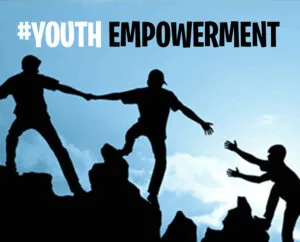
- Empowerment: a process of teaching values and skills so that a learner can lead a satisfying life while keeping to the cherished values and ideals of society.
- Youth empowerment: a development programme that creates opportunities for youths to become morally responsible, self-reliant and financially productive.
- Taking charge: children and young people are encouraged to take charge of their own lives.
- Improved access to resources: youths look at their situation and act to get the resources they need.
- Change of consciousness: youths change their beliefs, values and attitudes.
- Aim: to improve the quality of life of young people.
- Means: participation in youth empowerment programmes.
How are young people empowered?
Young people are empowered through training, guidance and access to resources.
- Skill acquisition training: youths learn trades such as tailoring, welding, catering and hairdressing.
- Education: formal and informal schooling builds knowledge and good judgement.
- Start-up support: grants, loans and tools help trained youths begin a business.
- Mentoring: experienced adults guide youths in work and character.
- Leadership programmes: clubs, societies and youth councils give youths practice in leading others.
Why is youth empowerment important?
Youth empowerment benefits both the young person and the nation.
Benefits to the individual
- Self-reliance: youths learn to earn a living without waiting for others.
- Employment: skilled youths can find work or start their own business.
- Good character: youths learn values that keep them responsible.
- Confidence: youths gain self-respect and belief in their own ability.
Benefits to the nation
- Less unemployment: more youths create jobs or fill jobs.
- Less crime and idleness: busy, skilled youths are less likely to join harmful groups.
- National development: productive youths add to the economy and prepare the country for future challenges.
- Better leaders: youths trained in leadership become responsible citizens and future leaders.
What are the types of youth empowerment skills?
There are eleven types of youth empowerment skills: manipulative, life coping, intellectual, artistic, leadership, vocational/entrepreneurial, decision-making, negotiation, interpersonal, motivational and communicative.
| Skill | Meaning | Example |
|---|---|---|
| Manipulative skill | Enables a youth to handle or control things skilfully, as in using tools or machines. | Using a sewing machine or welding tools. |
| Life coping skill | Enables a youth to deal with the realities and challenges of life. | Managing money and resisting peer pressure. |
| Intellectual skill | The ability to think and to understand ideas and information. | Solving problems and researching a topic. |
| Artistic skill | The creative ability to excel in producing works such as music, drawing and crafts. | Drumming, painting and bead making. |
| Leadership skill | Making thoughtful decisions about the mission and goals of an organisation and sharing resources to achieve them. | Leading a school club as president. |
| Vocational/entrepreneurial skill | Training that enables youths to earn a living, join the skilled workforce or run a business. | Catering, fish farming and phone repair. |
| Decision-making skill | The process of making choices among possible alternatives. | Choosing a career or subject combination. |
| Negotiation skill | The method by which people settle differences without going to court. | Settling a quarrel between two classmates by dialogue. |
| Interpersonal/human relation skill | The ability to relate and work well with other people. | Working in a team on a group project. |
| Motivational/self-actualisation skill | The drive to set goals and work towards one’s full potential. | Setting a goal to pass WAEC and studying for it. |
| Communicative skill | The ability to pass information and ideas to others effectively. | Speaking in a debate or writing a letter. |
What is communication skill?
Communication skill is one’s ability to convey information and ideas to others effectively and efficiently.
- Communication: the process by which information is exchanged between individuals or groups.
- Communication skill: one’s ability to convey information and ideas to others effectively and efficiently.
- Methods: people exchange information through several methods, such as speech, writing and gestures.
What are the types of communication skills?
There are three types of communication skills: listening skill, expressive skill and managing the overall process.
- Listening skill: the active process of receiving and understanding spoken messages or sounds.
- Expressive skill: the use of words, sentences, gestures and writing to pass meaning and messages to others.
- Managing the overall process: a skill that helps a person decide what to work on and what information to exchange.
What are the agencies of youth empowerment in Nigeria?
Agencies of youth empowerment are government and private bodies that train and support young people.
- Youth Enterprise with Innovation in Nigeria (YOU WIN): the Federal Government’s National Youth Empowerment Programme for young entrepreneurs.
- Civil Society Leadership Institute: a body that builds leadership skills in young people.
- National Social Investment Programme (N-SIP): a Federal Government programme that includes NPOWER, which engages and trains young people.
- Youth Empowerment Scheme (YES): a scheme that trains youths in skills for work.
- Osun State Youth Empowerment Scheme (O-YES): a state scheme for youths in Osun State.
- African Youth Empowerment-Nigeria (AYEN): an organisation that works for the empowerment of young people.
- National Youth Service Corps (NYSC): the national service year for graduates, which includes skills training.
Evaluation
- What is youth empowerment?
- List five types of youth empowerment skills.
- What is negotiation skill?
- State the three types of communication skills.
- Name three agencies of youth empowerment in Nigeria.
Assignment
Explain vocational/entrepreneurial skill and leadership skill, then list four agencies of youth empowerment in Nigeria.
This term's Civic Education topics
SS1 First Term · 11 topics
- Responsibilities of Individuals and Groups in Maintaining UDHR
- Values I
- Values II: Community Service
- Values III: Opportunity to Defend Oneself
- HIV/AIDS I
- HIV/AIDS II
- Youth Empowerment I
- Youth Empowerment II
- Citizenship I: Meaning & Benefit of Citizenship Education
- Citizenship II: Functions of Government
- Nationalism
Get Civic Education as PDF and Word
Every week of SS1 Civic Education, First Term, formatted and ready to print. Ad-free, and the copy lock comes off.
Get this term Card, bank transfer, USSD or OPay
SS1 Civic Education Lesson Notes for Other Topics
Responsibilities Of Individuals And Groups In Maintaining UDHR
Read the full lesson note.
Values I
Read the full lesson note.
Values II - Community Service
Read the full lesson note.
Values III - Opportunity to Defend Oneself
Read the full lesson note.
HIV/AIDS I
Read the full lesson note.
HIV/AIDS II
Read the full lesson note.
Youth Empowerment II
Read the full lesson note.
Citizenship I - Meaning & Benefit of Citizenship Education
Read the full lesson note.
Citizenship II - Functions of Government
Read the full lesson note.
Nationalism
Read the full lesson note.
Representative Democracy
Read the full lesson note.
Rule Of Law I
Read the full lesson note.

Rule Of Law II : Liberty & Types of Liberty
Read the full lesson note.

Pillars Of Democracy - The Constitution
Read the full lesson note.

Strong Institutions as Major Pillars Of Democracy
Read the full lesson note.
Lesson Notes for Other Classes

SS2 Lesson Note
The complete lesson note to guide your studies.

SS3 Lesson Note
The complete lesson note to guide your studies.
