
Single Column Cash Book – SS1 Book Keeping Lesson Note (Second Term)
Download this term · ₦1,000Lesson note at a glance
- Subject
- Book Keeping
- Class
- SS1
- Term
- Second Term
- Topic
- Single Column Cash Book
- Order
- Topic 4 of 6 this term
- Reading time
- 5 min
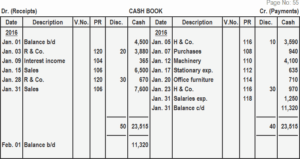
A single-column cash book is the simplest cash book, a record of all cash receipts and cash payments of a business in one money column on each side.
Behavioural objectives
By the end of the lesson, students should be able to:
- state what a single-column cash book is;
- list the transactions recorded in a single-column cash book;
- prepare a single-column cash book from given information;
- balance the cash book at the end of the month;
- identify transactions that must not be entered in the cash book.
What is a single-column cash book?
A single-column cash book is a book that records every receipt and payment of cash, with one amount column on each side.
- Cash receipts: entered on the left (debit) side.
- Cash payments: entered on the right (credit) side.
- Book of original entry: cash transactions are first written here.
- Ledger account: it also serves as the cash account, so no separate cash account is needed.
- Credit transactions: these are not entered because no cash moves.
What are the columns of a single-column cash book?
The cash book has the same four columns on each side: date, narration, folio and amount.
- Date: the day the cash was received or paid.
- Narration: a short description, such as the name of the person or the item.
- Folio: the page number of the ledger account where the entry is also posted.
- Amount: the sum of money in naira (₦).
What transactions are recorded in a single-column cash book?
Any transaction that involves the receipt or payment of cash is recorded in the cash book.
Cash receipts (left side)
- Cash sales: goods sold and paid for at once.
- Receipts from customers: cash paid by credit customers for goods bought earlier.
- Loans received: cash lent to the business, such as a loan from D. Bright.
- Opening balance: cash in hand at the start of the period.
Cash payments (right side)
- Cash purchases: goods bought and paid for at once.
- Payments to suppliers: cash paid for goods bought earlier on credit.
- Expenses: rent, wages, electricity and carriage paid in cash.
- Fixed assets: properties such as furniture or equipment bought with cash.
How do you prepare a single-column cash book?
- Draw the cash book with receipts on the left and payments on the right.
- Enter the opening cash in hand on the left side as “Balance b/d”.
- Read each transaction and decide whether cash came in or went out.
- Enter cash received on the left and cash paid on the right, in date order.
- Leave out every credit transaction.
- Balance the book at the end of the month.
How do you balance a single-column cash book?
Balancing a cash book means finding the cash left in hand at the end of the period.
- Add up the amounts on the receipts side.
- Add up the amounts on the payments side.
- Subtract the total payments from the total receipts to get the balance.
- Write the balance on the payments side as “Balance c/d” (carried down).
- Add the payments side again. Both sides must now have the same total.
- Write the equal totals on the same line on both sides.
- Bring the balance down on the receipts side as “Balance b/d” for the next period.
An illustration: how do you prepare a cash book for March 2017?
The question
Prepare a cash book from the following information for March 2017.
| Date | Description | Amount (₦) |
|---|---|---|
| Mar 1 | Balance of cash in hand | 14,130 |
| Mar 2 | Received cash from Adesola, a credit customer | 3,600 |
| Mar 4 | Paid rent for the month | 1,750 |
| Mar 5 | Paid cash to Lawal, a supplier | 3,200 |
| Mar 9 | Cash sales | 15,235 |
| Mar 12 | Received from D. Bright as a loan | 10,000 |
| Mar 18 | Paid Ayodele, a supplier | 6,250 |
| Mar 19 | Received cash from Bonik Ventures | 14,000 |
| Mar 22 | Credit sales to Owoyemi | 42,000 |
| Mar 24 | Purchases on credit from F. Lawal | 15,550 |
| Mar 26 | Paid wages to shop clerk | 4,500 |
| Mar 28 | Paid electricity bills | 1,200 |
| Mar 30 | Paid carriage on purchases | 2,550 |
The cash book
| Date | Narration | Folio | Amount | Date | Narration | Folio | Amount |
|---|---|---|---|---|---|---|---|
| 2017 | ₦ | 2017 | ₦ | ||||
| Mar 1 | Balance | b/d | 14,130 | Mar 4 | Rent | 1,750 | |
| Mar 2 | Adesola | 3,600 | Mar 5 | F. Lawal | 3,200 | ||
| Mar 9 | Sales | 15,235 | Mar 18 | Ayodele | 6,250 | ||
| Mar 12 | D. Bright (loan) | 10,000 | Mar 26 | Wages | 4,500 | ||
| Mar 19 | Bonik Ventures | 14,000 | Mar 28 | Electricity | 1,200 | ||
| Mar 30 | Carriage inwards | 2,550 | |||||
| Mar 31 | Balance | c/d | 37,515 | ||||
| 56,965 | 56,965 |
How is the balance worked out?
- Total receipts: ₦14,130 + ₦3,600 + ₦15,235 + ₦10,000 + ₦14,000 = ₦56,965.
- Total payments before balancing: ₦1,750 + ₦3,200 + ₦6,250 + ₦4,500 + ₦1,200 + ₦2,550 = ₦19,450.
- Balance c/d: ₦56,965 minus ₦19,450 = ₦37,515.
- Next period: the balance is brought down on the receipts side as ₦37,515 on 1 April 2017.
Which transactions are left out of the cash book?
Credit transactions are left out because they do not involve the movement of cash.
| Transaction | Amount (₦) | Where it is recorded |
|---|---|---|
| Mar 22: credit sales to Owoyemi | 42,000 | Sales Journal |
| Mar 24: credit purchases from F. Lawal | 15,550 | Purchases Journal |
- Examination tip: expect a few credit items in the question, and leave them out.
- Cash from a credit customer: this is recorded, because cash is received (Adesola, Mar 2).
What mistakes should students avoid?
- Entering credit sales or purchases: they do not belong in the cash book.
- Putting entries on the wrong side: receipts go left, payments go right.
- Forgetting the opening balance: it must start the receipts side.
- Unequal totals: after balancing, both sides must show the same total.
- Omitting b/d: bring the balance down for the next period.
Evaluation
- What is a single-column cash book?
- List four transactions that are recorded in a single-column cash book.
- Why are the credit sales of March 22 not entered in the cash book?
- In which books are credit sales and credit purchases recorded?
- What is the cash balance carried down on 31 March 2017 in the illustration?
Assignment
Using the March 2017 information in the illustration, prepare the single-column cash book on your own. Balance it, state the total of each side and show the balance brought down on 1 April 2017.
This term's Book Keeping topics
SS1 Second Term · 6 topics
Get Book Keeping as PDF and Word
Every week of SS1 Book Keeping, Second Term, formatted and ready to print. Ad-free, and the copy lock comes off.
Get this term Card, bank transfer, USSD or OPay
SS1 Book Keeping Lesson Notes for Other Topics

Books Of Original Entry
Read the full lesson note.

Principles Of Double Entry
Read the full lesson note.
Ledgers
Read the full lesson note.

Double Column Cash Book
Read the full lesson note.
Contra Entries
Read the full lesson note.

Introduction To Bookkeeping
Read the full lesson note.

Stock Valuation
Read the full lesson note.

Assets And Liabilities
Read the full lesson note.

Business Transactions
Read the full lesson note.

Debtors And Creditors
Read the full lesson note.

Source Documents
Read the full lesson note.

Three Column Cash Book
Read the full lesson note.

Petty Cashbook
Read the full lesson note.
Trial Balance
Read the full lesson note.
Lesson Notes for Other Classes

SS2 Lesson Note
The complete lesson note to guide your studies.

SS3 Lesson Note
The complete lesson note to guide your studies.
