
Debtors and Creditors – SS1 Book Keeping Lesson Note (First Term)
Download this term · ₦1,000Lesson note at a glance
- Subject
- Book Keeping
- Class
- SS1
- Term
- First Term
- Topic
- Debtors and Creditors
- Order
- Topic 5 of 6 this term
- Reading time
- 4 min
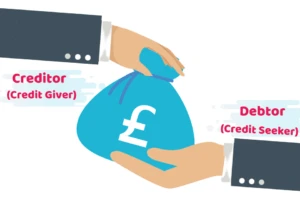
A debtor is a person or business that owes money to another business, and a creditor is a person or business to whom a business owes money. Both arise when goods or services are bought or sold on credit, with payment made at a later date.
Behavioural objectives
By the end of the lesson, students should be able to:
- define debtors and creditors;
- state the other names for debtors and creditors;
- explain how a debt arises when goods or services are sold or bought on credit;
- describe how a business determines its debtors and its creditors;
- state why a business should keep track of its debtors and creditors.
What is a credit transaction?
A credit transaction is a sale or purchase in which payment is made at a later date.
- Credit sale: the business hands over goods or services now and the customer pays later.
- Credit purchase: the business receives goods or services now and pays the supplier later.
- Cash transaction: payment is made at the time of the sale or purchase, so no debt is created.
What is a debtor?
A debtor is an individual or company that owes money to a business, and is also called an account receivable.
- How it arises: the business sells goods or services to a customer on credit.
- Other name: accounts receivable, because the business expects to receive the money.
- Example: a customer collects ₦50,000 worth of goods from Bola Stores and promises to pay next month. The customer is a debtor of Bola Stores.
- Position in the books: money owed by debtors is an asset of the business.
What is a creditor?
A creditor is an individual or company that a business owes money to, and is also called an account payable.
- How it arises: the business buys goods or services on credit from a supplier.
- Other name: accounts payable, because the business must pay the money.
- Example: Bola Stores buys ₦200,000 worth of goods from a wholesaler and will pay in 30 days. The wholesaler is a creditor of Bola Stores.
- Position in the books: money owed to creditors is a liability of the business.
What is the difference between a debtor and a creditor?
A debtor owes the business, while the business owes a creditor. The table compares them.
| Point | Debtor | Creditor |
|---|---|---|
| Meaning | Owes money to the business | Is owed money by the business |
| Other name | Account receivable | Account payable |
| Arises from | Credit sales | Credit purchases |
| Who the person is | Customer | Supplier |
| Effect on the business | Asset | Liability |
| Cash movement later | Cash comes in | Cash goes out |
How are debtors determined?
A business determines its debtors by tracking all credit sales that have not yet been paid for.
- The business sells goods or services to a customer on credit.
- An invoice is prepared and sent to the customer.
- The sale is recorded in the customer’s account in the accounting system.
- The account is updated regularly as payments are received.
- Any customer whose account still shows an unpaid balance is a debtor.
How are creditors determined?
A business determines its creditors by tracking all credit purchases that it has not yet paid for.
- The business buys goods or services from a supplier on credit.
- The supplier sends an invoice (a bill) to the business.
- The purchase is recorded in the supplier’s account in the accounting system.
- The account is updated regularly as payments are made.
- Any supplier whose account still shows an unpaid balance is a creditor.
How are debtors and creditors recorded?
Debtors and creditors are recorded in personal accounts, one account for each person or business.
- Credit sale: debit the debtor’s account and credit the sales account.
- Debtor pays: debit the cash or bank account and credit the debtor’s account.
- Credit purchase: debit the purchases account and credit the creditor’s account.
- Business pays creditor: debit the creditor’s account and credit the cash or bank account.
- Debtors’ ledger: the book that holds the accounts of customers (also called the sales ledger).
- Creditors’ ledger: the book that holds the accounts of suppliers (also called the purchases ledger).
Why should a business keep track of debtors and creditors?
A business keeps track of debtors and creditors to maintain a healthy cash flow.
- Follow up on overdue payments: the business can remind debtors who have not paid on time.
- Manage cash flow: the business knows how much cash to expect and how much it must pay out.
- Pay suppliers on time: this keeps the goodwill of creditors and protects the business’s name.
- Avoid disputes: clear records settle arguments about amounts owed.
- Reduce bad debts: early follow-up lowers the chance that a debtor never pays.
- Review reports regularly: the accounts receivable and accounts payable reports show who owes what.
Evaluation
- Define a debtor and a creditor.
- What other name is given to debtors? What other name is given to creditors?
- How does a business come to have a debtor?
- How does a business determine who its creditors are?
- Why should a business review its accounts receivable and accounts payable reports regularly?
Assignment
In your own words, explain the difference between a debtor and a creditor, and state how a business determines each of them.
This term's Book Keeping topics
SS1 First Term · 6 topics
Get Book Keeping as PDF and Word
Every week of SS1 Book Keeping, First Term, formatted and ready to print. Ad-free, and the copy lock comes off.
Get this term Card, bank transfer, USSD or OPay
SS1 Book Keeping Lesson Notes for Other Topics
Introduction To Bookkeeping
Read the full lesson note.

Stock Valuation
Read the full lesson note.

Assets And Liabilities
Read the full lesson note.

Business Transactions
Read the full lesson note.
Source Documents
Read the full lesson note.

Books Of Original Entry
Read the full lesson note.
Principles Of Double Entry
Read the full lesson note.

Ledgers
Read the full lesson note.

Single Column Cash Book
Read the full lesson note.

Double Column Cash Book
Read the full lesson note.
Contra Entries
Read the full lesson note.

Three Column Cash Book
Read the full lesson note.
Petty Cashbook
Read the full lesson note.
Trial Balance
Read the full lesson note.
Lesson Notes for Other Classes

SS2 Lesson Note
The complete lesson note to guide your studies.

SS3 Lesson Note
The complete lesson note to guide your studies.
