Towns and Settlements in Nigeria – Basic 3 History Lesson Note (Third Term)
Download Lesson NoteLesson note at a glance
- Subject
- History
- Class
- Basic 3
- Term
- Third Term
- Topic
- Towns and Settlements in Nigeria
- Order
- Topic 1 of 5 this term
- Reading time
- 4 min
What We Will Learn Today
- Different types of places where people live in Nigeria
- What makes a compound, community, village, and city different
- How people live in each type of settlement
- Examples of each type in Nigeria
Types of Settlements
- COMPOUND
What is a Compound?
- A group of houses where one extended family lives
- Usually has one main entrance
- Houses are built around a central area (courtyard)
- Grandparents, parents, children, uncles, aunts all live together
What You Find in a Compound:
- Several houses for different family members
- Shared courtyard where people meet and children play
- Common kitchen or cooking area
- Storage areas for food and belongings
- Family shrine or meeting place
Examples:
- Yoruba compounds in Ibadan, Abeokuta
- Igbo compounds in Enugu, Owerri
- Hausa compounds in Kano, Kaduna
- COMMUNITY
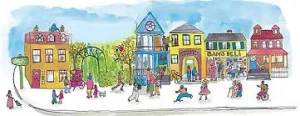
What is a Community?
- Several compounds living close together
- People know each other and work together
- Has a community leader (like a chief or elder)
- People help each other and share things
What You Find in a Community:
- Many family compounds
- Community meeting place (village square or hall)
- Small shops and local markets
- Primary school or learning center
- Health center or traditional healer
- Place of worship (church, mosque, or shrine)
Examples:
- Igbo communities with village squares
- Yoruba communities with palace of Oba
- Hausa communities with emirate system
- VILLAGE
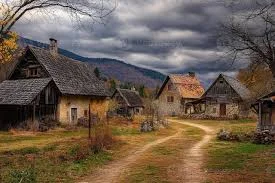
What is a Village?
- Many communities living together in one area
- Has more people than a community
- Has a village head or traditional ruler
- People mostly do farming, fishing, or crafts
What You Find in a Village:
- Primary and secondary schools
- Health center with nurses
- Market days (usually once or twice a week)
- Post office or communication center
- Local government office
- Banks or cooperative societies
- Good roads connecting to other places
Examples:
- Farming villages in Middle Belt (Benue, Plateau)
- Fishing villages along rivers and coasts
- Trading villages along major roads
- CITY

What is a City?
- Very many people living together (hundreds of thousands or millions)
- Has tall buildings and busy streets
- People do many different jobs
- Has modern facilities and services
What You Find in a City:
- Universities and many schools
- Big hospitals with specialist doctors
- Shopping malls and big markets
- Banks and business offices
- Airports and major transportation
- Industries and factories
- Government offices
- Television and radio stations
Examples in Nigeria:
- Lagos – biggest city (over 15 million people)
- Kano – major northern city
- Ibadan – large Yoruba city
- Port Harcourt – oil city
- Abuja – capital city
Differences Between Settlements
Size and Population:
- Compound: Smallest (one family)
- Community: Small (few families)
- Village: Medium (many families)
- City: Largest (millions of people)
Facilities:
- Compound: Basic family needs
- Community: School, health center, small shops
- Village: Schools, market, local government
- City: Universities, hospitals, industries, airports
Jobs People Do:
- Compound/Community: Mostly farming and traditional crafts
- Village: Farming, small trading, local services
- City: Many different jobs (banking, teaching, engineering, etc.)
Transportation:
- Compound/Community: Walking, bicycles, motorcycles
- Village: Buses, cars, motorcycles
- City: Cars, buses, trains, airplanes
How Settlements Grow
Growth Pattern:
- Compound → 2. Community → 3. Village → 4. City
Why They Grow:
- More families move to the area
- Better facilities attract more people
- Good location for trade and business
- Government builds roads and services
- Industries provide jobs
Examples of Growth:
- Lagos started as fishing villages, became biggest city
- Abuja was built as new capital city
- Port Harcourt grew because of oil discovery
Life in Different Settlements
Compound Life:
- Everyone knows each other very well
- Shared responsibilities and resources
- Traditional customs are strong
- Peaceful and quiet environment
Community Life:
- People help each other during farming or building
- Traditional festivals bring everyone together
- Simple but comfortable living
- Close to nature
Village Life:
- More opportunities for education and health
- Local markets and small businesses
- Mix of traditional and modern ways
- Good for agriculture and small industries
City Life:
- Many job opportunities and good schools
- Modern facilities like electricity and water
- Fast-paced and busy lifestyle
- People from different places living together
What We Learned
- Nigeria has four main types of settlements: compound, community, village, and city
- Each type has different sizes, facilities, and ways of life
- Settlements can grow from small compounds to big cities
- People in different settlements do different types of work
- Each type of settlement has advantages for the people who live there
EXERCISES
- Fill in the blanks:
- A __________ is where one extended family lives together.
- A __________ has several compounds living close together.
- A __________ has many communities and a village head.
- A __________ has millions of people and tall buildings.
- Put in order from smallest to largest:
City, Village, Compound, Community
Smallest: __________ → __________ → __________ → __________: Largest
- True or False:
- A compound has only one family living in it. ( )
- Villages are bigger than cities. ( )
- Lagos is an example of a city in Nigeria. ( )
- Communities have traditional rulers. ( )
- Match the settlement with what you find there:
- Compound → Universities and airports
- Community → One extended family
- Village → Small shops and primary school
- City → Market days and local government
- Choose the correct answer:
- The biggest city in Nigeria is (Kano / Lagos / Abuja).
- A compound usually has (one / many / no) families.
- Villages are good for (banking / farming / flying).
- Cities have (few / some / many) different types of jobs.
- Answer these questions:
- What is the difference between a compound and a community?
- Name two things you can find in a village.
- Why do people move from villages to cities?
- Give one example each of a Nigerian village and city.
This term's History topics
Basic 3 Third Term · 5 topics
Third Term History Lesson Notes for Other Topics
Traditional Ruler in our Community
Read the full lesson note.

Traditional Rulers in Lagos
Read the full lesson note.
Procedures of Becoming a Traditional Ruler
Read the full lesson note.
Symbols of Traditional Rulers' Authority
Read the full lesson note.
Roles of Traditional Rulers
Read the full lesson note.

Title Holders
Read the full lesson note.

Duties of Traditional Title Holders
Read the full lesson note.

The Local Government Chairperson
Read the full lesson note.
Settlements in Nigeria (Ancient)
Read the full lesson note.
Towns and Settlements in Nigeria (Modern)
Read the full lesson note.
Settlements in Lagos (Ancient)
Read the full lesson note.

Settlements in Lagos State (Modern)
Read the full lesson note.

The Growth of Industry in Nigeria
Read the full lesson note.
The Growth of Industries in Nigeria (Scale Classification)
Read the full lesson note.
The Growth of Industries in Nigeria - Technology Transfer
Read the full lesson note.
Lesson Notes for Other Classes

Basic 1 Lesson Note
The complete lesson note to guide your studies.
Basic 2 Lesson Note
The complete lesson note to guide your studies.
Basic 4 Lesson Note
The complete lesson note to guide your studies.

Basic 5 Lesson Note
The complete lesson note to guide your studies.

Basic 6 Lesson Note
The complete lesson note to guide your studies.

JSS1 Lesson Note
The complete lesson note to guide your studies.