
Suspense Account – SS2 Financial Accounting Lesson Note (First Term)
Lesson note at a glance
- Class
- SS2
- Subject
- Financial Accounting
- Term
- First Term
- Reading time
- 6 min
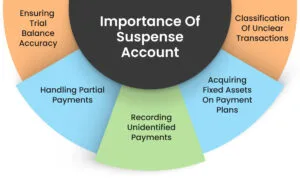
A suspense account is a temporary account in which the difference in the trial balance is recorded until the errors are found and corrected.
Behavioural objectives
- State what a suspense account is.
- List the checks used to locate errors when a trial balance does not agree.
- State the uses of a suspense account.
- Explain how a suspense account is opened.
- Explain how the balance on a suspense account appears in the balance sheet.
- Explain when the correction of an error involves the suspense account.
What is a trial balance and why may it not agree?
A trial balance is a list of all ledger account balances, used to check that total debits equal total credits.
- Agreement: the debit total and the credit total are equal when every double entry is correct.
- Disagreement: the totals differ when an error affects only one side of the books.
- Hidden errors: some errors leave the totals equal, so the trial balance does not show them.
Which errors are not shown by the trial balance?
Errors made in day-to-day recording are of two kinds: those the trial balance does not reveal and those that stop it balancing.
- Error of omission: a transaction is left out of the books completely.
- Error of commission: an entry is posted to the wrong account of the same type, such as the wrong customer’s account.
- Error of principle: an item is posted to the wrong class of account, such as office equipment debited to the purchases account.
- Error of original entry: a wrong amount is used for both the debit and the credit.
- Compensating errors: two or more errors of equal size on opposite sides cancel each other out.
- Reversal of entries: the debit and credit are posted to the correct accounts but on the wrong sides.
Which errors stop the trial balance from agreeing?
Errors that affect only one side of the books make the debit and credit totals unequal.
- Single entry: only the debit or only the credit of a transaction is posted.
- Different amounts: the debit and the credit are posted with different amounts.
- Two debits or two credits: both aspects of a transaction are posted to the same side.
- Addition errors: an account or the trial balance is added up wrongly.
- Wrong column: a balance is entered in the wrong column of the trial balance.
- Omitted balance: a ledger balance is left out of the trial balance.
How do you locate errors when a trial balance does not agree?
Where the trial balance totals do not agree, apply the following checklist to locate the errors.
- Check the additions to the trial balance.
- Check the addition of the balance of each ledger account.
- Check that each ledger account balance has been entered in the correct column of the trial balance.
- Check that every ledger account balance has been entered in the trial balance.
- Look for a transaction equal to the difference in the trial balance and check that a double entry has been made for it.
- Look for a transaction equal to half the difference and check if it was entered twice on the same side of the ledger instead of once on each side.
- Check the double entry for every transaction entered since the date of the last trial balance.
- If the errors are not found: the trial balance is balanced temporarily by inserting the difference in a suspense account.
What are the uses of a suspense account?
A suspense account holds an amount temporarily until its correct account is known.
- Trial balance difference: it records differences in the trial balance until the errors are detected and corrected.
- Undecided treatment: it is used when transactions are recorded before a decision is made on their proper accounting treatment.
- Temporary destination: it holds one aspect of a transaction until the account to which it should be posted is known.
How is a suspense account opened?
A suspense account is opened in the general ledger with a balance on the side that makes the trial balance agree.
- Add up the debit column and the credit column of the trial balance.
- Find the difference between the two totals.
- Place the difference on the side that is smaller.
- Open the suspense account with the same amount on the same side.
Worked example
- Situation: the credit side of a trial balance is ₦6,000 less than the debit side.
- Action: the suspense account is opened with a credit balance of ₦6,000.
- Result: when the suspense balance is inserted in the trial balance, the totals agree.
| Trial balance position | Suspense account balance |
|---|---|
| Debit total is higher than credit total | Credit balance |
| Credit total is higher than debit total | Debit balance |
How does a suspense account appear in the final accounts?
Once a suspense account is opened, the final accounts can be prepared even if all the errors have not been found.
- Debit balance: it appears in the balance sheet as an asset.
- Credit balance: it appears in the balance sheet as a liability.
- When errors are found later: they are corrected, and the suspense account is cleared to nil.
How are errors corrected?
Errors are corrected by journal entries, which are then posted to the ledger accounts.
- Write the journal entry that puts the accounts right.
- Post the journal entry to the ledger accounts.
- Use the suspense account only if the error affected the agreement of the trial balance.
| Type of error | Suspense account involved? |
|---|---|
| Error that does not affect the trial balance agreement | No |
| Error that affects the trial balance agreement | Yes |
Example 1: error that involves the suspense account
- Error: sales of ₦4,000 to a customer, Ade, were credited to the sales account, but Ade’s account was not debited.
- Effect: the credit side was ₦4,000 higher, so a suspense account was opened with a debit balance of ₦4,000.
| Account | Debit (₦) | Credit (₦) |
|---|---|---|
| Ade’s account | 4,000 | |
| Suspense account | 4,000 |
Example 2: error that does not involve the suspense account
- Error: office equipment of ₦50,000 was debited to the purchases account.
- Effect: debits and credits are still equal, so the trial balance agrees.
| Account | Debit (₦) | Credit (₦) |
|---|---|---|
| Office equipment account | 50,000 | |
| Purchases account | 50,000 |
Evaluation
- What is a suspense account?
- List four checks you can make when a trial balance does not agree.
- State two uses of a suspense account.
- The credit side of a trial balance is ₦6,000 less than the debit side. On which side will the suspense account be opened, and with what amount?
- How does a suspense account balance appear in the balance sheet?
Assignment
A trial balance has a credit total ₦2,500 higher than its debit total. Answer the three parts below.
- State the side and amount of the suspense account balance.
- Explain why the final accounts can be prepared before the error is found, and where the balance will appear in the balance sheet.
- Explain the difference between an error that involves the suspense account when corrected and one that does not.
This term's Financial Accounting topics
SS2 First Term · 5 topics
SS2 Financial Accounting Lesson Notes for Other Topics
Suspense Account II - Correction of Errors
Read the full lesson note.
Manufacturing Accounts
Read the full lesson note.
Control Account And Self-Balancing Ledger
Read the full lesson note.
Introduction To Single Entry And Incomplete Records
Read the full lesson note.

Single Entry And Incomplete Records
Read the full lesson note.
Accounts Of Non Profit Making Organisations
Read the full lesson note.
Partnership Accounts
Read the full lesson note.
Partnership Accounts II - Partnership Capital Accounts & How to Calculate it
Read the full lesson note.

Receipts And Payment Accounts
Read the full lesson note.
Dissolution Of Partnership
Read the full lesson note.
Company Accounts
Read the full lesson note.
Balance Sheet
Read the full lesson note.
Issues & Classes of Shares
Read the full lesson note.
Interpretation Of Financial Statement Using Simple Ratio
Read the full lesson note.
Lesson Notes for Other Classes

SS1 Lesson Note
The complete lesson note to guide your studies.

SS3 Lesson Note
The complete lesson note to guide your studies.
