
Accounts of Non Profit Making Organisations – SS2 Financial Accounting Lesson Note (Second Term)
Lesson note at a glance
- Class
- SS2
- Subject
- Financial Accounting
- Term
- Second Term
- Reading time
- 5 min
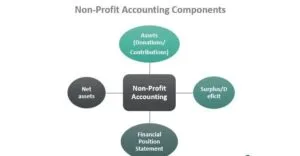
A non-profit-making organisation is a body owned by its members that exists to provide services for them, not to make profit.
Behavioural objectives
By the end of the lesson, students should be able to:
- state what a non-profit-making organisation is and give examples;
- list the special features of the accounts of non-profit-making organisations;
- explain the cash basis and accrual basis of treating subscriptions;
- explain how life subscriptions, entry fees and donations are treated;
- show how the net receipts of a non-trading activity, such as a dinner-dance, are presented.
What is a non-profit-making organisation?
A non-profit-making organisation is a club or society formed to provide services for its members.
- Examples: sports clubs, social clubs, dramatic societies and music clubs.
- Purpose: making profit is not the main aim, although many hold fundraising activities to give members more services.
- Ownership: all the members own the organisation, not one person or a few members.
- Record keeping: a member who is not a trained bookkeeper or accountant usually records money received and spent.
- Link to earlier work: usually no other records are kept, so this topic extends incomplete records.
What are the special features of the accounts of non-profit-making organisations?
There are five special features, and each uses a different name from the accounts of a trading business.
- An Income and Expenditure Account takes the place of the Profit and Loss Account.
- Surplus of Income Over Expenditure is used in place of Net Profit.
- Excess of Expenditure Over Income is used in place of Net Loss.
- Accumulated Fund is used in place of Capital Account.
- A Trading Account is prepared only for an activity that is like trading and is carried on to increase the club’s funds.
| Trading business | Non-profit-making organisation |
|---|---|
| Profit and Loss Account | Income and Expenditure Account |
| Net Profit | Surplus of Income Over Expenditure |
| Net Loss | Excess of Expenditure Over Income |
| Capital Account | Accumulated Fund |
What is the Accumulated Fund?
The Accumulated Fund is the net worth of a club, built up from past surpluses.
- Opening figure: total assets minus total liabilities at the start of the period.
- Surplus: a surplus of income over expenditure is added to it.
- Deficit: an excess of expenditure over income is deducted from it.
How is the income of a club treated in its accounts?
A club’s income comes from subscriptions, life subscriptions, entry fees, donations and supporting activities, and each is treated differently.
Subscriptions
A subscription is the yearly amount a member pays to belong to the club.
- Amount credited: the annual subscription per member multiplied by the number of members.
- Workings: a subscriptions account helps to decide how much to credit to the Income and Expenditure Account.
- Arrears and advance: these are normally treated as accruals and prepayments, but each club has its own policy.
There are two possible policies: the cash basis and the accrual basis.
- Cash basis: the amount received in the year is credited to the Income and Expenditure Account. It may include a subscription for a previous year or one paid in advance.
- Accrual basis: all subscriptions due for the year, including those not yet received, are credited. A club usually writes off as bad debts subscriptions not received in the year after they were due.
How is the subscription income for the year worked out?
On the accrual basis, adjust the cash received for arrears and advance payments.
- Start with the subscriptions received in cash during the year.
- Subtract opening arrears paid in the year, because they belong to last year.
- Subtract closing advance payments, because they belong to next year.
- Add closing arrears, because they are due for this year but unpaid.
- Add opening advance payments, because they were paid last year for this year.
Example (figures for illustration): cash received ₦5,000, opening arrears ₦400, closing arrears ₦300, opening advance ₦100, closing advance ₦200.
- Working: 5,000 − 400 − 200 + 300 + 100.
- Subscription income for the year: ₦4,800.
Life subscriptions and entry fees
Life subscriptions and entry fees are lump sums that are not credited in full to the Income and Expenditure Account when received.
- Policy: the club spreads the income over a number of years, for example five.
- On receipt: the amount is credited to a Deferred Income Account.
- Each year: an equal instalment is transferred to the Income and Expenditure Account.
- Period: the club committee decides how many years to use.
Donations
A donation is money given to a club, and a legacy is money left to it in a will.
- Purpose: they are usually for a particular use, such as a new hall or equipment.
- Recording: credit the donation to an account opened for that purpose.
- Spending: debit expenditure on it to the same account.
- Bank account: keep money for special purposes in a separate bank account so that it is not spent on other things.
Supporting activities
Supporting activities are activities that raise money to add to income from subscriptions.
- Trading activities: prepare a Trading Account as part of the annual accounts. Transfer the profit or loss to the Income and Expenditure Account.
- Non-trading activities: social get-togethers, outings and dinner-dances may be dealt with in the Income and Expenditure Account, with income and costs grouped together.
Example: annual dinner-dance
| Annual dinner-dance | ₦ | ₦ |
|---|---|---|
| Sale of tickets | 600 | |
| Less: hire of band | (100) | |
| Catering and drinks | (240) | |
| Net receipts | 260 |
- Costs: band hire ₦100 plus catering and drinks ₦240 gives ₦340.
- Net receipts: ticket sales of ₦600 minus costs of ₦340 gives ₦260.
Evaluation
- What is a non-profit-making organisation? Give two examples.
- State the term used in place of each of the following: net profit, net loss and capital account.
- Explain the cash basis and the accrual basis of treating subscriptions.
- How should a club treat a life subscription received as a lump sum?
- Why should money received for a special purpose be placed in a separate bank account?
Assignment
List the five special features of the accounts of non-profit-making organisations, then explain how the net receipts of ₦260 from the annual dinner-dance were worked out.
This term's Financial Accounting topics
SS2 Second Term · 5 topics
- Single Entry and Incomplete Records
- Accounts of Non Profit Making Organisations
- Partnership Accounts
- Partnership Accounts II: Partnership Capital Accounts & How to Calculate It
- Receipts and Payment Accounts
SS2 Financial Accounting Lesson Notes for Other Topics

Single Entry And Incomplete Records
Read the full lesson note.
Partnership Accounts
Read the full lesson note.
Partnership Accounts II - Partnership Capital Accounts & How to Calculate it
Read the full lesson note.

Receipts And Payment Accounts
Read the full lesson note.

Suspense Account
Read the full lesson note.
Suspense Account II - Correction of Errors
Read the full lesson note.
Manufacturing Accounts
Read the full lesson note.
Control Account And Self-Balancing Ledger
Read the full lesson note.
Introduction To Single Entry And Incomplete Records
Read the full lesson note.
Dissolution Of Partnership
Read the full lesson note.
Company Accounts
Read the full lesson note.
Balance Sheet
Read the full lesson note.
Issues & Classes of Shares
Read the full lesson note.
Interpretation Of Financial Statement Using Simple Ratio
Read the full lesson note.
Lesson Notes for Other Classes

SS1 Lesson Note
The complete lesson note to guide your studies.

SS3 Lesson Note
The complete lesson note to guide your studies.
