
The Amalgamation of Nigeria – JSS3 Nigerian History Lesson Note (Third Term)
Download Lesson NoteLesson note at a glance
- Subject
- Nigerian History
- Class
- JSS3
- Term
- Third Term
- Topic
- The Amalgamation of Nigeria
- Order
- Topic 1 of 10 this term
- Reading time
- 10 min
Amalgamation means the joining together of two or more separate entities to form one single unit. In Nigerian history, amalgamation refers to the joining together of the Northern and Southern Protectorates by the British colonial government to create a single colony called Nigeria. This important event happened on January 1, 1914, under the leadership of Sir Frederick Lugard, who became the first Governor-General of the unified Nigeria. The amalgamation laid the foundation for the modern Nigerian state, bringing together diverse peoples, cultures, and regions under one administrative system for the first time.
The Situation Before Amalgamation
Before 1914, what is now Nigeria was administered as three separate territories by the British:
The Colony of Lagos
- Establishment: Lagos became a British colony in 1861 after the British forced Oba Dosunmu to surrender his territory.
- Administration: It was governed directly by British officials as a Crown Colony.
- Importance: Lagos was a major trading port and served as an entry point for British influence into the interior.
- Legal System: British law operated in Lagos, with British-style courts and legal procedures.
The Protectorate of Southern Nigeria
- Formation: The Southern Protectorate was formed in stages through various British territorial acquisitions.
- Components: It included the Niger Coast Protectorate (formerly Oil Rivers Protectorate) and territories previously controlled by the Royal Niger Company.
- Administration: While technically a protectorate rather than a colony, it was administered fairly directly by British officials.
- Economy: The Southern Protectorate was economically valuable to Britain due to palm oil production, cocoa farming, and other resources.
The Protectorate of Northern Nigeria
- Establishment: The Northern Protectorate was formally established in 1900 when the British government took over the territories previously controlled by the Royal Niger Company.
- Conquest: The British military conquest of the North, led by Frederick Lugard, was completed with the defeat of the Sokoto Caliphate in 1903.
- Administration: It was governed through the system of Indirect Rule, working through existing traditional rulers, particularly the emirs.
- Economy: The North produced groundnuts, cotton, and other agricultural products, though its economic development under colonial rule lagged behind the South.
These three territories had different administrative systems, legal codes, economic policies, and developmental trajectories. The Lagos Colony and Southern Protectorate were merged in 1906, creating two main British-controlled territories in what would become Nigeria. However, the North and South remained separate until the 1914 amalgamation.
Reasons for Amalgamation
The British had several reasons for deciding to amalgamate the Northern and Southern Protectorates:
- Economic and Financial Considerations
- Northern Financial Problems: The Northern Protectorate was not financially self-sufficient. It cost more to administer than it generated in revenue.
- Southern Prosperity: The Southern Protectorate, with its lucrative palm oil trade and access to coastal ports, was more financially viable.
- Financial Integration: Amalgamation allowed the British to use revenue from the wealthier South to subsidize the administration of the North.
- Railway Development: The British had invested in railway construction linking the North and South and wanted a unified administration to manage this infrastructure.
- Administrative Efficiency
- Streamlined Governance: Managing one colony instead of two separate protectorates promised greater administrative efficiency.
- Unified Civil Service: Amalgamation allowed for the creation of a single colonial civil service.
- Standardized Policies: It enabled the implementation of more consistent policies across all Nigerian territories.
- Resource Optimization: Colonial officials and resources could be deployed more effectively across a unified territory.
- Imperial Strategic Interests
- Colonial Rivalry: European powers were competing for territory in Africa, and consolidating British holdings made strategic sense.
- Territorial Control: A unified Nigeria would be easier to defend and would represent a more substantial British presence in West Africa.
- Trade Benefits: A larger, unified territory could create a more significant market for British manufactured goods.
- Resource Access: Amalgamation helped secure British access to Nigeria’s diverse natural resources.
- Ideological Factors
- “Civilizing Mission”: Some British officials believed that amalgamation would help advance their supposed “civilizing mission” in Nigeria.
- Administrative Vision: Frederick Lugard, in particular, believed in creating larger, more efficient colonial units.
- Colonial Theory: Amalgamation aligned with evolving British theories about how to govern colonial territories effectively.
The Process of Amalgamation
The amalgamation was not a single event but a process that involved several steps:
Preparation Phase (1912-1913)
- Lugard’s Appointment: In 1912, Frederick Lugard was appointed Governor of both the Northern and Southern Protectorates to prepare for amalgamation.
- Administrative Planning: Lugard and his team developed plans for merging the different administrative systems.
- Economic Assessment: Studies were conducted to determine how to integrate the economies of the two regions.
- Infrastructure Development: Preparations were made for extending infrastructure to connect the regions better.
Formal Amalgamation (January 1, 1914)
- Official Proclamation: On January 1, 1914, the amalgamation was officially proclaimed, creating the Colony and Protectorate of Nigeria.
- Lugard as Governor-General: Frederick Lugard became the first Governor-General of the unified Nigeria.
- New Administrative Structure: A new unified administrative structure was established, though with significant regional differences maintained.
- Capital in Lagos: Lagos became the capital of the unified Nigeria.
Post-Amalgamation Adjustments (1914-1920s)
- Administrative Integration: The process of integrating the different administrative systems continued for years after the formal amalgamation.
- Legal Harmonization: Efforts were made to harmonize the different legal systems, though many differences remained.
- Financial Integration: The financial systems were gradually integrated, with revenue from the South helping to support the North.
- Infrastructure Expansion: Railways, roads, and communication systems were expanded to connect the different regions better.
The Nature of the Amalgamated Nigeria
While the 1914 amalgamation created a single Nigerian colony on paper, in practice, the unified Nigeria had several important characteristics:
- Regional Distinctions Maintained
- Separate Administration: The Northern and Southern Provinces continued to be administered differently in many ways.
- Different Legal Systems: Different legal codes continued to apply in different parts of Nigeria.
- Cultural Separation: The British made limited efforts to encourage cultural integration between the different regions.
- Distinct Development Patterns: Development policies continued to differ between North and South.
- Three-Region Structure
- Northern Province: The former Northern Protectorate became the Northern Province.
- Western Province: The western part of the former Southern Protectorate became the Western Province.
- Eastern Province: The eastern part of the former Southern Protectorate became the Eastern Province.
- **This three-region structure foreshadowed the later regional divisions of independent Nigeria.
- Limited Integration
- Political Separation: There was little political integration between the different regions.
- Economic Differences: The regions maintained different economic orientations and development trajectories.
- Educational Disparities: Educational development varied significantly between regions, with the South generally having more Western-style schools.
- Religious Differences: Religious patterns (primarily Muslim North, predominantly Christian South) were reinforced by colonial policies.
Key Figures in the Amalgamation
Several individuals played important roles in the amalgamation process:
Sir Frederick Lugard (1858-1945)
- Background: Lugard had a military background and extensive experience in colonial administration.
- Previous Role: He had served as High Commissioner of the Northern Nigeria Protectorate (1900-1906).
- Architect of Amalgamation: Lugard designed the framework for the amalgamated Nigeria.
- Indirect Rule: He was the primary advocate for the system of Indirect Rule, which he applied throughout Nigeria after amalgamation.
- Legacy: Lugard wrote “The Dual Mandate in British Tropical Africa” (1922), which outlined his views on colonial governance.
Lord Lewis Harcourt (1863-1922)

- Position: Harcourt was the British Colonial Secretary (1910-1915) who approved the amalgamation plan.
- Involvement: He provided political support in London for Lugard’s amalgamation proposal.
- Recognition: Nigeria’s Port Harcourt was named after him.
Sir Walter Egerton (1858-1947)
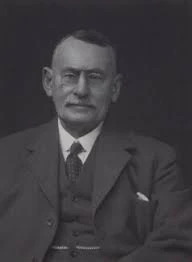
- Role: Egerton was the last Governor of the Southern Nigeria Protectorate (1906-1912).
- Contribution: He helped prepare the Southern Protectorate for amalgamation and implemented important development projects.
Sir William Wallace (1860-1940)
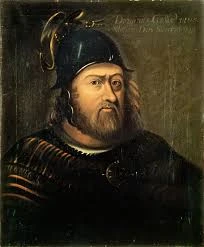
- Position: Wallace served as Acting Governor of Northern Nigeria and helped implement Lugard’s policies.
- Support: He supported the amalgamation process and helped with the transition in the Northern Protectorate.
Impact and Legacy of Amalgamation
The amalgamation of 1914 had profound and lasting effects on Nigeria:
- Creation of Modern Nigeria
- Territorial Foundation: The amalgamation established the territorial boundaries of what would become the independent nation of Nigeria.
- National Identity: It created the need to develop a Nigerian national identity that transcended regional and ethnic affiliations.
- Political Framework: The amalgamated structure provided the basic framework for Nigeria’s later political evolution.
- Regional Tensions
- North-South Divide: The amalgamation brought together regions with very different histories, cultures, and colonial experiences, creating tensions that continue today.
- Religious Differences: The religious geography of Nigeria (predominantly Muslim North, predominantly Christian South) became a factor in national politics.
- Development Disparities: Different rates of educational and economic development between regions created ongoing challenges.
- Administrative Legacy
- Federal Structure: The regional differences maintained after amalgamation contributed to Nigeria eventually adopting a federal system of government.
- Civil Service Tradition: The unified colonial civil service established after amalgamation influenced Nigeria’s post-independence bureaucracy.
- Legal System: Nigeria’s complex legal system, with multiple sources of law, reflects the incomplete integration following amalgamation.
- Economic Patterns
- Resource Distribution: The amalgamation created a single economy but with significant regional specializations.
- Revenue Sharing: Issues of how to share national revenue among regions began with amalgamation and remain contentious.
- Infrastructure Development: The pattern of infrastructure development initiated after amalgamation continued to influence economic development.
Criticisms of the Amalgamation
The amalgamation has been criticized from various perspectives:
- Lack of Nigerian Input
- No Consultation: Nigerians were not consulted about whether their territories should be amalgamated.
- Colonial Decision: The amalgamation was a decision made by British officials based primarily on British interests.
- Imposed Unity: The unity of Nigeria was imposed from outside rather than developing organically from within.
- Artificial Boundaries
- Disregard for Ethnic Boundaries: The amalgamation created a country that combined numerous ethnic groups with distinct identities and sometimes histories of conflict.
- Administrative Convenience: Boundaries were drawn for British administrative convenience rather than reflecting cultural or historical realities.
- Legacy of Division: The artificial nature of these boundaries contributed to later ethnic tensions and separatist movements.
- Incomplete Integration
- Superficial Unity: The amalgamation created administrative unity but did little to foster social, cultural, or political integration.
- Regional Isolation: The different regions remained relatively isolated from each other, with limited interaction.
- Development Gaps: The amalgamation did not address, and in some ways reinforced, development disparities between regions.
- Economic Motivation
- Financial Considerations: Critics argue that the amalgamation was primarily motivated by British financial concerns rather than Nigerian interests.
- Resource Exploitation: The unified territory facilitated British exploitation of Nigerian resources.
- Dependency Patterns: The economic structures established after amalgamation created patterns of dependency that continued after independence.
Steps Toward Integration After Amalgamation
Despite the limited initial integration, some steps were taken to bring the different parts of Nigeria together:
- Constitutional Developments
- 1922 Clifford Constitution: Introduced limited elective representation, though only in Lagos and Calabar.
- 1946 Richards Constitution: Created regional assemblies, recognizing the three-region structure while maintaining a central government.
- 1951 Macpherson Constitution: Increased Nigerian participation in governance and strengthened both regional and central governments.
- 1954 Lyttleton Constitution: Established a truly federal system, moving Nigeria toward the federal structure it would have at independence.
- Infrastructure Development
- Railway Extension: The railway network was extended to connect different regions.
- Road Construction: Roads were built to link previously isolated areas.
- Postal and Telegraph Services: Communication systems were developed to connect different parts of Nigeria.
- Educational Integration
- Educational Institutions: Some educational institutions were established that accepted students from different regions.
- Common Curriculum: Efforts were made to develop more standardized educational approaches.
- Civil Service Training: Training programs for the colonial civil service brought together Nigerians from different regions.
- Political Awareness
- Nationalist Movements: Nigerian nationalist movements gradually developed a vision of Nigeria as a single nation despite regional differences.
- Pan-Nigerian Organizations: Organizations emerged that brought together Nigerians from different regions with common interests.
- National Media: Newspapers and later radio began to create more national awareness across regional boundaries.
This term's Nigerian History topics
JSS3 Third Term · 10 topics
- The Amalgamation of Nigeria
- The Amalgamation Process
- Key Personalities and Their Roles in the Amalgamation of Nigerian Territories
- The Independence Movement
- Factors That Led to the Independence Movement
- The Nature of Nigerian Nationalism: The Struggle for Independence
- The Attainment of Independence
- The Berlin Treaty (Continuation of the Evolution of the Nigerian State)
- The Role of the Royal Niger Company in the Evolution of the Nigerian State
- People Involved in the Struggle for Nigerian Independence
Third Term Nigerian History Lesson Notes for Other Topics

History Of Lagos State III - Division of Lagos State
Read the full lesson note.

History Of Lagos State IV - Governors of Lagos State Since Creation
Read the full lesson note.

Major Title -Holders In The State: Idejo Chief, White Cap Chief
Read the full lesson note.

History Of Lagos State II
Read the full lesson note.

History Of Lagos State
Read the full lesson note.

Adjective And Adverb Puzzles
Read the full lesson note.

Nigerian Independence Republic And Federation
Read the full lesson note.

Christianity In Nigeria
Read the full lesson note.
Traditional Occupations In The Locality-Lagos State
Read the full lesson note.
Traditional Occupations Of Nigerian People Northern Nigeria
Read the full lesson note.

Traditional Religion In Nigeria
Read the full lesson note.
Traditional Occupations Of Nigerian People Southern Nigeria
Read the full lesson note.
Islam In Nigeria
Read the full lesson note.

Nigerian Independence
Read the full lesson note.

Heroes in Nigeria Environment
Read the full lesson note.
Lesson Notes for Other Classes

Basic 1 Lesson Note
The complete lesson note to guide your studies.

Basic 2 Lesson Note
The complete lesson note to guide your studies.

Basic 3 Lesson Note
The complete lesson note to guide your studies.

Basic 4 Lesson Note
The complete lesson note to guide your studies.

Basic 5 Lesson Note
The complete lesson note to guide your studies.

Basic 6 Lesson Note
The complete lesson note to guide your studies.

