
Traditional Occupations Of Nigerian People Northern Nigeria Basic 5 Nigerian History Lesson Note
Download Lesson NoteTopic: Traditional Occupations Of Nigerian People Northern Nigeria
Learning Objectives
By the end of this lesson, pupils should be able to:
- Tell where Northern Nigeria is located
- Name the Nigerian people in Northern Nigeria
- Mention the various traditional occupations in Northern Nigeria
- Establish the connection between the various occupations and their benefits
- Differentiate between the concepts of primary occupation and secondary occupation
Location of Northern Nigeria
Northern Nigeria is the upper part of our country. It is located:
- North of the River Niger and River Benue
- Above the Middle Belt region
- Bordering countries like Niger Republic, Chad, and Cameroon
- Covering about two-thirds of Nigeria’s total land area
Northern Nigeria includes states like Kano, Kaduna, Sokoto, Katsina, Jigawa, Bauchi, Gombe, Borno, Yobe, Adamawa, Taraba, and others.
Nigerian People in Northern Nigeria
Northern Nigeria is home to many different ethnic groups:
Major Ethnic Groups
Hausa People
- Found mainly in Kano, Katsina, Jigawa, and Kaduna states
- Known for trading and farming
Fulani People
- Spread across many northern states
- Famous for cattle rearing and nomadic lifestyle
Kanuri People
- Found mainly in Borno and Yobe states
- Known for fishing and farming around Lake Chad
Nupe People
- Found in Niger state and parts of Kwara
- Known for farming and glass making
Tiv People
- Found mainly in Benue state
- Famous for yam farming
Other Groups
- Gbagyi people in Niger and Kaduna states
- Jukun people in Taraba state
- Idoma people in Benue state
- Igala people in Kogi state
Various Traditional Occupations in Northern Nigeria
1. Animal Husbandry (Cattle Rearing)

- What they do: Raise cattle, goats, sheep, and camels
- Who does it: Mainly Fulani people
- Benefits: Provides milk, meat, and hides; source of wealth and status
2. Cereal Farming

- What they do: Grow grains like millet, sorghum, maize, rice, and wheat
- Who does it: Hausa, Kanuri, Tiv, and other farming communities
- Benefits: Provides food for families and communities; creates income through sales
3. Leather Work
- What they do: Make bags, shoes, saddles, and decorative items from animal hides
- Who does it: Hausa craftsmen and specialists
- Benefits: Creates beautiful and useful products; preserves traditional skills
4. Cotton Farming and Textile Production

- What they do: Grow cotton and weave it into cloth
- Who does it: Hausa and other northern communities
- Benefits: Provides clothing materials; supports local textile industry
5. Trading and Commerce
- What they do: Buy and sell goods across long distances
- Who does it: Hausa traders (famous across West Africa)
- Benefits: Spreads goods across regions; creates wealth and connections
6. Fishing
- What they do: Catch fish from rivers, lakes, and ponds
- Who does it: Kanuri people around Lake Chad, and others near water bodies
- Benefits: Provides protein-rich food; supports riverine communities
7. Salt Mining
- What they do: Extract salt from natural salt deposits
- Who does it: Communities in Borno and other areas with salt deposits
- Benefits: Provides essential seasoning; valuable trading commodity
8. Blacksmithing
- What they do: Make farming tools, weapons, and household items from iron
- Who does it: Specialized craftsmen across northern communities
- Benefits: Provides essential tools for farming and daily life
9. Pottery
- What they do: Make water pots, cooking vessels, and storage containers
- Who does it: Women in many northern communities
- Benefits: Provides household items; preserves traditional skills
10. Mat Weaving
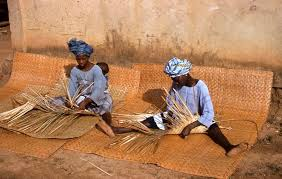
- What they do: Make sleeping mats and prayer mats from grass and palm fronds
- Who does it: Various northern communities
- Benefits: Provides comfort items; generates income for families
Connection Between Occupations and Their Benefits
Animal Husbandry ↔ Leather Work
- Connection: Cattle rearing provides raw hides and skins
- Benefits: Fulani herders sell hides to leather workers; leather workers create valuable products
Cereal Farming ↔ Trading
- Connection: Farmers grow grains that traders buy and sell
- Benefits: Farmers get money for their crops; traders profit from sales; communities get food
Cotton Farming ↔ Textile Production
- Connection: Cotton farmers provide raw materials for weavers
- Benefits: Creates complete textile industry; provides clothing for communities
Salt Mining ↔ Trading
- Connection: Salt miners extract salt that traders transport to other regions
- Benefits: Provides essential commodity; creates trade networks across Nigeria
Fishing ↔ Market Trading
- Connection: Fishermen catch fish that traders sell in markets
- Benefits: Provides protein food; creates income for both fishermen and traders
Blacksmithing ↔ Farming
- Connection: Blacksmiths make tools that farmers use for agriculture
- Benefits: Farmers get better tools; blacksmiths get payment and food from farmers
Primary and Secondary Occupations
What is a Primary Occupation?
A primary occupation is work that involves getting raw materials directly from nature. These are the first stage of production.
What is a Secondary Occupation?
A secondary occupation is work that takes raw materials from primary occupations and changes them into finished products.
Examples from Northern Nigeria:
Primary Occupations
- Animal Husbandry: Getting cattle, hides, and milk directly from animals
- Cereal Farming: Growing grains like millet and sorghum from the soil
- Cotton Farming: Growing cotton plants from the ground
- Fishing: Catching fish directly from rivers and lakes
- Salt Mining: Extracting salt directly from natural deposits
Secondary Occupations
- Leather Work: Using hides from cattle (primary) to make bags and shoes
- Textile Production: Using cotton (primary) to weave cloth
- Blacksmithing: Using iron ore (primary) to make tools and weapons
- Food Processing: Using grains (primary) to make flour and other products
- Pottery: Using clay (primary) to make pots and containers
The Connection
- Primary occupations provide raw materials
- Secondary occupations use these raw materials to create finished products
- Both types work together to meet community needs
Summary
Northern Nigeria is located in the upper part of our country and is home to many ethnic groups like the Hausa, Fulani, Kanuri, and others. The traditional occupations in Northern Nigeria include animal husbandry, cereal farming, leather work, trading, and many others. These occupations are connected – some provide raw materials (primary occupations) while others process these materials into finished products (secondary occupations). Together, they create a complete economic system that provides food, clothing, tools, and other necessities for Northern Nigerian communities, while also contributing to trade and development across the entire country.
Third Term Nigerian History Lesson Notes for Other Topics

History Of Lagos State III - Division of Lagos State
Explore lesson notes covering all topics.

History Of Lagos State IV - Governors of Lagos State Since Creation
Explore lesson notes covering all topics.

Major Title -Holders In The State: Idejo Chief, White Cap Chief
Explore lesson notes covering all topics.

History Of Lagos State II
Explore lesson notes covering all topics.

History Of Lagos State
Explore lesson notes covering all topics.

Adjective And Adverb Puzzles
Explore lesson notes covering all topics.

Nigerian Independence Republic And Federation
Explore lesson notes covering all topics.

Christianity In Nigeria
Explore lesson notes covering all topics.

Traditional Occupations In The Locality-Lagos State
Explore lesson notes covering all topics.

Traditional Religion In Nigeria
Explore lesson notes covering all topics.

Islam In Nigeria
Explore lesson notes covering all topics.

Traditional Occupations Of Nigerian People Southern Nigeria
Explore lesson notes covering all topics.
Nigerian Independence
Explore lesson notes covering all topics.

Heroes in Nigeria Environment
Explore lesson notes covering all topics.
Heroines in Nigeria
Explore lesson notes covering all topics.
Lesson Notes for Other Classes

Basic 1 Lesson Note
The complete lesson note to guide your studies.

Basic 2 Lesson Note
The complete lesson note to guide your studies.

Basic 3 Lesson Note
The complete lesson note to guide your studies.

Basic 4 Lesson Note
The complete lesson note to guide your studies.

Basic 6 Lesson Note
The complete lesson note to guide your studies.

JSS1 Lesson Note
The complete lesson note to guide your studies.