
Major Title -Holders In The State: Idejo Chief, White Cap Chief Basic 2 Nigerian History Lesson Note
Download Lesson NoteTopic: Major Title -Holders In The State: Idejo Chief, White Cap Chief
Learning Objectives
By the end of this lesson, pupils should be able to:
- Identify the major title holders in Lagos State
- Name the pre-colonial areas where these title holders are found
- Discuss the roles of title holders
Lesson Content
What are Title Holders? Title holders are traditional leaders who have special positions in their communities. They help the king (Oba) to rule and take care of the people. They have important titles (special names) that show their positions.
Major Title Holders in Lagos State
- WHITE CAP CHIEFS (Ogboni)

Who are White Cap Chiefs?
- They are the most important chiefs in Lagos traditional system
- They wear white caps as a symbol of their position
- They are chosen based on their wisdom and good character
- They help the Oba of Lagos make important decisions
Names of White Cap Chiefs:
- Erelu Kuti – Chief of women affairs
- Asoju Oba – Representative of the king
- Elegushi – Chief of Ikateland
- Oniru – Chief of Iru land
- Aromire – Important chief in Lagos Island
- IDEJO CHIEFS
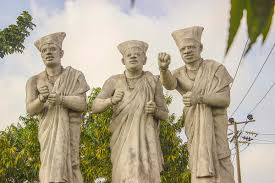
Who are Idejo Chiefs?
- They are land-owning chiefs in Lagos
- “Idejo” means “original landowners”
- They have traditional rights to certain lands in Lagos
- They are descendants of the original settlers
Names of Some Idejo Chiefs:
- Elegushi of Ikate
- Oniru of Iru
- Onitolo of Itolo
- Onisiwo of Isiwo
- Onikoyi of Ikoyi
Pre-Colonial Areas Where Title Holders Are Found
Lagos Island Traditional Areas:
- This is where most White Cap Chiefs come from
- The Oba’s palace is located here
- Traditional ruling system started here
Mainland Traditional Areas:
- Ikoyi – Onikoyi area
- Victoria Island – Part of traditional Lagos
- Iru Land – Oniru’s area
- Ikate – Elegushi’s area
Roles of Title Holders
Roles of White Cap Chiefs:
- Advisory Role
- Give advice to the Oba on important matters
- Help make decisions for the community
- Share their wisdom and experience
- Judicial Role
- Help settle disputes between people
- Listen to complaints and solve problems
- Make sure traditional laws are followed
- Ceremonial Role
- Participate in traditional festivals and ceremonies
- Represent the community at important events
- Preserve traditional customs and culture
- Administrative Role
- Help govern different parts of Lagos
- Supervise development projects in their areas
- Report community needs to the Oba
Roles of Idejo Chiefs:
- Land Management
- Take care of traditional lands
- Settle land disputes
- Ensure proper use of community land
- Community Development
- Work with government on development projects
- Represent their communities’ interests
- Help bring development to their areas
- Cultural Preservation
- Keep traditional customs alive
- Teach young people about their heritage
- Organize cultural festivals and events
- Peace-Making
- Settle disputes in their communities
- Promote peace and unity
- Work with other chiefs to solve problems
Modern Role of Title Holders:
- They work with state government officials
- They help bridge traditional and modern governance
- They promote development while preserving culture
- They represent their communities in modern Lagos
Why Title Holders Are Important:
- They connect us to our traditional roots
- They help preserve Lagos culture and customs
- They provide leadership in their communities
- They help maintain peace and order
- They ensure that traditional wisdom is not lost
Multiple Choice Exercise
- What do White Cap Chiefs wear as a symbol of their position? a) Red caps b) Blue caps c) White caps d) Green caps
- What does “Idejo” mean? a) New settlers b) Original landowners c) Government officials d) Business people
- Where is the Oba’s palace located? a) Ikeja b) Badagry c) Lagos Island d) Ikorodu
- What is one important role of White Cap Chiefs? a) Cooking food b) Building houses c) Giving advice to the Oba d) Teaching in schools
- Who is the Elegushi? a) Chief of Ikoyi b) Chief of Ikate c) Chief of Iru d) Chief of Badagry
Answers: 1(c), 2(b), 3(c), 4(c), 5(b)
Third Term Nigerian History Lesson Notes for Other Topics

History Of Lagos State III - Division of Lagos State
Explore lesson notes covering all topics.

History Of Lagos State IV - Governors of Lagos State Since Creation
Explore lesson notes covering all topics.

History Of Lagos State II
Explore lesson notes covering all topics.

History Of Lagos State
Explore lesson notes covering all topics.

Adjective And Adverb Puzzles
Explore lesson notes covering all topics.

Nigerian Independence Republic And Federation
Explore lesson notes covering all topics.

Christianity In Nigeria
Explore lesson notes covering all topics.

Traditional Occupations In The Locality-Lagos State
Explore lesson notes covering all topics.

Traditional Occupations Of Nigerian People Northern Nigeria
Explore lesson notes covering all topics.

Traditional Religion In Nigeria
Explore lesson notes covering all topics.

Islam In Nigeria
Explore lesson notes covering all topics.

Traditional Occupations Of Nigerian People Southern Nigeria
Explore lesson notes covering all topics.
Nigerian Independence
Explore lesson notes covering all topics.

Heroes in Nigeria Environment
Explore lesson notes covering all topics.
Heroines in Nigeria
Explore lesson notes covering all topics.
Lesson Notes for Other Classes

Basic 1 Lesson Note
The complete lesson note to guide your studies.

Basic 3 Lesson Note
The complete lesson note to guide your studies.

Basic 4 Lesson Note
The complete lesson note to guide your studies.
Basic 5 Lesson Note
The complete lesson note to guide your studies.
Basic 6 Lesson Note
The complete lesson note to guide your studies.
JSS1 Lesson Note
The complete lesson note to guide your studies.