
Inclined Planes – Basic 6 Basic Technology Lesson Note (Third Term)
Lesson note at a glance
- Class
- Basic 6
- Subject
- Basic Technology
- Term
- Third Term
- Reading time
- 5 min
LEARNING OBJECTIVES By the end of the lesson, pupils should be able to:
- Mention examples of inclined planes
- Construct and use inclined planes to move objects
- State the advantages of inclined plane
Definition of inclined plane
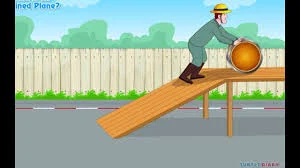
An inclined plane is a simple machine that consists of a flat surface tilted at an angle. It is a sloping surface that connects a lower level to a higher level. It makes it easier to move heavy objects up or down by reducing the effort needed.
Other Names:
- Ramp
- Slope
- Slant
Examples of inclined planes
In Everyday Life:
- Ramps: Used at building entrances for wheelchairs and trolleys
- Slides: Children’s playground equipment
- Road on Hills: Winding roads going up mountains
- Stairs: Series of small inclined planes
- Ladders: Leaning against walls
- Escalators: Moving inclined planes in shopping malls
- Roofs: Slanted to allow rain water to flow down
- Chisels: Sharp inclined edge for cutting
- Axe: Wedge-shaped blade
- Knife: Sharp slanted edge
- Wheelchair Ramps: At hospitals and public buildings
- Loading Ramps: For loading goods into trucks
- Pyramid Sides: Ancient Egyptians used ramps to build pyramids
- Aircraft Boarding Stairs: Mobile stairs for entering planes
- Skateboard Ramps: For tricks and stunts
Parts of an inclined plane
- Base: The horizontal bottom part
- Height (Vertical Rise): How high the plane goes
- Length (Slope): The slanting surface
- Angle: The steepness of the slope
How inclined planes work
When you push an object up an inclined plane:
- You use less force (effort) than lifting it straight up
- You move the object over a longer distance
- The work done is the same, but it’s easier
Example:
- Lifting a 50kg box straight up 2 meters is very hard
- Pushing the same box up a 10-meter ramp to reach 2 meters height is much easier
- You travel longer distance but use less force
FORMULA: Effort needed reduces as the length of the slope increases Mechanical Advantage = Length of Slope ÷ Height
Types of inclined planes
- Simple Ramp: Single flat slope
- Wedge: Two inclined planes joined back-to-back Examples: Axe, knife, nail, needle, chisel
- Screw: Inclined plane wrapped around a cylinder Examples: Bolt, jar lid, light bulb base, corkscrew
CONSTRUCTING A SIMPLE INCLINED PLANE
Materials Needed:
- Wooden plank or strong cardboard
- Books or blocks (for support)
- Small toy car or wheeled object
- Ruler (to measure)
Steps:
- Place several books stacked on top of each other (this is your height)
- Rest one end of the plank on top of the books
- Rest the other end on the floor or table
- You now have an inclined plane
Experiment:
- Try lifting the toy car straight up to the top of the books
- Now roll or push the car up the inclined plane
- Notice which method is easier
Advantages of inclined planes
- Reduces Effort: Less force needed to move heavy objects
- Makes Work Easier: Heavy loads can be moved with less strain
- Safer: Reduces risk of injury from lifting heavy objects
- Versatile: Can be used in many situations
- Simple and Cheap: Easy to construct with basic materials
- No Energy Source Needed: Works without electricity or fuel
- Accessible: Helps people with disabilities access buildings
- Efficient: Moves large quantities of goods easily
- Reduces Time: Faster than carrying objects up and down
- Durable: Lasts long with little maintenance
Disadvantages of inclined planes
- Takes up more space than stairs or elevators
- Requires longer distance to travel
- Can be dangerous if too steep
- Difficult for people without wheels or trolleys
- Slippery when wet
USES OF INCLINED PLANES
In Construction:
- Loading heavy materials onto trucks
- Moving wheelbarrows with cement
- Accessing different building levels
In Transportation:
- Highway overpasses and underpasses
- Bridge approaches
- Parking garage ramps
- Airport runways
In Daily Life:
- Wheelchair access to buildings
- Moving furniture up to trucks
- Children’s playground slides
- Skateboarding and skating ramps
In Agriculture:
- Loading farm produce onto vehicles
- Grain chutes in storage facilities
- Barn ramps for animals
EVALUATION
- What is an inclined plane?
- Give five examples of inclined planes
- Draw and label the parts of an inclined plane
- State four advantages of inclined planes
- How does an inclined plane make work easier?
Multiple choice questions
An inclined plane is also called a ________
- a) Lever
- b) Ramp
- c) Pulley
- d) Wheel
Which of these is NOT an inclined plane?
- a) Slide
- b) Ramp
- c) Seesaw
- d) Stairs
An inclined plane reduces the ________ needed
- a) Distance
- b) Time
- c) Effort
- d) Speed
A knife is an example of ________
- a) Lever
- b) Wedge (inclined plane)
- c) Pulley
- d) Wheel
The flat sloping surface of an inclined plane is called ________
- a) Base
- b) Height
- c) Length or slope
- d) Angle
Wheelchair ramps are inclined planes used for ________
- a) Playing
- b) Accessibility
- c) Decoration
- d) Storage
A screw is an inclined plane wrapped around a ________
- a) Square
- b) Triangle
- c) Cylinder
- d) Pyramid
Which makes an inclined plane easier to use?
- a) Making it very steep
- b) Making it longer and less steep
- c) Making it shorter
- d) Making it narrow
Roofs are slanted to ________
- a) Look beautiful
- b) Allow rain to flow down
- c) Save money
- d) Provide shade
An axe is an example of ________
- a) Lever
- b) Pulley
- c) Wedge (inclined plane)
- d) Wheel
ANSWERS: 1.b 2.c 3.c 4.b 5.c 6.b 7.c 8.b 9.b 10.c
HOMEWORK
- Draw three examples of inclined planes you see in your school or home
- Explain with a diagram how an inclined plane makes work easier
- List eight uses of inclined planes in real life
- Design and draw an inclined plane that could help load goods into a truck
- Write the differences between an inclined plane and a lever
This term's Basic Technology topics
Basic 6 Third Term · 19 topics
- Simple Machine (Lever)
- Food and Nutrition
- Pulley
- Food and Nutrition (Cont’d)
- Social Media
- Inclined Planes
- Martial Art (History of Judo)
- Forces
- Martial Art: Rules of Judo and Skills
- Career Opportunities in Computer
- Frictional Force
Get Basic Technology as PDF and Word
Every week of Basic 6 Basic Technology, Third Term, formatted and ready to print. Ad-free, and the copy lock comes off.
Get this term Card, bank transfer, USSD or OPay
Instant PDF and Word download · Secure Paystack payment · Questions? WhatsApp us
Basic 6 Basic Technology Lesson Notes for Other Topics
Simple Machine (Lever)
Read the full lesson note.
Food and Nutrition
Read the full lesson note.
Pulley
Read the full lesson note.
Food and Nutrition (Cont'd)
Read the full lesson note.
Social Media
Read the full lesson note.
Martial Art (History of Judo)
Read the full lesson note.
Forces
Read the full lesson note.
Martial Art - Rules of Judo and Skills
Read the full lesson note.
Career Opportunities in Computer
Read the full lesson note.

Frictional Force
Read the full lesson note.
Swimming Strokes
Read the full lesson note.
Scratch in the Environment
Read the full lesson note.
Water Project
Read the full lesson note.

Pathogens, Diseases and Prevention
Read the full lesson note.

Scratch Project
Read the full lesson note.
Lesson Notes for Other Classes

Basic 1 Lesson Note
The complete lesson note to guide your studies.

Basic 2 Lesson Note
The complete lesson note to guide your studies.

Basic 3 Lesson Note
The complete lesson note to guide your studies.

Basic 4 Lesson Note
The complete lesson note to guide your studies.

Basic 5 Lesson Note
The complete lesson note to guide your studies.
