
Issues and Challenges in PHE – Basic 5 Physical & Health Education Lesson Note (Third Term)
Download Lesson NoteLesson note at a glance
- Subject
- Physical & Health Education
- Class
- Basic 5
- Term
- Third Term
- Topic
- Issues and Challenges in PHE
- Order
- Topic 8 of 8 this term
- Reading time
- 2 min

Performance objectives
At the end of this discussion in this unit, children should be able to know:
- The meaning of drug
- The consequences of using drug
Learning materials
- Whiteboard/Chalkboard • Explanatory posters/pictures • Explanatory videos
Reference materials
- NERDC Basic Education Curriculum • Universal Basic Education Curriculum (UBE) • Lagos State Scheme of Work • Online Materials • Physical and Health Education for Primary Schools
CONTENT
Meaning of drug use
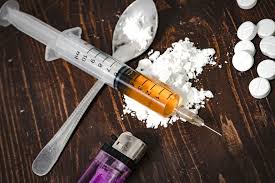
DRUGS are chemicals or substances that change the way our bodies work. The drug is used for medical purposes. When drug is swallowed, drugs are transported by blood to all parts of the body.
DRUG USE is obtaining appropriate drugs in suitable duration and dosage as prescribed by a doctor is also the use of drugs to enhance recreational experience.
Example of drug that can be prescribed by a doctor are:
- Penicillin • Paracetamol • Panadol • Nivaquine • Phrensic • Antpain • Coflin • Amoxil • Ampicillin • Ampjeclox
Consequences of using drugs
Drug are used for the following reasons:
- Treatment of injuries
- Curing sicknesses and diseases
- Control weight
- For birth control
- For relaxation
- Renew our energy
- Aid digestion
- Treatment for the shortage of blood
PRESENTATION
- The Teacher reviews the previous lesson • The Teacher introduces the topic • The Teacher explains the lessons
Evaluative activities
- What are communicable diseases? • List three examples of communicable diseases • What is non communicable diseases? • List three examples of non-communicable diseases
[mediator_tech]
- Drug use refers to obtaining appropriate drugs in suitable _______ and _______ as prescribed by a doctor. a) frequency, dosage b) duration, dosage c) duration, timing d) frequency, timing
- Drug use can also involve using drugs to enhance _______ experiences. a) medical b) recreational c) educational d) professional
- Examples of drugs that can be prescribed by a doctor include penicillin, paracetamol, and _______. a) aspirin b) caffeine c) nicotine d) heroin
- Consequences of using drugs include the treatment of injuries and _______. a) improving diseases b) curing sicknesses c) controlling weight d) relaxation
- Drugs can be used for birth control and to _______ energy. a) consume b) renew c) reduce d) deplete
- Drug use can aid _______ and treat the shortage of blood. a) digestion b) respiration c) circulation d) excretion
- Communicable diseases are diseases that can be _______ from one person to another. a) cured b) prevented c) treated d) spread
- Provide three examples of communicable diseases:
- Non-communicable diseases are diseases that cannot be _______ to another person. a) transmitted b) spread c) transferred d) transferred
- Provide three examples of non-communicable diseases:
- Drug use involves obtaining drugs in suitable _______ and _______. a) dosage, quantity b) timing, amount c) frequency, timing d) amount, concentration
This term's Physical & Health Education topics
Basic 5 Third Term · 8 topics
Third Term Physical & Health Education Lesson Notes for Other Topics
Health and Hygiene
Read the full lesson note.
Teeth Brushing
Read the full lesson note.
Care of the Nails and Hair
Read the full lesson note.
Cleanliness
Read the full lesson note.

First Aid
Read the full lesson note.
First Aid (Continued)
Read the full lesson note.
Content of First Aid
Read the full lesson note.
Benefits of First Aid
Read the full lesson note.

First Aid
Read the full lesson note.
Health And Hygiene - Pollution
Read the full lesson note.
Swimming
Read the full lesson note.
Swimming II
Read the full lesson note.

First Aid II
Read the full lesson note.
First Aid
Read the full lesson note.
Issues and Challenges in Sports and PHE
Read the full lesson note.
Lesson Notes for Other Classes

Basic 1 Lesson Note
The complete lesson note to guide your studies.

Basic 2 Lesson Note
The complete lesson note to guide your studies.

Basic 3 Lesson Note
The complete lesson note to guide your studies.

Basic 4 Lesson Note
The complete lesson note to guide your studies.
Basic 6 Lesson Note
The complete lesson note to guide your studies.

JSS1 Lesson Note
The complete lesson note to guide your studies.

