
Food and Nutrition – Basic 5 Physical & Health Education Lesson Note (Third Term)
Download Lesson NoteLesson note at a glance
- Subject
- Physical & Health Education
- Class
- Basic 5
- Term
- Third Term
- Topic
- Food and Nutrition
- Order
- Topic 1 of 8 this term
- Reading time
- 3 min
UNITS:
- Sources of food Nutrient • Nutritional Deficiency Diseases
Performance objectives
At the end of this discussion in this unit, children should be able to:
- Mention sources of food nutrients
- Know about Nutrition deficiencies
Learning materials
- Whiteboard/Chalkboard • Explanatory posters/pictures • Fruits • Palm oil • Vegetable oil • Vegetables • Grains
Reference materials
- Lagos State Scheme of Work • Online Materials • Physical and Health Education for Primary Schools
CONTENT
Sources of nutrients

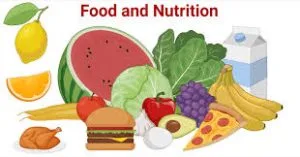
Nutrients are found in the variety of foods that we eat. We have six types of food from which we get all nutrients.
Types of food
- Carbohydrates: Energy giving foods, made up of sugars or starches. Examples are yam, banana, cassava, maize, rice.
- Protein: make us grow strong and repair the body. Examples are Beans, fish, egg.
- Fat: also gives us energy for work and play.It keeps us warm. Examples are Palm oil, Soy oil, Margarine, vegetable oil.
- Vitamins: It protect us from diseases. Examples are fruits, corn.
- Minerals: help to form strong bones and teeth. Examples are Milk, meat vegetables, fruits, grains, beans and starchy vegetables.
- Water: It carries other nutrients to all parts of the body and helps to remove wastes from the body.
Nutritional deficiency diseases
Nutritional diseases are illness that happen as a result of inadequate poor diet.
Inadequate and poor diet causes various diseases like:
- KWASHIORKOR: It is cause by eating mostly carbohydrate food. The person lack food that contains protein, vitamin C, iodine and folic acid.
- RICKETS: It is the softening of bones in children due to deficiency in vitamin D, magnesium, calcium.
- PELLAGRA: It is a vitamin deficiency disease caused by lack of niacin (Vitamin B3) in the diet. Not eating enough vegetables, sea foods, meat and egg can also cause PELLAGRA.
- SCURVY: happens when there is deficiency of Vitamin C (fruits and vegetables)
- BERIBERI: caused by thiamin (Vitamin B) and excessive intake of alcohol.
- ANEMIA: It occurs when the red blood cells are unable to carry enough to the body cell. It is caused by lack of vegetables, egg, liver and meat.
- DIABETES: It happens when the blood glucose level is higher than normal it can be prevented by living a healthy life style.
PRESENTATION
- The Teacher reviews the previous lesson • The Teacher introduces the topic • The Teacher explains the lessons • Teacher welcomes pupils questions • Teacher evaluates the pupils
Evaluative activities
- What is Balanced diet? • List the six kinds of food from which we can select the foods we eat daily • What is a nutritional disease? • List three deficiency diseases
[mediator_tech]
- Carbohydrates are _______ giving foods. a) protein b) energy c) mineral d) fat
- Which of the following is a source of protein? a) fruits b) beans c) margarine d) vegetables
- Fat provides us with energy for _______ and _______. a) sleep, rest b) work, play c) study, exercise d) cooking, baking
- Which nutrient helps protect us from diseases? a) carbohydrates b) protein c) vitamins d) water
- Minerals help to form strong _______ and _______. a) muscles, tendons b) nails, hair c) bones, teeth d) skin, organs
This term's Physical & Health Education topics
Basic 5 Third Term · 8 topics
Third Term Physical & Health Education Lesson Notes for Other Topics
Health and Hygiene
Read the full lesson note.
Teeth Brushing
Read the full lesson note.
Care of the Nails and Hair
Read the full lesson note.
Cleanliness
Read the full lesson note.

First Aid
Read the full lesson note.
First Aid (Continued)
Read the full lesson note.
Content of First Aid
Read the full lesson note.
Benefits of First Aid
Read the full lesson note.

First Aid
Read the full lesson note.
Health And Hygiene - Pollution
Read the full lesson note.
Swimming
Read the full lesson note.
Swimming II
Read the full lesson note.

First Aid II
Read the full lesson note.
First Aid
Read the full lesson note.
Issues and Challenges in Sports and PHE
Read the full lesson note.
Lesson Notes for Other Classes

Basic 1 Lesson Note
The complete lesson note to guide your studies.

Basic 2 Lesson Note
The complete lesson note to guide your studies.

Basic 3 Lesson Note
The complete lesson note to guide your studies.

Basic 4 Lesson Note
The complete lesson note to guide your studies.

Basic 6 Lesson Note
The complete lesson note to guide your studies.

JSS1 Lesson Note
The complete lesson note to guide your studies.

