
Water – Objects That Sink Basic 2 Basic Science Lesson Note
Download Lesson NoteTopic: Water – Objects That Sink
Learning Objectives: By the end of this lesson, pupils should be able to:
- Identify objects that sink in water
- Describe the characteristics of objects that sink in water
- Examine how heavy objects sink in water
Lesson Content:
What is Sinking in Water? Sinking is when objects go down to the bottom of water instead of staying on top. Objects sink because they are heavier (more dense) than the water they displace.
Objects That Sink in Water:
Metal Objects:
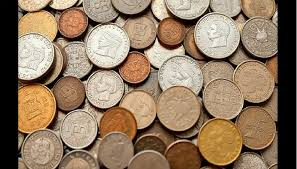
- Coins: Copper, silver, gold coins all sink
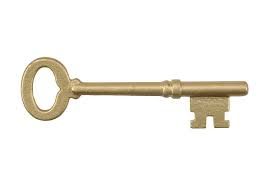
- Keys: Made of metal, always sink
- Nails: Iron nails sink immediately
- Scissors: Heavy metal tools sink
- Spoons: Kitchen utensils made of metal
- Jewelry: Rings, chains, bracelets
Stone and Rock Objects:
- Small stones: Pebbles and rocks sink fast
- Marbles: Glass marbles sink quickly
- Concrete blocks: Very heavy, sink immediately
- Ceramic items: Plates, cups (when full of water)
Dense Natural Materials:
- Shells: Some heavy shells sink
- Bones: Animal bones are dense
- Seeds: Many plant seeds sink
- Sand: Individual grains sink quickly
Heavy Man-Made Objects:
- Toy cars: Metal toy vehicles
- Batteries: Heavy and dense
- Magnets: Usually made of heavy metal
- Paper clips: Small but metal, so they sink
- Bottle caps: Metal caps sink
Characteristics of Objects That Sink:
- High Density:
- Heavier than water: More mass in same space
- Compact materials: Tightly packed molecules
- No air spaces: Solid throughout, no hollow areas
- Heavy for their size: Small but weighty
- Material Properties:
- Metals: Iron, copper, silver, gold all sink
- Stones: Rock materials are denser than water
- Glass: Solid glass objects sink
- Ceramics: Fired clay materials sink
- Shape Factors:
- Solid shapes: No air trapped inside
- Compact forms: Not spread out over large area
- Filled containers: When containers fill with water
- No buoyancy aids: Nothing to help them float
- Water Displacement:
- Heavy for volume: Weigh more than water they push aside
- Gravitational pull: Earth pulls them down stronger
- No upward force: Water can’t push them up enough
Examining How Heavy Objects Sink:
Experiment 1: Comparing Weights Materials: Objects of different weights, water container, scale Procedure:
- Weigh objects before testing (light to heavy)
- Predict sinking order based on weight
- Drop objects gently in water
- Observe sinking speed – heavier = faster?
- Record results and compare to predictions
Experiment 2: Same Material, Different Sizes Materials: Metal objects of different sizes (paper clips, nails, spoons) Procedure:
- Test small metal object (paper clip)
- Test medium metal object (nail)
- Test large metal object (spoon)
- Observe: Do all sink? Which sinks fastest?
- Conclusion: Size affects sinking speed
Experiment 3: Density Comparison Materials: Same-sized objects of different materials Objects: Ping-pong ball, golf ball, marble, cork ball Procedure:
- All roughly same size but different materials
- Test each one in water
- Observe results: Which float? Which sink?
- Explain: Material density determines floating/sinking
Experiment 4: Sinking Speed Materials: Various sinking objects, deep water container, stopwatch Procedure:
- Drop objects from same height
- Time how long each takes to reach bottom
- Compare speeds: Which sink fastest?
- Factors: Weight, shape, water resistance affect speed
Factors Affecting Sinking Speed:
Weight:
- Heavier objects generally sink faster
- More mass means stronger gravitational pull
- Exception: Shape and water resistance also matter
Shape:
- Streamlined shapes (pointed) sink faster
- Flat shapes sink slower due to water resistance
- Irregular shapes may tumble as they sink
Water Resistance:
- Smooth surfaces experience less resistance
- Large surfaces create more drag
- Turbulence slows sinking speed
Making Sinkers into Floaters:
Adding Air:
- Attach to balloon – air makes combination float
- Put in container with air space
- Seal in plastic bag with air bubble
Changing Shape:
- Flatten metal foil – spreads weight over larger area
- Create boat shape – even with heavy materials
- Add floatation aids – cork, foam attachments
Real-World Applications:
Underwater Work:
- Diving weights: Help divers sink and stay underwater
- Anchor chains: Heavy chains keep boats in place
- Submarine ballast: Water tanks control sinking/floating
Construction:
- Foundation stones: Heavy materials for stable building bases
- Underwater foundations: Sink heavy materials for bridge supports
Treasure Hunting:
- Metal detectors: Find heavy metal objects underwater
- Diving for objects: Heavy valuable items sink to bottom
Safety Considerations:
- Don’t sink valuable items accidentally
- Heavy objects underwater can be dangerous
- Swimming safety: Heavy clothes make swimming difficult
Third Term Basic Science Lesson Notes for Other Topics

Simple Machines
Explore lesson notes covering all topics.

Simple Machines - The Safe Use of Simple Machines
Explore lesson notes covering all topics.

Concept of Technology
Explore lesson notes covering all topics.

Technology in Home - Electric Gadgets
Explore lesson notes covering all topics.

Technology in Transportation - Land and Air
Explore lesson notes covering all topics.

What Is Water Transportation?
Explore lesson notes covering all topics.

Exploring Your Environment I
Explore lesson notes covering all topics.

Exploring Your Environment II
Explore lesson notes covering all topics.

Exploring Your Environment III
Explore lesson notes covering all topics.
Animals - As Living Things (Characteristics)
Explore lesson notes covering all topics.

Uses of Animals
Explore lesson notes covering all topics.
Meaning and Characteristics of Plants
Explore lesson notes covering all topics.

Meaning and Characteristics of Animals
Explore lesson notes covering all topics.

Plants - As Living Things II
Explore lesson notes covering all topics.

Uses of Plants
Explore lesson notes covering all topics.
Lesson Notes for Other Classes

Basic 1 Lesson Note
The complete lesson note to guide your studies.

Basic 3 Lesson Note
The complete lesson note to guide your studies.

Basic 4 Lesson Note
The complete lesson note to guide your studies.

Basic 5 Lesson Note
The complete lesson note to guide your studies.
Basic 6 Lesson Note
The complete lesson note to guide your studies.

JSS1 Lesson Note
The complete lesson note to guide your studies.