
Five Prophets of Allah – Basic 1 Islamic Studies Lesson Note (First Term)
Download this term · ₦1,000Lesson note at a glance
- Subject
- Islamic Studies
- Class
- Basic 1
- Term
- First Term
- Topic
- Five Prophets of Allah
- Order
- Topic 8 of 8 this term
- Reading time
- 8 min
A prophet (Nabi) is a person chosen by Allah to receive revelation, guide people to the right path and teach about Allah. This lesson introduces five prophets named in the Qur’an: Adam, Nuh, Hud, Salih and Lut (peace be upon them). It covers their stories, what each one teaches us, and why Muslims believe in all prophets.
Behavioural objectives
By the end of the lesson, students should be able to:
- explain what a Prophet (Nabi) and a Messenger (Rasul) are;
- state how many prophets the Qur’an mentions by name;
- name the five prophets in this lesson and tell the story of each one in simple words;
- state one lesson from the story of each prophet;
- say “Alaihis Salam” (AS) when they mention a prophet’s name.
What is a Prophet (Nabi)?
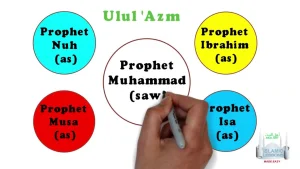
A Prophet is:
- Someone chosen by Allah
- Someone who receives revelation from Allah
- Someone who guides people to the right path
- Someone who teaches about Allah
In Arabic: نَبِي (Nabi), plural: أَنْبِيَاء (Anbiya)
What is a Messenger (Rasul)?
A Messenger is:
- A prophet who received a book or major revelation
- Someone sent with a new message
- All Messengers are Prophets, but not all Prophets are Messengers
In Arabic: رَسُول (Rasul), plural: رُسُل (Rusul)
How many prophets were there?
- Allah sent 124,000 prophets
- The Qur’an mentions 25 prophets by name
- We must believe in all of them
Which five prophets do we learn about?
- Prophet Adam (AS)
- Prophet Nuh (AS)
- Prophet Hud (AS)
- Prophet Salih (AS)
- Prophet Lut (AS)
Who was Prophet Adam (AS) – آدَم?
Who was he?
- The first human being
- The first prophet
- Father of all mankind
His story
Creation
- Allah created Adam from clay
- Allah taught Adam the names of all things
- Allah commanded the angels to bow to Adam (as respect)
- All angels bowed except Iblis (Satan)
- Iblis refused and became Allah’s enemy
In Jannah (Paradise)
- Adam and his wife Hawwa (Eve) lived in Jannah
- Allah told them not to eat from one tree
- Shaytan (Satan) deceived them
- They ate from the tree
- Allah sent them to earth
On earth
- Allah forgave them when they repented
- Adam became the first prophet
- He taught his children about Allah
- He built the first Ka’bah
What we learn from Prophet Adam (AS)
- Allah forgives when we repent
- We should obey Allah’s commands
- Shaytan is our enemy
Qur’anic verse: “Indeed, Allah chose Adam and Noah” (Qur’an 3:33)
Who was Prophet Nuh (AS) – نُوح (Noah)?
Who was he?
- A prophet of patience
- He preached for 950 years
- He built the Ark
His story
The people
- His people worshipped idols
- They had idols named: Wadd, Suwa, Yaghuth, Ya’uq, Nasr
- They refused to listen to Nuh
The warning
- Nuh preached for 950 years
- He told them to worship only Allah
- Only a few people believed
- Most people mocked him
The flood
- Allah commanded Nuh to build a huge ship (Ark)
- People laughed at him (Why build a ship on land?)
- Allah commanded him to take believers and pairs of animals
- Allah sent a great flood
- The flood covered the earth
- All disbelievers drowned, including Nuh’s son who refused to believe
- Only those in the Ark were saved
After the flood
- The water receded
- The Ark rested on Mount Judi
- Those saved became the new generation
- Nuh’s offspring populated the earth
What we learn from Prophet Nuh (AS)
- Be patient when calling people to Allah
- Obey Allah even if people mock you
- Allah punishes the disbelievers
- Allah saves the believers
Qur’anic verse: “And We saved him and those with him in the Ark” (Qur’an 29:15)
Who was Prophet Hud (AS) – هُود?
Who was he?
- Sent to the people of ‘Ad
- A prophet of Arabia
His story
The people of ‘Ad
- They lived in a place called Al-Ahqaf
- They were very strong and tall
- They built tall buildings
- They were arrogant and proud
- They worshipped idols
Hud’s message
- “Worship Allah alone”
- “Stop being proud”
- “Thank Allah for your strength”
Their response
- They rejected him
- They said “Who is stronger than us?”
- They challenged Allah’s power
The punishment
- Allah stopped the rain
- Drought came
- Then Allah sent a fierce wind
- The wind destroyed everything
- It blew for 7 nights and 8 days
- All disbelievers were destroyed
- Only Hud and the believers were saved
What we learn from Prophet Hud (AS)
- Don’t be proud of your strength
- Strength comes from Allah
- Thank Allah for His blessings
- Pride leads to destruction
Qur’anic verse: “And to ‘Ad [We sent] their brother Hud” (Qur’an 7:65)
Who was Prophet Salih (AS) – صَالِح?
Who was he?
- Sent to the people of Thamud
- They lived in an area called Hijr (north of Arabia)
His story
The people of Thamud
- They carved houses in mountains
- They were very skilled builders
- They worshipped idols
- They were arrogant
Salih’s message
- “Worship Allah alone”
- “Don’t worship idols”
- “Be grateful for your skills”
The miracle of the she-camel
- They challenged Salih to show a miracle
- Allah sent a she-camel from a rock
- This camel was special:
- It drank from the well one day
- The people drank the next day
- They got milk from her
The command
- Allah told them: “Don’t harm this camel”
- It was a test
The sin
- Some evil people killed the camel
- This was a great sin
- They all agreed to this crime
The punishment
- Salih warned them: “You have 3 days”
- After 3 days, a loud sound came
- An earthquake came
- All of them died
- Only Salih and the believers were saved
What we learn from Prophet Salih (AS)
- Obey Allah’s commands
- Don’t harm what Allah has blessed
- Evil actions lead to punishment
- Miracles are signs from Allah
Qur’anic verse: “And to Thamud [We sent] their brother Salih” (Qur’an 7:73)
Who was Prophet Lut (AS) – لُوط (Lot)?
Who was he?
- The nephew of Prophet Ibrahim (AS)
- Sent to the people of Sodom and Gomorrah
His story
The people
- They lived in cities: Sodom, Gomorrah
- They committed terrible sins:
- Men with men (homosexuality)
- They robbed travellers
- They did evil openly
- They had no shame
Lut’s message
- “Stop your evil deeds”
- “This is a great sin”
- “Marry women, don’t do this evil”
Their response
- They rejected him
- They wanted to harm him
- They said “Drive Lut out of your city”
The angels visit
- Allah sent angels as guests to Lut
- They looked like handsome young men
- The evil people wanted to harm the angels
- Lut tried to protect his guests
The punishment
- Angels revealed they were messengers of Allah
- They told Lut to leave at night with his family
- “Don’t look back”
- Allah destroyed the cities:
- He turned them upside down
- He rained stones of fire
- Everything was destroyed
- Lut’s wife looked back and was destroyed too (she didn’t believe)
What we learn from Prophet Lut (AS)
- Some sins are very grave
- We must stay away from all evil
- Allah punishes those who persist in sin
- Protect yourself from bad company
Qur’anic verse: “And [mention] Lot, when he said to his people, ‘Do you commit immorality while you are seeing?'” (Qur’an 27:54)
What did these five prophets do?
1. They called people to Tawhid (the Oneness of Allah)
- Main message: Worship Allah alone
- Stop worshipping idols
- No partners with Allah
2. They warned about punishment
- Warned people about Allah’s punishment
- Told them about the Day of Judgement
- Gave them time to repent
3. They showed patience
- They faced rejection
- They were mocked
- They never gave up
4. They were good examples
- They lived righteous lives
- They were honest and trustworthy
- They practised what they preached
5. They delivered Allah’s message
- They conveyed exactly what Allah told them
- They didn’t change anything
- They were faithful messengers
How do the five prophets compare?
| Prophet | People | Main sin | Miracle/Sign | Punishment |
|---|---|---|---|---|
| Adam (AS) | First humans | Disobeyed once | Taught names | Sent to earth (temporary) |
| Nuh (AS) | His people | Idol worship | The Ark | Great Flood |
| Hud (AS) | People of ‘Ad | Pride, idols | None mentioned | Fierce wind |
| Salih (AS) | People of Thamud | Idols, pride | She-camel | Earthquake and loud sound |
| Lut (AS) | Sodom and Gomorrah | Homosexuality, robbery | Angels | Cities destroyed, rain of stones |
Why must we believe in all the prophets?
1. It is part of our faith
- It is one of the Six Articles of Faith
- Without it, our faith is incomplete
2. They all taught the same message
- Worship Allah alone
- Be righteous
- Prepare for the Hereafter
3. We respect them all
- We say “Peace be upon him” (AS) after each name
- We don’t prefer one over another (except as Allah mentioned)
- We love them all
4. They are our teachers
- We learn from their stories
- We follow their examples
- We avoid the sins of their people
What do we say when we mention a prophet?
عَلَيْهِ ٱلسَّلَام (Alaihis Salam), written (AS). Meaning: “Peace be upon him”
Du’a
O Allah!
We believe in all Your prophets.
We love them and respect them.
Help us follow their teachings.
Make us among the righteous.
Ameen!
Evaluation
Choose the correct answer.
- The first prophet was _____.
- a) Nuh (AS)
- b) Adam (AS)
- c) Ibrahim (AS)
- Prophet Nuh (AS) preached for _____ years.
- a) 50
- b) 500
- c) 950
- The people of ‘Ad were destroyed by _____.
- a) flood
- b) fierce wind
- c) earthquake
- The miracle of Prophet Salih (AS) was a _____.
- a) stick
- b) she-camel
- c) flood
- Prophet Lut (AS) was the nephew of Prophet _____.
- a) Adam (AS)
- b) Nuh (AS)
- c) Ibrahim (AS)
Assignment
- Learn the names of the five prophets in Arabic and English.
- Tell your parents the story of one prophet.
- Say “Alaihis Salam” (AS) when you mention a prophet’s name.
- Draw pictures representing each prophet’s story (Ark, Camel, etc.).
This term's Islamic Studies topics
Basic 1 First Term · 8 topics
Get Islamic Studies as PDF and Word
Every week of Basic 1 Islamic Studies, First Term, formatted and ready to print. Ad-free, and the copy lock comes off.
Get this term Card, bank transfer, USSD or OPay
First Term Islamic Studies Lesson Notes for Other Topics
Prophet Muhammad (SAW): The Last Prophet
Read the full lesson note.
Four Attributes of Allah
Read the full lesson note.
Articles of Faith in Islam
Read the full lesson note.
Sūratul-Fātihah (Chapter 1, Verses 5-7)
Read the full lesson note.
Sūratul-Fātihah (Chapter 1, Verses 1-4)
Read the full lesson note.

Arabic Alphabets (ḌĀd Do Yā)
Read the full lesson note.

Arabic Alphabets (Alif to Sād)
Read the full lesson note.

Süratul-Fātihah
Read the full lesson note.

Belief in the Existence of Shaytan
Read the full lesson note.
Belief In Jinn
Read the full lesson note.

Prophet Muhammad's Hijrah and his Persecution
Read the full lesson note.

Arabic letters (Alif to Yäw) with Fätihah
Read the full lesson note.
Süratul Kawthar (Q108)
Read the full lesson note.
Asmäullahhil Husnä
Read the full lesson note.
Asmäullahhil Husnä II
Read the full lesson note.
Lesson Notes for Other Classes

Basic 2 Lesson Note
The complete lesson note to guide your studies.

Basic 3 Lesson Note
The complete lesson note to guide your studies.

Basic 4 Lesson Note
The complete lesson note to guide your studies.

Basic 5 Lesson Note
The complete lesson note to guide your studies.
Basic 6 Lesson Note
The complete lesson note to guide your studies.

JSS1 Lesson Note
The complete lesson note to guide your studies.

