
Gender Discrimination – Basic 6 Social Studies Lesson Note (Third Term)
Download this term · ₦1,000Lesson note at a glance
- Subject
- Social Studies
- Class
- Basic 6
- Term
- Third Term
- Topic
- Gender Discrimination
- Order
- Topic 8 of 13 this term
- Reading time
- 4 min
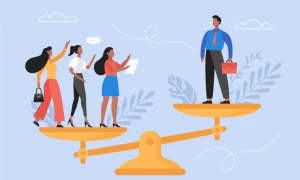
Gender discrimination is the unfair treatment of a person because he is male or because she is female.
Behavioural objectives
By the end of the lesson, pupils should be able to:
- Define gender discrimination in their own words.
- List five areas where gender discrimination happens.
- State the social, economic and educational consequences of gender discrimination.
- Suggest ways of reducing gender discrimination at home, in school and in the community.
- Explain why boys and girls should have equal chances.
What is gender discrimination?
Gender discrimination is treating people unfairly, or denying them a right or chance, only because of their gender.
- Gender: being male (boy, man) or female (girl, woman).
- Discrimination: unfair treatment of a person or group.
- Equality: giving boys and girls, men and women, the same rights and fair chances.
- Who is affected: it can hurt both males and females, though women and girls suffer it more often.
What are the areas of gender discrimination?
There are five common areas of gender discrimination: education, employment, home, politics and inheritance.
1. Education
- Girls denied schooling: some families send only the boys to school.
- Boys forced into hard labour: some boys are sent to farm, trade or work instead of learning.
2. Employment
- Top positions: women are not given senior jobs even when they are qualified.
- Unequal pay: men are sometimes paid more for the same work.
3. Home
- Housework: girls are made to do all the cooking, washing and cleaning.
- Favouritism: boys are treated as more important than girls.
4. Politics
- Leadership: few women hold leadership positions in government and community groups.
5. Inheritance
- Property: in some families only boys inherit land and houses, and girls and widows get nothing.
What is the difference between discrimination and fair treatment?
Discrimination favours one gender, while fair treatment gives both genders the same chances.
| Area | Discrimination | Fair treatment |
|---|---|---|
| Education | Only boys go to school | Boys and girls both go to school |
| Employment | Men earn more for the same work | Equal pay for equal work |
| Home | Girls do all the housework | Boys and girls share chores |
| Politics | Women are kept out of leadership | Qualified women and men can lead |
| Inheritance | Only boys inherit property | Children inherit fairly |
What are the causes of gender discrimination?
Gender discrimination is caused mainly by wrong beliefs and old practices that treat one gender as better than the other.
- Culture and tradition: some customs give men more rights than women.
- Stereotypes: fixed ideas such as “girls are weak” or “boys must not cook”.
- Ignorance: some people do not know that boys and girls have equal rights.
- Poverty: a poor family may pay school fees for only one child, often a boy.
What are the consequences of gender discrimination?
The consequences of gender discrimination are social, economic and educational.
Social consequences
- Low self-esteem: victims feel unimportant and lose confidence.
- Broken families: unfair treatment causes quarrels and separation.
- Violence against women: women and girls may be beaten or abused.
Economic consequences
- Poverty: families and communities become poorer when women cannot work.
- Low productivity: less work is done when many people are not allowed to contribute.
- Wasted human resources: the skills of talented people are not used.
Educational consequences
- High illiteracy among girls: many girls cannot read or write.
- Poor development of society: a country with many uneducated people grows slowly.
How can gender discrimination be stopped?
Gender discrimination can be stopped by giving boys and girls, men and women, equal rights and equal chances.
- Equal education: send boys and girls to school.
- Laws against discrimination: make and enforce laws that punish unfair treatment.
- Awareness campaigns: teach people through radio, schools, churches, mosques and community meetings.
- Equal job opportunities: employ and pay people according to skill, not gender.
- Women in leadership: encourage qualified women to take leadership roles.
- Fair inheritance laws: let children and widows share property fairly.
- Equality at home: teach children that boys and girls share chores and deserve respect.
Evaluation
Choose the correct option.
- Gender discrimination means:
- A) Treating everyone equally
- B) Unfair treatment based on gender
- C) Helping women only
- D) Favouring men always
- An example of discrimination is:
- A) Both boys and girls going to school
- B) Only boys inheriting property
- C) Equal pay for equal work
- D) Women voting
- A consequence of gender discrimination is:
- A) National development
- B) High literacy
- C) Poverty
- D) Peace
- To stop discrimination, we should:
- A) Educate boys only
- B) Give equal opportunities to all
- C) Prefer one gender
- D) Ignore the problem
- Gender discrimination affects:
- A) Only women
- B) Only men
- C) Everyone in society
- D) No one
Answers: 1-B, 2-B, 3-C, 4-B, 5-C
Assignment
Write three ways gender discrimination happens in your community and suggest a solution for each.
This term's Social Studies topics
Basic 6 Third Term · 13 topics
- Sources of Drug Supply and Trafficking
- Effects of Substance Abuse
- Modes of Drug Use and Consequences
- Sources of Drug Supply and Trafficking
- Transport and Communication
- Gender Discrimination
- Group Conflicts and Cooperation
- International Organizations
- Peace Education
- Concepts of Drug and Drug Abuse
- Synthetic and Naturally Occurring Drugs
Get Social Studies as PDF and Word
Every week of Basic 6 Social Studies, Third Term, formatted and ready to print. Ad-free, and the copy lock comes off.
Get this term Card, bank transfer, USSD or OPay
Basic 6 Social Studies Lesson Notes for Other Topics

Effects of Substance Abuse
Read the full lesson note.

Mode of Drug Use and Consequences
Read the full lesson note.
Sources of Drug Supply and Trafficking
Read the full lesson note.
Effects of Substance Abuse
Read the full lesson note.
Modes of Drug Use and Consequences
Read the full lesson note.

Sources of Drug Supply and Trafficking
Read the full lesson note.
Transport and Communication
Read the full lesson note.
Group Conflicts and Cooperation
Read the full lesson note.
International Organizations
Read the full lesson note.
Peace Education
Read the full lesson note.
Concepts of Drug and Drug Abuse
Read the full lesson note.
Synthetic and Naturally Occurring Drugs
Read the full lesson note.

External Influence on Nigeria Life
Read the full lesson note.

The Influence of Working Parents on Nigeria Family Cont'd
Read the full lesson note.
Intermarriage
Read the full lesson note.
Lesson Notes for Other Classes

Basic 1 Lesson Note
The complete lesson note to guide your studies.

Basic 2 Lesson Note
The complete lesson note to guide your studies.

Basic 3 Lesson Note
The complete lesson note to guide your studies.

Basic 4 Lesson Note
The complete lesson note to guide your studies.

Basic 5 Lesson Note
The complete lesson note to guide your studies.
