
Alloys – SS3 Chemistry Lesson Note (First Term)
Download this term · ₦1,000Lesson note at a glance
- Subject
- Chemistry
- Class
- SS3
- Term
- First Term
- Topic
- Alloys
- Order
- Topic 10 of 10 this term
- Reading time
- 5 min
An alloy is a mixture of a metal with one or more other metals, or with a non-metal such as carbon, made by melting them together. Bronze, brass and steel are common alloys used for coins, instruments, spoons and machines.
Behavioural objectives
- State the properties of metals.
- Define an alloy and give reasons for making alloys.
- State the components of bronze, brass, steel, stainless steel and solder.
- List the uses of bronze, steel, brass and solder.
- Describe aluminium, nickel, stainless steel and gold alloys.
What are metals?
A metal is a shiny substance that conducts heat and electricity and can be beaten into shape.
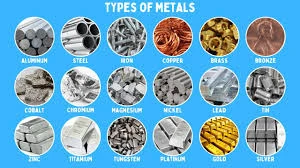
- Examples: iron, copper, zinc, aluminium, tin and gold.
- Use in alloys: metals are often too soft or too weak when pure, so they are mixed to improve them.
What are the properties of metals?
The main properties of metals are conductivity, malleability, ductility, lustre, fusibility and a characteristic colour.
- Conductivity: most metals let heat and electricity flow through them easily.
- Malleability: metals can be beaten or rolled into sheets without breaking.
- Ductility: metals can be drawn into wires, as with copper.
- Lustre: metals shine when their surface is clean and polished.
- Fusibility: metals can be melted and mixed with other metals.
- Colour: most metals are grey or silvery, but copper is reddish-brown and gold is yellow.
- Melting point and density: most metals have high melting points and are dense. Mercury, which is liquid at room temperature, is an exception.
What is an alloy?
An alloy is a combination of metals, or of a metal with one or more other elements.
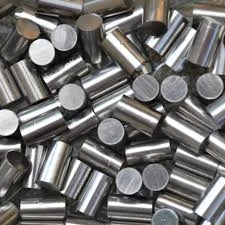
- Nature: an alloy is a mixture, so its parts keep their own properties and are not joined in a fixed ratio.
- Composition: the amounts of each part can vary, so the same alloy may have slightly different proportions.
How is an alloy made?
- Weigh the metals needed in the right proportions.
- Melt the main metal in a furnace.
- Add the other metal or element, such as carbon.
- Stir the molten mixture so that it is even.
- Allow the mixture to cool and set.
What is the difference between an alloy and a compound?
- Alloy: a mixture of metals, or of a metal and another element, in no fixed ratio.
- Compound: a substance in which elements are chemically joined in a fixed ratio, such as sodium chloride.
| Feature | Alloy | Compound |
|---|---|---|
| Type of substance | Mixture | Chemically combined substance |
| Proportion of parts | Can vary | Fixed |
| Properties of parts | Parts keep many of their own properties | Properties differ from those of the elements |
| Formed by | Melting and mixing | Chemical reaction |
Why are alloys made?
- Strength: alloys are usually harder and stronger than the pure metals in them.
- Why harder: atoms of different sizes make it difficult for the layers of atoms to slide over each other.
- Resistance to rust: some alloys resist rusting and tarnishing better than pure metals.
- Appearance: alloys can have a better colour or shine.
- Melting point: some alloys melt at a lower temperature, which suits solder.
What are the common alloys and their components?
The common alloys are bronze, brass, steel, stainless steel and soft solder.
| Alloy | Main components | Uses |
|---|---|---|
| Bronze | Copper and tin | Medals and coins |
| Brass | Copper and zinc | Bolts and musical instruments |
| Steel | Iron and carbon | Cars, bridges and machines |
| Stainless steel | Iron, carbon, chromium and nickel | Spoons, plates, sinks and knives |
| Soft solder | Tin and lead | Joining metals |
What are the uses of alloys?
Each common alloy is used according to its strength, appearance or melting point.
- Bronze: used for making medals and coins.
- Steel: used for building cars, bridges and machines.
- Stainless steel: used for making spoons and plates.
- Brass: used for making bolts and musical instruments.
- Solder: soft solders are used for joining metals because they melt at a low temperature.
What are some important alloys and their features?
Important alloys are named after their main metal, such as aluminium, nickel, stainless steel and gold alloys.
Aluminium alloys
- Reason for alloying: pure aluminium is soft, so it is mixed with other metals to make it stronger.
- Properties: light, good conductors, and resistant to heat and tarnish.
- Uses: car engines, aeroplane body panels and boat hulls.
- Duralumin: an aluminium alloy containing copper, magnesium and manganese, used in aircraft parts.
Nickel alloys
- Batteries: nickel and other metals react with certain chemicals to produce electricity, so they are used in batteries.
- Stainless steel: nickel is one of the metals added to iron to make stainless steel.
Stainless steel
- Steel: every steel is made from iron and carbon.
- Role of carbon: carbon makes the iron harder. Steel with more carbon is harder and more brittle.
- Role of chromium and nickel: they are added to make the steel resist rusting.
- Uses: refrigerators, sinks, forks, knives and many other household products.
Gold alloys
- Pure gold: it is very soft and malleable, so jewellery made from it bends and wears out easily.
- Gold jewellery: most is made from a gold alloy, which is harder and more durable.
- Carats: pure gold is 24 carat, so 18 carat gold has 18 parts of gold in 24 parts of the alloy.
- Gold in electronics: gold is used because it is malleable and conducts electricity well.
Evaluation
- Define an alloy.
- State four properties of metals.
- Give one use each of bronze, brass and soft solder.
- Name the metals added to iron and carbon to produce stainless steel.
- Why is most gold jewellery made from an alloy?
Assignment
List four products made from stainless steel, and name two parts of a car or aeroplane made from aluminium alloys.
This term's Chemistry topics
SS3 First Term · 10 topics
Get Chemistry as PDF and Word
Every week of SS3 Chemistry, First Term, formatted and ready to print. Ad-free, and the copy lock comes off.
Get this term Card, bank transfer, USSD or OPay
SS3 Chemistry Lesson Notes for Other Topics

Alkanoic Acids/Carboxylic Acid
Read the full lesson note.
Fats And Oils
Read the full lesson note.

Soaps
Read the full lesson note.

Amino Acids
Read the full lesson note.
Polymers, Giants And Macro Molecules
Read the full lesson note.
Polymers, Giants And Macro Molecules II
Read the full lesson note.

Metals And Their Compounds
Read the full lesson note.

Alkaline Earth Metals, Aluminium And Tins
Read the full lesson note.
Transition Metals
Read the full lesson note.

Nuclear Chemistry
Read the full lesson note.

Shapes and Molecules
Read the full lesson note.

Petroleum and Crude Oil
Read the full lesson note.
Volumetric Analysis
Read the full lesson note.

Qualitative Analysis
Read the full lesson note.
Lesson Notes for Other Classes

SS1 Lesson Note
The complete lesson note to guide your studies.

SS2 Lesson Note
The complete lesson note to guide your studies.
