
Single Entry and Incomplete Records – SS2 Book Keeping Lesson Note (Third Term)
Download this term · ₦1,000Lesson note at a glance
- Subject
- Book Keeping
- Class
- SS2
- Term
- Third Term
- Topic
- Single Entry and Incomplete Records
- Order
- Topic 1 of 5 this term
- Reading time
- 6 min
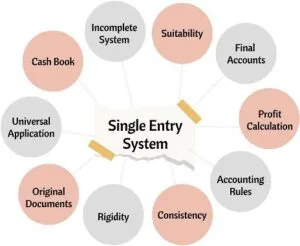
Incomplete records are the receipts and payments records a business keeps instead of a full set of books.
Behavioural objectives
By the end of the lesson, students should be able to:
- Define single entry and incomplete records.
- Name the records a business may keep when it has incomplete records.
- List the six steps for preparing a P&L A/C and balance sheet from incomplete records.
- State why an opening statement of affairs and control accounts are prepared.
- Prepare a profit and loss account and balance sheet from a set of incomplete records.
What is single entry?
Single entry is a method of record keeping in which transactions are not fully recorded using double entry.
- Incomplete records: the books of a business that has no full set of ledger accounts.
- Who uses it: small traders, such as a market stall owner or a small shop owner, who do not keep a full set of books.
- What can still be done: a trader can prepare a profit and loss account and a balance sheet from the records that exist.
What is the difference between single entry and double entry?
Double entry records both the debit and the credit of every transaction. Single entry does not.
| Point | Single entry | Double entry |
|---|---|---|
| Recording | Transactions are not fully recorded in two accounts. | Every transaction is recorded in two accounts. |
| Books kept | Few or no ledger accounts. | Full set of ledger accounts. |
| Trial balance | Cannot be used to check accuracy. | Used to check arithmetical accuracy. |
| Profit | Worked out from the records available. | Shown by the final accounts from the ledgers. |
| Capital | Found by comparing assets and liabilities. | Shown in the capital account. |
What records do businesses keep?
Most businesses with incomplete records keep documents that show receipts and payments.
- Bank paying-in book counterfoils: show the money paid into the bank.
- Chequebook counterfoils: show the payments made by cheque.
- Bank statements: show money paid in and out and the bank balance.
- Supplier invoices: show goods bought on credit.
- Copies of sales invoices: show goods sold on credit.
What is a statement of affairs?
A statement of affairs is a list of the assets and liabilities of a business at a given date, used to find the capital.
- Layout: it looks like a balance sheet.
- Capital: it is the balancing figure, not a figure taken from a capital account.
- Formula: Capital = Total assets – Total liabilities.
- Opening statement of affairs: gives the opening capital at the start of the period.
What are the steps for preparing a P&L A/C and balance sheet from incomplete records?
There are six steps, taken in this order:
- Opening statement of affairs: prepare it to obtain the opening capital.
- Receipts and payments account: prepare it from the bank and cash records.
- Control accounts: prepare them for debtors and creditors, if necessary, to calculate sales and purchases. These two figures are needed to make the account balance.
- Prepayments and accruals: adjust the receipts and payments accounts for those at the beginning and end of the period.
- Provisions and other items: calculate provisions for doubtful debts, depreciation and any other matters not mentioned above.
- Final accounts: prepare the P&L A/C and balance sheet from the information now available.
How are sales and purchases calculated?
Sales and purchases are found with control accounts, because they are not recorded directly.
Debtors control account
- Purpose: to find the credit sales for the period.
- Debit side: opening debtors and credit sales (the balancing figure).
- Credit side: cash and cheques received from debtors, and closing debtors.
- Total sales: credit sales plus any cash sales.
Creditors control account
- Purpose: to find the credit purchases for the period.
- Debit side: payments to creditors, and closing creditors.
- Credit side: opening creditors and purchases (the balancing figure).
How are expenses adjusted for prepayments and accruals?
The expense for the year is the cash paid, adjusted for amounts prepaid and owing.
| Item | Rule |
|---|---|
| Expense for the year | Cash paid + opening prepayment – closing prepayment + closing accrual – opening accrual |
| Prepaid expense | A debit balance, shown as a current asset. |
| Accrued expense | A credit balance, shown as a current liability. |
How can profit be found without a full set of books?
Profit can be found by comparing the opening and closing capital.
- Find the opening capital from the opening statement of affairs.
- Find the closing capital from the closing assets and liabilities.
- Calculate: Profit = Closing capital – Opening capital + Drawings – Capital introduced.
What are the limitations of incomplete records?
- No trial balance: errors are not easily found.
- Estimates: some figures, such as opening values, may only be estimates.
- Fraud: it is easier to hide mistakes or theft.
- Weak information: banks and tax offices may not accept the accounts easily.
Classwork: Azim’s accounts
Azim’s only records are bank paying-in book counterfoils, chequebook counterfoils and records of debtors and creditors.
His bank transactions for the year ended 31/12/03 are summarised below.
- Paid into the bank (takings): N8000.
- Cheques drawn: payment to suppliers N2430, rent N600, electricity N320, postage and stationery N80, purchase of shop fittings N480, and personal expenses N2700.
- Cash payments: Azim banked all his takings after paying in cash a creditor for supplies N400 and sundry expenses N115.
Assets and liabilities on 1st January 2003
Azim estimated them as follows:
- Shop fittings N1600
- Stock N1960
- Debtors N240
- Rent prepaid N80
- Bank balance N1500
- Cash in hand N50
- Creditors for goods N420
- Electricity owing N130
Assets and liabilities on 31st December 2003
Azim listed them as follows:
- Shop fittings N1800
- Stock N1520
- Debtors N380
- Rent prepaid N50
- Bank balance N2640
- Cash in hand N50
- Creditors for goods N390
- Electricity owing N225
Required: prepare Azim’s profit and loss account for the year ended 31 December 2003 and his balance sheet at that date.
Guide to the workings
- Opening capital: assets N5430 less liabilities N550 = N4880.
- Total takings: N8000 banked + N515 paid in cash (N400 + N115) = N8515. Cash in hand did not change.
- Sales: N8515 + closing debtors N380 – opening debtors N240 = N8655.
- Purchases: N2430 + N400 = N2830 paid. Add closing creditors N390, less opening creditors N420 = N2800.
- Rent: N600 + N80 – N50 = N630.
- Electricity: N320 + N225 – N130 = N415.
- Shop fittings: N1600 + N480 – N1800 = N280 fall in value, treated as depreciation.
- Final accounts: use these figures, with postage N80, sundry expenses N115 and drawings N2700.
Evaluation
- Name four records a business may keep when it has incomplete records.
- List the six steps for preparing a P&L A/C and balance sheet from incomplete records.
- Why is an opening statement of affairs prepared?
- Why are control accounts for debtors and creditors prepared?
Assignment
Answer all the questions below.
- A debtors control account is prepared to reveal: (a) debtors (b) creditors (c) cash received (d) sales.
- In incomplete records, a creditors’ control account is prepared to reveal: (a) sundry creditors (b) purchases (c) cash paid to creditors (d) discount received.
- In adjustment accounts, the prepaid rent A/C should have a ______ balance: (a) credit (b) debit (c) both debit and credit (d) either debit or credit.
- In adjusting for final accounts, accrued wages should have a ______ balance: (a) debit (b) credit (c) debit and credit (d) debit or credit.
- The calculation of provisions for doubtful debts, depreciation and similar items is done in step ____ when preparing a P&L A/C and balance sheet from incomplete records: (a) 1 (b) 2 (c) 5 (d) 6.
This term's Book Keeping topics
SS2 Third Term · 5 topics
- Single Entry and Incomplete Records
- Account of Non-Profit Making Organizations
- Receipt and Payment Account
- Income and Expenditure Account
- Basic Concepts of Marketing
Get Book Keeping as PDF and Word
Every week of SS2 Book Keeping, Third Term, formatted and ready to print. Ad-free, and the copy lock comes off.
Get this term Card, bank transfer, USSD or OPay
SS2 Book Keeping Lesson Notes for Other Topics
Account Of Non-Profit Making Organizations
Read the full lesson note.

Receipt And Payment Account
Read the full lesson note.
Income And Expenditure Account
Read the full lesson note.

Basic Concepts Of Marketing
Read the full lesson note.
Bad Debts And Doubtful Debts
Read the full lesson note.

Stock Evalaution
Read the full lesson note.
Control Account
Read the full lesson note.
Entreprenuership Education
Read the full lesson note.

Relational Models
Read the full lesson note.
Lesson Notes for Other Classes

SS1 Lesson Note
The complete lesson note to guide your studies.
SS3 Lesson Note
The complete lesson note to guide your studies.
