
Making of Crochets – JSS3 Cultural & Creative Arts Lesson Note (Second Term)
Download this term · ₦1,000Lesson note at a glance
- Subject
- Cultural & Creative Arts
- Class
- JSS3
- Term
- Second Term
- Topic
- Making of Crochets
- Order
- Topic 7 of 9 this term
- Reading time
- 4 min
Crochet is the making of fabric by interlocking loops of yarn, thread or other strands with a crochet hook.
Behavioural objectives
By the end of the lesson, students should be able to:
- define crochet and state where the word comes from;
- state the main difference between crochet and knitting;
- list articles that can be made by crochet;
- name the materials and tools used for crochet;
- describe the types and sizes of crochet hooks;
- list the basic equipment needed for crocheting.
What is crochet?
Crochet is a method of forming fabric from a single thread using a hook.
- Origin of the word: it comes from the French word “crochet”, meaning small hook.
- Hook materials: hooks are made of metal, wood or plastic.
- Where hooks are made: factories make them commercially, and artisan workshops also produce them.
- Portability: a ball of thread and a hook are all you need, so you can carry them in a bag and crochet almost anywhere.
How is crochet different from knitting?
Crochet completes each stitch before the next one is started, while knitting keeps many stitches open at a time.
- Crochet: uses one hook and works on one loop at a time.
- Knitting: uses two needles (or more) and holds a whole row of live stitches.
- Variant forms: Tunisian crochet and broomstick lace keep several crochet stitches open at a time.
| Point | Crochet | Knitting |
|---|---|---|
| Tool | One crochet hook | Knitting needles |
| Open stitches | One at a time | Many at a time |
| Stitch completion | Each stitch is finished before the next | Stitches stay open until the row is done |
What is crochet used for?
Crochet is used to make articles for personal and household use.
- Traditional use: lacy patterns for doilies and edgings.
- Modern use: a wide range of articles made with modern designs.
Articles made by crochet
- Baby’s clothes and blankets: soft items for infants.
- Ladies’ blouses and gowns: wearable clothing.
- Shawls: wraps for the shoulders.
- Bags: for carrying personal items.
- Belts: worn at the waist.
- Caps: worn on the head.
- Lampshades: household decoration.
- Table or plate mats: protect table surfaces.
- Bedspreads: cover the bed.
- Rugs: cover the floor.
What materials are needed for crochet?
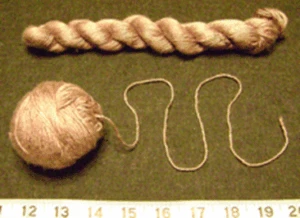
The basic materials for crochet are a hook and a material to crochet, most commonly yarn or thread.
Additional tools
These tools help with counting stitches, measuring work and making accessories.
- Cardboard cutouts: used to make tassels, fringe and many other items.
- Pom-pom circle: used to make pom-poms.
- Tape measure and gauge measure: used to measure crocheted work and count stitches.
- Row counter: keeps count of the rows worked.
- Plastic rings: occasionally used for special projects.
Types of yarn
- Synthetic, plant and animal fibres: the usual yarn materials.
- Newer fibres: yarn is now also made from bamboo, qiviut, hemp and banana stalks.
What are crochet hooks?
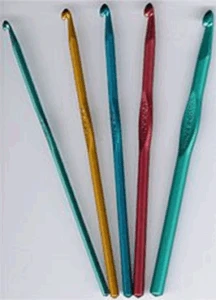
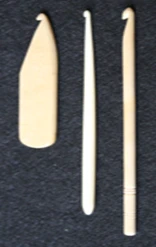
A crochet hook is a small tool with a hooked tip used to pull loops of yarn through other loops.
- Materials: bone, bamboo, aluminium, plastic and steel.
- Sizing: hooks are sized by the diameter of the shaft.
- Gauge: a pattern states the stitch size needed, called the gauge.
- Changing hooks: if the gauge is not reached, the crafter tries another hook until the stitches are the right size.
Why do crafters prefer some hook materials?
- Appearance: some crafters like the look of a certain material.
- Glide: yarn slides more easily on some hooks than on others.
- Hand disorders: crafters with arthritis often favour bamboo or wood over metal.
- Reason for bamboo and wood: they are seen as warmer and more flexible to use.
- Hook aids: hook grips and ergonomic handles also help crafters.
What are the hook sizes?
Hook size depends on the hook type, and the size is given in millimetres or in American sizing.
| Type of hook | Size in millimetres | American sizing | Use |
|---|---|---|---|
| Steel | 0.4 to 3.5 | 00 to 16 | Fine crochet work such as doilies and lace |
| Aluminium, bamboo and plastic | 2.5 to 19 | B to S | Thicker yarn work such as clothes, bags and blankets |
What are the other types of hook?
Besides the plain hook, there are several special hooks and devices.
- Artisan-made hooks: often of hand-turned wood, sometimes decorated with semi-precious stones or beads.
- Tunisian hooks: long, with a stopper at the end of the handle.
- Double-ended hooks: have a hook on both ends of the handle.
- Cro-hook: a popular double-hooked tool.
- Hairpin loom: a device used with a crochet hook to make long, lacy stitches called hairpin lace. It is not a hook itself.
What equipment is needed for crocheting?
The basic equipment for crocheting is a ball of wool, hooks and a few simple tools.
- Ball of wool: the yarn to be worked.
- Small bag: keeps the equipment clean.
- Tape measure: measures the work.
- Small pair of scissors: cuts the yarn.
- Blunt-pointed needle: used to sew pieces together and hide loose ends.
- Crochet hooks: several sizes, to suit different yarns and patterns.
Evaluation
- Define crochet.
- State one difference between crochet and knitting.
- List five articles that can be made by crochet.
- Name four items of crochet equipment.
- Why might a crafter with arthritis choose a bamboo or wooden hook?
Assignment
Explain where the word “crochet” comes from, and list the materials from which crochet hooks are made.
This term's Cultural & Creative Arts topics
JSS3 Second Term · 9 topics
Get Cultural & Creative Arts (CCA) as PDF and Word
Every week of JSS3 Cultural & Creative Arts (CCA), Second Term, formatted and ready to print. Ad-free, and the copy lock comes off.
Get this term Card, bank transfer, USSD or OPay
JSS3 Cultural & Creative Arts (CCA) Lesson Notes for Other Topics

Package Designs
Read the full lesson note.
Package Designs II
Read the full lesson note.
Marketing Of Artwork
Read the full lesson note.

Funding For Art Business
Read the full lesson note.

Introduction To Embroidery
Read the full lesson note.
Knitting
Read the full lesson note.
Batik Work
Read the full lesson note.

Uses And Impact of Music
Read the full lesson note.

Nigerian Traditional Art
Read the full lesson note.
Contemporary Nigerian Art And Artists
Read the full lesson note.
Motif
Read the full lesson note.
Display Techniques
Read the full lesson note.
Lettering
Read the full lesson note.

Drama And The Development Of Rural Communities
Read the full lesson note.

Opportunities For Career Dramatists
Read the full lesson note.
Lesson Notes for Other Classes

JSS1 Lesson Note
The complete lesson note to guide your studies.

JSS2 Lesson Note
The complete lesson note to guide your studies.
