
Physical Fitness – Basic 6 Physical & Health Education Lesson Note (Second Term)
Download Lesson NoteLesson note at a glance
- Subject
- Physical & Health Education
- Class
- Basic 6
- Term
- Second Term
- Topic
- Physical Fitness
- Order
- Topic 4 of 8 this term
- Reading time
- 4 min
Learning Objectives
By the end of the lesson, pupils should be able to:
- Discuss the concept of physical fitness
- List components of physical fitness
- Differentiate between health-related and performance-related components
Content
What is Physical Fitness?
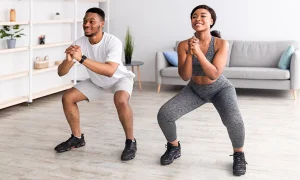
Definition: Physical fitness is the ability to perform daily activities with vigor, without excessive fatigue, and with enough energy to enjoy leisure activities and meet emergency demands.
Importance of Physical Fitness:
- Improves overall health
- Increases energy levels
- Enhances mental health
- Reduces disease risk
- Improves quality of life
- Increases lifespan
- Boosts confidence
- Better sleep
- Stronger immune system
Components of Physical Fitness
Physical fitness has TWO main categories with a total of 11 components:
A. health-related components (5)
These components are essential for good health and daily functioning.
- CARDIOVASCULAR ENDURANCE
Definition: Ability of heart, lungs, and blood vessels to deliver oxygen to working muscles during prolonged physical activity.
Importance:
- Reduces heart disease risk
- Improves stamina
- Increases energy
- Better oxygen delivery
Activities to Improve:
- Running/Jogging
- Swimming
- Cycling
- Brisk walking
- Dancing
- Rope skipping
- Aerobics
Tests:
- 12-minute run
- Step test
- Beep test
- MUSCULAR STRENGTH
Definition: Maximum amount of force a muscle or muscle group can exert in a single effort.
Importance:
- Perform daily tasks easily
- Better posture
- Injury prevention
- Bone health
- Metabolism boost
Activities to Improve:
- Weight lifting
- Push-ups
- Pull-ups
- Squats
- Resistance band exercises
Tests:
- One-rep max
- Grip strength test
- MUSCULAR ENDURANCE
Definition: Ability of muscles to perform repeated contractions over time without fatigue.
Difference from Strength:
- Strength = Maximum force once
- Endurance = Repeated efforts over time
Importance:
- Sustain physical activity
- Reduce fatigue
- Improve posture
- Daily task performance
Activities to Improve:
- Sit-ups
- Push-ups (multiple reps)
- Plank holds
- Cycling long distance
- Swimming laps
Tests:
- Maximum push-ups in 1 minute
- Maximum sit-ups in 1 minute
- Plank duration
- FLEXIBILITY
Definition: Range of motion available at a joint or group of joints.
Importance:
- Injury prevention
- Better posture
- Reduced muscle soreness
- Improved performance
- Daily movement ease
Activities to Improve:
- Stretching exercises
- Yoga
- Pilates
- Gymnastics
- Dance
Tests:
- Sit and reach test
- Shoulder flexibility test
Types of Stretching:
- Static (holding position)
- Dynamic (controlled movements)
- Ballistic (bouncing)
- PNF (partner-assisted)
- BODY COMPOSITION
Definition: Relative proportion of fat mass to lean mass (muscle, bone, water) in the body.
Importance:
- Health indicator
- Disease risk assessment
- Performance optimization
- Fitness progress tracking
Healthy Body Composition:
- Appropriate body fat percentage
- Good muscle mass
- Strong bones
- Adequate hydration
Factors Affecting:
- Diet/nutrition
- Exercise
- Genetics
- Age
- Gender
- Hormones
Assessment Methods:
- BMI (Body Mass Index)
- Skin fold measurements
- Bioelectrical impedance
- Waist-to-hip ratio
Improvement:
- Balanced diet
- Regular exercise
- Adequate sleep
- Stress management
- Hydration
B. performance-related components (6)
These components are more important for athletic performance and sports.
- AGILITY
Definition: Ability to change direction quickly and efficiently while maintaining control.
Importance in Sports:
- Quick direction changes
- Evading opponents
- Catching/striking moving objects
- Improved reaction
Activities:
- Shuttle runs
- Cone drills
- Ladder drills
- Zig-zag runs
- Sports: Basketball, football, tennis
Tests:
- Illinois agility test
- T-test
- Hexagon test
- BALANCE
Definition: Ability to maintain equilibrium while stationary or moving.
Types:
- Static balance: Maintaining position (standing on one leg)
- Dynamic balance: Maintaining control while moving (walking on beam)
Importance:
- Injury prevention
- Better coordination
- Sports performance
- Daily activities
Activities:
- Yoga poses
- Balance board
- One-leg stands
- Gymnastics
- Dance
Tests:
- Stork stand test
- Balance beam walk
- COORDINATION
Definition: Ability to use different body parts together smoothly and efficiently.
Types:
- Hand-eye coordination
- Foot-eye coordination
- Hand-foot coordination
Importance:
- Sports performance
- Daily tasks
- Learning new skills
- Injury prevention
Activities:
- Juggling
- Dribbling
- Catching and throwing
- Dancing
- Playing musical instruments
Tests:
- Wall toss test
- Alternate hand wall toss
- POWER
Definition: Ability to exert maximum force in the shortest time (Speed × Strength).
Formula: Power = Force × Velocity
Importance:
- Explosive movements
- Sports performance
- Jumping, throwing, sprinting
Activities:
- Plyometrics (jump training)
- Medicine ball throws
- Sprint starts
- Olympic lifts
Tests:
- Standing long jump
- Vertical jump
- Medicine ball throw
- REACTION TIME
Definition: Time taken to respond to a stimulus.
Importance:
- Sports performance
- Safety (avoiding danger)
- Competitive advantage
- Quick decision-making
Factors Affecting:
- Age
- Fatigue
- Practice
- Anticipation
- Type of stimulus
Activities:
- Sprinting starts
- Catching dropped ruler
- Reaction ball drills
- Sports requiring quick responses
Tests:
- Ruler drop test
- Light board test
- SPEED
Definition: Ability to move the body or body parts quickly.
Types:
- Acceleration speed (starting)
- Maximum speed (peak velocity)
- Speed endurance (maintaining speed)
Importance:
- Sports performance
- Competitive advantage
- Efficiency of movement
Activities:
- Sprinting
- Interval training
- Plyometrics
- Sport-specific drills
Tests:
- 40-meter dash
- 100-meter sprint
- Flying 30-meter test
Comparison Table:
| Component | Category | Example Activity | Example Sport |
| Cardiovascular Endurance | Health | Jogging | Marathon |
| Muscular Strength | Health | Weightlifting | Powerlifting |
| Muscular Endurance | Health | Push-ups | Wrestling |
| Flexibility | Health | Stretching | Gymnastics |
| Body Composition | Health | Balanced diet + exercise | All |
| Agility | Performance | Cone drills | Football |
| Balance | Performance | One-leg stand | Gymnastics |
| Coordination | Performance | Juggling | Basketball |
| Power | Performance | Jump squats | Basketball |
| Reaction Time | Performance | Sprint starts | Sprinting |
| Speed | Performance | Sprinting | Track events |
Developing Physical Fitness:
Principles:
- Specificity – Train for specific goals
- Overload – Challenge body beyond normal
- Progression – Gradually increase intensity
- Reversibility – “Use it or lose it”
- Individual differences – Everyone is different
FITT Principle:
- Frequency – How often
- Intensity – How hard
- Time – How long
- Type – What activity
For Students:
- Exercise 60 minutes daily
- Mix different activities
- Include all components
- Make it fun
- Stay consistent
- Get adequate rest
- Eat nutritiously
- Stay hydrated
This term's Physical & Health Education topics
Basic 6 Second Term · 8 topics
Second Term Physical & Health Education Lesson Notes for Other Topics
Games - Basic Skills in Ball Games
Read the full lesson note.

Games (Local Games)
Read the full lesson note.
Safety Rules in Football Games
Read the full lesson note.
Swimming (Aquatic)
Read the full lesson note.
Revision
Read the full lesson note.

Revision II
Read the full lesson note.
Safety Rules in Swimming
Read the full lesson note.
Ball Games - Basketball
Read the full lesson note.

Ball Games - Football
Read the full lesson note.
Ball Games - Safety Rules in Football
Read the full lesson note.

Tennis
Read the full lesson note.

Recreation
Read the full lesson note.

Gymnastics with Apparatus
Read the full lesson note.
Gymnastics
Read the full lesson note.

Physical Fitness Cont'd
Read the full lesson note.
Lesson Notes for Other Classes

Basic 1 Lesson Note
The complete lesson note to guide your studies.

Basic 2 Lesson Note
The complete lesson note to guide your studies.

Basic 3 Lesson Note
The complete lesson note to guide your studies.

Basic 4 Lesson Note
The complete lesson note to guide your studies.

Basic 5 Lesson Note
The complete lesson note to guide your studies.

JSS1 Lesson Note
The complete lesson note to guide your studies.

