
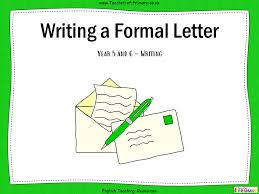
Guided Formal Letter Writing Basic 5 English Studies Lesson Note
Download Lesson NoteTopic: Guided Formal Letter Writing
Learning Objectives:
- understand advanced forms of a functional
- identify the main idea and supporting details in different passages
- analyze textual details for effective questions
Embedded Core Skills: • Reading • Vocabulary development • Comprehension
Learning Materials: • Whiteboard and markers • Comprehension passages • Worksheets with questions
Set Induction: The teacher will begin the lesson by asking pupils to read a short passage and identify the main idea, then ask them to find supporting details that help them understand the main idea better.
Building Background/Connection to Prior Knowledge: • Good comprehension • Basic understanding of main ideas and supporting details • Familiarity with reading comprehension passages
Entry Behaviour: Pupils have learned about identifying supporting details from previous comprehension passages and can identify basic textual information.
Reference Books: • Primary English textbook for Primary 5 • Comprehension workbook
Content:
Main Idea: It tells what the passage is mainly about. It is the most important idea in the passage.
Supporting Details: These are the facts, examples, and other information that help explain the main idea.
How to find the main idea and supporting details:
- Read the passage carefully
- Ask yourself: “What is this passage mostly about?”
- Look for the sentence or sentences that tell you what the whole passage is about
- Supporting details usually come before or after the main idea
Example:
Dogs make great pets. They are loyal and loving. Dogs can protect your home and family. Many dogs like to play fetch and go for walks. Dogs need food, water, and exercise every day.
Main Idea: Dogs make great pets.
Supporting Details: • They are loyal and loving • Dogs can protect your home and family • Many dogs like to play fetch and go for walks • Dogs need food, water, and exercise every day
Comprehension Passage:
The butterfly is one of the most beautiful creatures in nature. Butterflies come in many different colors like orange, yellow, blue, and red. They have four wings that help them fly from flower to flower. Butterflies start their life as caterpillars. The caterpillar eats leaves and grows bigger. Then it makes a cocoon around itself. After some time, a beautiful butterfly comes out of the cocoon. Butterflies drink nectar from flowers. They are important because they help flowers make seeds by carrying pollen from one flower to another.
Questions:
- What is the main idea of this passage? a) Caterpillars eat leaves b) The butterfly is one of the most beautiful creatures in nature c) Butterflies have four wings d) Butterflies drink nectar
- Which detail supports the main idea of the passage? Butterflies… a) eat leaves b) come in many different colors c) make cocoons d) all of the above
- What are some details about butterfly life cycle? Choose all that apply: a) They start as caterpillars b) They make cocoons c) They come out as butterflies d) All of the above
- Why are butterflies important according to the passage? a) They are beautiful b) They help flowers make seeds c) They have four wings d) They drink nectar
- Supporting details… a) tell us more about the main idea b) are not important c) are the same as the main idea d) none of the above
Assessment:
After reading the passage, students will identify the main idea and list three supporting details.
Evaluation:
- The main idea is the most important idea in a _______. a) sentence b) paragraph c) passage d) word
- Supporting details _______ the main idea. a) contradict b) explain c) ignore d) repeat
- To find the main idea, you should ask “What is this passage _______ about?” a) least b) never c) mostly d) sometimes
- In the butterfly passage, the main idea appears _______. a) at the end b) in the middle c) at the beginning d) nowhere
- Details about butterfly colors are _______ details. a) main b) supporting c) unimportant d) confusing
- A passage about dogs would likely have supporting details about _______. a) cats b) birds c) dog behavior and care d) fish
- The purpose of supporting details is to _______. a) confuse the reader b) provide more information about the main idea c) change the topic d) end the passage
- When looking for the main idea, look for the sentence that _______. a) has the most words b) comes first c) tells what the whole passage is about d) has difficult words
- Supporting details help make the main idea _______. a) harder to understand b) clearer and more complete c) less important d) confusing
- Good readers look for _______ to help understand what they read. a) pictures only b) main ideas and supporting details c) long words d) short sentences
Presentation:
Step 1: The teacher reviews the previous lesson on reading comprehension and supporting details.
Step 2: The teacher introduces the concept of main idea, explaining that it’s the most important idea in a passage.
Step 3: The teacher shows how to identify supporting details that help explain the main idea.
Teacher’s Activities: • Explain what main ideas and supporting details are • Provide examples using simple passages • Guide students through identifying main ideas and supporting details
Learners’ Activities: • Read passages carefully • Identify main ideas in given passages • List supporting details • Answer comprehension questions
Assessment: • Students will read a passage and correctly identify the main idea and supporting details • Evaluate student understanding through questioning and written exercises
Evaluation Questions:
- What is a main idea?
- How do you find the main idea in a passage?
- What are supporting details?
- Why are supporting details important?
- Give an example of a main idea and supporting details from today’s lesson.
Homework: Students will be given a comprehension passage to read at home and identify the main idea and three supporting details.
First Term English Studies Lesson Notes for Other Topics

Build Rhyming Words Family
Explore lesson notes covering all topics.

Writing: Describe an Object
Explore lesson notes covering all topics.

Vocabulary: New Words II
Explore lesson notes covering all topics.
Structure: Articles "a" and "an"
Explore lesson notes covering all topics.
Phonics: Rhyming Words & one Syllable Words
Explore lesson notes covering all topics.

Writing - Writing of Alphabet (cont'd)
Explore lesson notes covering all topics.
Vocabulary - New Words
Explore lesson notes covering all topics.
Vocabulary: Objects in the Kitchen
Explore lesson notes covering all topics.
Reading: Pictorial Reading
Explore lesson notes covering all topics.
Structure: Action Verbs with Kitchen Objects
Explore lesson notes covering all topics.

Writing: First Letters of Kitchen Objects
Explore lesson notes covering all topics.
Phonics: Songs and Rhymes
Explore lesson notes covering all topics.

Structure: Matching Words and Figures
Explore lesson notes covering all topics.
Vocabulary: New Words III
Explore lesson notes covering all topics.
Writing: 'Our House' & Two Letter Words
Explore lesson notes covering all topics.
Lesson Notes for Other Classes

Basic 1 Lesson Note
The complete lesson note to guide your studies.

Basic 2 Lesson Note
The complete lesson note to guide your studies.

Basic 3 Lesson Note
The complete lesson note to guide your studies.

Basic 4 Lesson Note
The complete lesson note to guide your studies.
Basic 6 Lesson Note
The complete lesson note to guide your studies.

JSS1 Lesson Note
The complete lesson note to guide your studies.