Revision of Whole Numbers – Basic 4 Mathematics Lesson Note (First Term)
Download Lesson NoteLesson note at a glance
- Subject
- Mathematics
- Class
- Basic 4
- Term
- First Term
- Topic
- Revision of Whole Numbers
- Order
- Topic 3 of 6 this term
- Reading time
- 4 min
LEARNING AREA
- Introductory Activities
- Revision of Counting, Reading and Writing up to 999
- Revision of Counting, Reading and Writing up to 9 999
- Value and Place Value of Whole Numbers up to 9 999
- Lesson Evaluation and Weekly Assessment (Test)
PERFORMANCE OBJECTIVES By the end of the lesson, most of the pupils should have attained the following objectives –
- count, read and write numbers up to 999.
- count, read and write numbers up to 9999.
- find the value and place value of whole numbers up to 9999.
ENTRY BEHAVIOR The pupils can count, Read and write the whole number up to 1 000.
INSTRUCTIONAL MATERIALS The teacher will teach the lesson with the aid of:
- Chart of square boxes
- Charts of written whole numbers
- Place value chart, etc.
METHOD OF TEACHING Choose a suitable and appropriate methods for the lessons.
Note – Irrespective of choosing methods of teaching, always introduce an activities that will arouse pupil’s interest or lead them to the lessons.
REFERENCE MATERIALS
- Scheme of Work
- 9 – Years Basic Education Curriculum
- Course Book – New Method Mathematics, Prime Mathematics, Primary Mathematics and MacMillan New Primary Mathematics
- All Relevant Material
- Online Information
CONTENT OF THE LESSON
LESSON 1 – COUNTING IN 100s
ACTIVITY 1 – COUNTING IN 10s Organize the pupils into two or more groups depending on the size of the class. Provide each group with a copy of 100 square boxes.
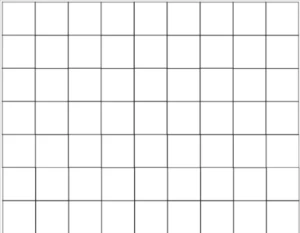
Group Instructions,
- Counting the number of boxes on the chart.
- Number each box in this order – 1, 2, 3 ___
ACTIVITY 2 – WHOLE CLASS Leads the pupils to count from 63 – 99
Teacher’s remark – We count in tens when there are 2 digits in a number.
ACTIVITY 3 – WHOLE CLASS Leads pupils to count in this order –
- 101, 102, _____, _____, 106, _____, _____, 111.
- 105, 110, _____, _____, _____, _____, 170, _____.
- 111, _____, _____, 151, _____, _____, _____, 191.
- 215, _____, 225, _____, _____, _____, _____, 260.
- 217, _____, _____, 237, _____, _____, _____, 277.
- 555, _____, _____, 575, _____, _____, _____, 605.
- 68, 610, _____, _____, 640, _____, _____, _____, 700.
ACTIVITY 4 – INDIVIDUAL WORK
Copy and complete the following:
- 118, _____, 120, _____, 122, _____, _____, _____.
- 150, _____, 140, _____, _____, 160, _____, _____.
- 114, 121, _____, _____, _____, _____, _____, 171.
- 278, 279, _____, _____, 282, _____, 286, _____.
- 656, _____, _____, 695, _____, _____, 734, _____.
- 280, _____, 278, _____, _____, 274, _____, 272, _____.
ACTIVITY 5 – ASSIGNMENT Copy and fill in the missing numerals.
- 711, 712, 713, _____, _____, _____, 717, _____, 719, _____.
- 808, 810, _____, _____, 825, 830, _____, _____, 845, _____.
- 902, 904, _____, 908, _____, _____, _____, _____, 920.
- 991, 992, _____, _____, _____, 996, _____, _____, 1 000.
LESSON 2 – COUNTING IN 1 000s
ACTIVITY 1 – CORRECTION Display chart showing the following numbers:
- 711, 712, 713, _____, _____, _____, 717, _____, 719, _____.
- 808, 810, _____, _____, 825, 830, _____, _____, 845, _____.
- 902, 904, _____, 908, _____, _____, _____, _____, 920.
- 991, 992, _____, _____, _____, 996, _____, _____, 1 000.
Ask the pupils to exchange their assignment with the instruction, mark the correct number as √ and wrong as x.
Randomly call on anyone of them to complete a question.
At the end of the correction score the pupils if the size of the class is low. In case of a large class, give instruction on the assignment should be scored.
ACTIVITY 2 – COUNTING IN THOUSANDS We count in thousands when there are more than 3 digits in a number.
Guide pupils to study the sequence below:
- 1 001 1 002 1 003 1 004 1 005 1 006 1 007 1 008 1 009 1 010
- 1 000 2 000 3 000 4 000 5 000 6 000 7 000 8 000 9 000
- 1 111 2 222 3 333 4 444 5 555 6 666 7 777 8 888 9 999
- 4 220 2 230 2 240 2 250 2 260 2 270 2 280 2 290 2 300
- 5 650 5 660 5 700 5 750 5 800 5 850 5 900 5 950 6 000
ACTIVITY 3 – COUNT, LOUD AND CLEAR Lead pupils to count the number sequence correctly.
ACTIVITY 4 – WORK TO DO Complete the sequences below:
- 1 118 _____, 1 120 _____, 1 123 _____, _____, _____.
- 1 180 _____, 1 190 _____, _____, _____, 1 210 _____.
- 2 171, 2 175 _____, _____, _____, _____, _____, 2 211.
- 3 278, 3 279 _____, _____, 3 283 _____, _____, 3 286 _____.
- 4 503 _____, _____, 4 506 _____, _____, _____, 4 512 _____.
- 7 266 _____, 7 276 _____, _____, 7 274 _____, 7 275.
LESSON 3 – VALUE AND PLACE VALUE OF WHOLE NUMBERS
ACTIVITY 1 – INTRODUCTORY ACTIVITIES
- What number is 5 hundred without a fraction or another.
Every digit in a number, for example, 7 385 has the value and place value of each digit as follows:
From the rightmost position.
- 7 units
80 = 8 tens
300 = 3 hundreds
7 000 = 7 thousands
This can also be represent the place value of the number as:
7 000 + 300 + 80 + 5
= 7 thousands + 3 hundreds + 8 tens + 5 units
- The place value of 8 in 5 unit its value = 5
- The place value of 8 in 4 tens its value = 80
- The place value of 8 in 9 hundreds, its value = 900
- The place value of 7 in thousands, its value = 7 000
ACTIVITY 2 – CLASSWORK
Write down the place value and value of each of the bold numbers:
- 754 5
The place value of 5 is 5 _____, its value = _____.
- 900
The place value of 9 is 9 _____, its value = _____.
- 245
The place value of 4 is 4 _____, its value = _____.
- 3 091
The place value of 3 is 3 _____, its value = _____.
ACTIVITY 3 – CORRECTION
- 754 5
The place value of 5 is 5 units, its value = 5
- 900
The place value of 9 is 9 hundreds, its value = 900
- 245
The place value of 4 is 4 units its value = 40
- 3 091
The place value of 3 is 3 thousands, its value = 3 000
PRESENTATION
To deliver the lesson, the teacher adopts the following steps:
- To introduce the lesson, the teacher revises the previous lesson. Based on this, he/she asks the pupils some questions.
- Displays chart showing square boxes.
- Impresses the pupils into two or more groups depending on the size of the class.
- Gives each group a copy of square boxes.
- Asks the pupils to count and number each box in this order – 1, 2, 3…
Pupil’s Activities – Follow the teacher’s instructions, count and number the square boxes.
- Leads pupils to count and write whole numbers in sequence up to 9 999.
Pupil’s Activities – Count and write whole numbers in sequence up to 9 999.
- Guides pupils to find the value and place value of whole numbers.
Pupil’s Activities – Find the value and place value of whole numbers.
- At the end of each lesson, give classwork or assignment.
Pupil’s Activities – Do your classwork or assignment.
CONCLUSION
To conclude the lesson for the week, the teacher revises the entire lesson and links it to the following week’s lesson.
NEXT LESSON
LESSON EVALUATION
Ask pupil to:
Count and write the following numbers
■ 1 118, ____ 1 120, ____ ____ 1 123, ____ ____ ____ ____ ____.
■ 1 100, ____ 1 120, ____ ____ ____ 1 160, ____ ____ ____ ____.
■ 2 111, 2 121, ____ ____ ____ ____ ____ ____ ____ ____ 2 211.
■ 5 278, 5 279, ____ ____ 5 282, ____ ____ ____ 5 286, ____ ____.
■ 8 656, ____ ____ ____ 8 696, ____ ____ ____ 8 736, ____ ____.
■ 9 280, ____ 9 278, ____ ____ ____ 9 274, ____ 9 272, ____ ____.
- Write down the place-value and value of each of the bold number,
■ 586
■ 999
■ 542
■ 3 091
This term's Mathematics topics
Basic 4 First Term · 6 topics
First Term Mathematics Lesson Notes for Other Topics
Whole Numbers - Counting & Writing 1-10
Read the full lesson note.
Whole Numbers - Counting & Writing 1-20
Read the full lesson note.
Whole Numbers 1-30 (Continued)
Read the full lesson note.
Numbers & Quantities 1-20
Read the full lesson note.
Whole Numbers 1-40 (Continued)
Read the full lesson note.
Comparing & Ordering Numbers 1-50
Read the full lesson note.
Counting & Writing Skills Review
Read the full lesson note.
Counting Skill: Numbers 51-60
Read the full lesson note.
Addition: Two 1-Digit Numbers (Sum ≤ 10)
Read the full lesson note.

Counting Skills: Numbers 61-70
Read the full lesson note.

Comparison & Ordering Numbers: 1-50
Read the full lesson note.

Whole Numbers
Read the full lesson note.
Addition and Subtraction of Whole Numbers
Read the full lesson note.
Addition and Subtraction of Whole Numbers
Read the full lesson note.
Division of Whole Numbers
Read the full lesson note.
Lesson Notes for Other Classes

Basic 1 Lesson Note
The complete lesson note to guide your studies.
Basic 2 Lesson Note
The complete lesson note to guide your studies.

Basic 3 Lesson Note
The complete lesson note to guide your studies.
Basic 5 Lesson Note
The complete lesson note to guide your studies.

Basic 6 Lesson Note
The complete lesson note to guide your studies.

JSS1 Lesson Note
The complete lesson note to guide your studies.