
Vocabulary Building: Synonyms and Antonyms – Basic 2 English Lesson Note (First Term)
Download Lesson NoteLesson note at a glance
- Subject
- English Studies
- Class
- Basic 2
- Term
- First Term
- Topic
- Vocabulary Building: Synonyms and Antonyms
- Order
- Topic 14 of 39 this term
- Reading time
- 1 min
Learning Objectives
By the end of the lesson, pupils should be able to:
- Explain synonyms and antonyms
- List some synonyms and antonyms
- Compare synonyms and antonyms
Introduction
Words can have similar meanings (synonyms) or opposite meanings (antonyms). Learning these helps us use better words when we speak and write.
Content Development
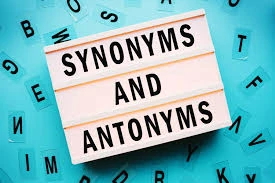
What are Synonyms? Synonyms are words that have the same or similar meaning.
Examples of Synonyms:
- Big = Large = Huge = Giant
- Small = Little = Tiny = Mini
- Happy = Glad = Joyful = Cheerful
- Sad = Unhappy = Sorrowful = Upset
- Fast = Quick = Speedy = Rapid
- Beautiful = Pretty = Lovely = Nice
- Smart = Clever = Intelligent = Wise
- Start = Begin = Commence
- End = Finish = Complete = Stop
What are Antonyms? Antonyms are words that have opposite meanings.
Examples of Antonyms:
- Hot ↔ Cold
- Big ↔ Small
- Happy ↔ Sad
- Fast ↔ Slow
- Up ↔ Down
- In ↔ Out
- Day ↔ Night
- Good ↔ Bad
- Clean ↔ Dirty
- Full ↔ Empty
- Old ↔ New
- Hard ↔ Soft
Comparison between Synonyms and Antonyms:
| Synonyms | Antonyms |
| Same meaning | Opposite meaning |
| Help us avoid repeating words | Show differences |
| Example: big/large | Example: big/small |
| Make writing interesting | Help us understand contrasts |
Using Synonyms in Sentences:
- The dog is big. / The dog is large.
- I am happy. / I am glad.
- She runs fast. / She runs quickly.
Using Antonyms in Sentences:
- The tea is hot, but the juice is cold.
- My bag is heavy, but yours is light.
- He is tall, but she is short.
This term's English Studies topics
Basic 2 First Term · 39 topics
- Picture Reading
- Supplementary Reading
- Listening to and Telling a Story
- Phonics: /B/, /D/ (Bed, Dog)
- Writing of Letters: A, B, C
- Vocabulary Building: Synonyms and Antonyms
- Comprehension: Reading Passage
- Phonics: Pronounce Consonant Sounds in Isolation
- Picture Reading: Classroom Environment
- Writing of Alphabet: Two Letter Words
- Introduction to Colours
First Term English Studies Lesson Notes for Other Topics

Build Rhyming Words Family
Read the full lesson note.
Writing: Describe an Object
Read the full lesson note.
Vocabulary: New Words II
Read the full lesson note.
Structure: Articles "a" and "an"
Read the full lesson note.
Phonics: Rhyming Words & one Syllable Words
Read the full lesson note.
Writing - Writing of Alphabet (cont'd)
Read the full lesson note.

Vocabulary - New Words
Read the full lesson note.
Vocabulary: Objects in the Kitchen
Read the full lesson note.

Reading: Pictorial Reading
Read the full lesson note.
Structure: Action Verbs with Kitchen Objects
Read the full lesson note.
Writing: First Letters of Kitchen Objects
Read the full lesson note.
Phonics: Songs and Rhymes
Read the full lesson note.
Structure: Matching Words and Figures
Read the full lesson note.
Vocabulary: New Words III
Read the full lesson note.
Writing: 'Our House' & Two Letter Words
Read the full lesson note.
Lesson Notes for Other Classes

Basic 1 Lesson Note
The complete lesson note to guide your studies.

Basic 3 Lesson Note
The complete lesson note to guide your studies.

Basic 4 Lesson Note
The complete lesson note to guide your studies.

Basic 5 Lesson Note
The complete lesson note to guide your studies.

Basic 6 Lesson Note
The complete lesson note to guide your studies.

JSS1 Lesson Note
The complete lesson note to guide your studies.

