
Security Precaution in the Environment – Basic 1 Security Education Lesson Note (Second Term)
Download this term · ₦1,000Lesson note at a glance
- Subject
- Security Education
- Class
- Basic 1
- Term
- Second Term
- Topic
- Security Precaution in the Environment
- Order
- Topic 7 of 7 this term
- Reading time
- 13 min
An environmental emergency is a dangerous situation in our surroundings that can harm many people, such as a flood, a fire or a road accident. Safety precautions are the steps we take before, during and after an emergency to protect ourselves. This lesson covers flood, fire, road accident, earthquake, lightning, building collapse, gas leak and chemical spill safety.
Behavioural objectives
By the end of the lesson, students should be able to:
- Mention precautions to be taken during floods
- Describe precautions during fire outbreaks
- State what to do during road accidents and other emergencies
What are environmental emergencies?
Sometimes dangerous things happen in our environment that we cannot control, like floods, fires or accidents. These are called emergencies or disasters. Today we will learn how to stay safe when these things happen.
Environmental emergencies are dangerous situations that happen in our surroundings and can harm many people. They include natural disasters (from nature) and accidents.
Flood safety precautions
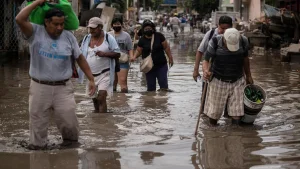
What is a flood?
A flood is when water covers land that is usually dry. It happens when:
- Too much rain falls
- Rivers overflow
- Drainage is blocked
- A storm brings too much water
Dangers of floods
- You can drown
- Water can sweep you away
- Buildings can collapse
- Diseases spread through flood water
- Snakes and dangerous animals may be in the water
- Electric shock from fallen wires
- You can get cuts from sharp objects in the water
Before a flood (preparation)
What families should do
- Know if you live in a flood-prone area
- Have emergency supplies ready:
- Clean drinking water
- Non-perishable food (food that lasts long)
- First aid kit
- Torch and batteries
- Important documents in a waterproof bag
- Warm clothes and blankets
- Radio to hear weather updates
- Know evacuation routes (ways to leave)
- Have emergency phone numbers
- Identify high ground nearby
What children should know
- Where the emergency supplies are
- Where to meet family if separated
- Phone numbers of parents
- The address where you live
- How to recognise flood warnings
During a flood: important rules
- Stay out of flood water
- Don’t play in flood water
- Don’t walk through flowing water
- Even shallow water can sweep you away
- Water may have dangerous things in it
- Get to high ground
- Go to upper floors if possible
- Get to a safe high place
- Don’t stay in areas that flood
- Listen to adults
- Follow your parents’ instructions immediately
- Don’t argue
- Move quickly when told
- Stay indoors
- Don’t go outside during a flood
- Stay away from windows
- Don’t play outside
- Avoid electrical hazards
- Don’t touch electrical items if you are wet
- Stay away from fallen power lines
- Don’t use electrical appliances during a flood
- Don’t drink flood water
- It is very dirty and has germs
- It can make you very sick
- Drink clean bottled water only
If evacuating (leaving home)
- Take emergency supplies
- Follow evacuation routes
- Go to designated safe areas
- Stay with family
- Don’t go back for belongings
After the flood
- Don’t return home until you are told it is safe
- Watch out for broken glass and sharp objects
- Don’t touch fallen power lines
- Throw away food that touched flood water
- Clean and disinfect everything
- Boil water before drinking
- Watch for snakes and insects
- Be careful of weakened buildings
What not to do during floods
- Don’t play in flood water
- Don’t try to swim in flowing water
- Don’t walk or drive through flooded areas
- Don’t touch electrical equipment while wet
- Don’t drink unclean water
- Don’t return home too early
Remember: “Turn Around, Don’t Drown! Even 6 inches of flowing water can knock you down!”
Fire outbreak precautions
What is a fire outbreak?
A fire outbreak is when fire starts and spreads uncontrollably, causing damage and danger to people and property.
Causes of fire
- Electrical faults
- Playing with matches or lighters
- Unattended cooking
- Gas leaks
- Candles left burning
- Overloaded electrical sockets
- Lightning
- Arson (someone starting a fire on purpose)
Dangers of fire
- Burns (very painful)
- Smoke (hard to breathe)
- Death
- Loss of property
- Building collapse
Before a fire (prevention)
Fire prevention at home
- Don’t play with matches or lighters
- Keep flammable items away from heat
- Don’t overload electrical sockets
- Turn off stoves after cooking
- Blow out candles before sleeping
- Keep a fire extinguisher at home
- Install smoke detectors
- Have an escape plan
What children can do
- Never play with fire
- Tell adults if you smell smoke or gas
- Know where fire extinguishers are
- Know escape routes
- Practise fire drills
During a fire outbreak: immediate actions
- Alert everyone
- Shout “FIRE!” loudly
- Wake up anyone sleeping
- Make sure everyone knows
- Get out immediately
- Don’t waste time
- Leave all belongings
- Don’t try to save toys or items
- Every second counts!
- Feel doors before opening
- Touch the door with the back of your hand
- If it is hot, don’t open it (there is fire on the other side)
- Find another way out
- If it is cool, open it slowly
- Stay low
- Smoke rises up
- Clean air is near the floor
- Crawl on hands and knees
- Cover your mouth with cloth if possible
- Breathe through your nose
- Close doors behind you
- It slows the spread of fire
- Close doors as you leave each room
- Use stairs, not lifts
- Lifts can stop working
- They can fill with smoke
- Stairs are safer
- Go to the meeting point
- Every family should have a meeting point outside
- Go there immediately
- Stay there
- Don’t go back inside
- Call for help
- Call 112 or the fire service
- Give the address clearly
- Explain the situation
If you can’t get out
If trapped in a room
- Close the door
- Block gaps under the door with towels or clothes
- Go to the window
- Signal for help (wave a cloth)
- Shout for help
- Don’t break the window unless necessary
- Stay low where the air is better
If your clothes catch fire: stop, drop and roll
- STOP: Don’t run (wind makes fire bigger)
- DROP: Fall to the ground immediately
- ROLL: Roll over and over to smother the flames
- COOL: Pour water on burns
- CALL: Get medical help
After the fire
- Don’t enter the building until the fire service says it is safe
- The building might collapse
- Watch for hot spots
- Be careful of smoke damage
- Emotional support may be needed
Fire safety rules
- GET OUT: Leave immediately
- STAY OUT: Never go back inside
- CALL OUT: Call for help once outside
What not to do during a fire
- Don’t hide (especially young children: don’t hide in cupboards or under beds)
- Don’t stop for belongings
- Don’t go back inside for anything
- Don’t use lifts
- Don’t open hot doors
- Don’t stand up (stay low under the smoke)
- Don’t break windows unless necessary (it lets in oxygen and feeds the fire)
- Don’t fight the fire yourself (call professionals)
Road accident precautions
What is a road accident?
A road accident is when vehicles crash into each other, into people, or into objects on the road. It can cause injuries and death.
Common causes of road accidents
- Speeding (driving too fast)
- Not following traffic rules
- Drunk driving
- Distracted driving (using a phone)
- Bad roads
- Poor visibility (not being able to see well)
- Vehicle problems
Before accidents (prevention)
As a pedestrian
- Always use pedestrian crossings
- Look left and right before crossing
- Obey traffic lights
- Walk on the footpath, not on the road
- Don’t run onto the road
- Hold an adult’s hand when crossing
- Don’t play near roads
- Be visible (wear bright clothes at night)
- Don’t use a phone while walking
As a passenger
- Always wear a seat belt
- Sit in the back seat
- Don’t distract the driver
- Get in and out of the vehicle safely
- Remind adults to drive safely
If you witness an accident
- Stay calm
- Don’t panic
- Take deep breaths
- Think clearly
- Stay safe
- Don’t run onto the road
- Stay away from the accident scene
- Don’t get too close
- Watch for other vehicles
- Get adult help immediately
- Call your parents
- Find the nearest adult
- Tell them there has been an accident
- Call emergency services
- Dial 112
- Give the location clearly
- Describe what happened
- Say if people are hurt
- Stay on the line
- Don’t move injured people
- Move them only if they are in immediate danger (fire, another car coming)
- Moving them can make injuries worse
- Wait for the ambulance
- Provide comfort
- Talk to the injured person calmly
- Tell them help is coming
- Keep them warm with a blanket if available
- Stay with them until help arrives
If you are in a vehicle during an accident
- Stay in the vehicle
- If it is safe, stay inside with your seat belt on
- Wait for adult instructions
- Don’t panic
- If the vehicle is unsafe
- Unbuckle your seat belt
- Exit away from traffic
- Move to a safe place
- Don’t stand on the road
- Follow adult instructions
- Listen to your parents
- Do exactly what they say
- Stay close to them
After a road accident
What to do
- Check if anyone is hurt
- Give information to the police if asked (with a parent)
- Don’t play at the accident scene
- Move away from the area
- Seek medical help if injured
What children should remember
- Road accidents are serious
- Don’t go near them
- Get adult help
- Don’t take photos or videos
- Don’t block rescue workers
- Stay out of the way
Earthquake precautions (basic awareness)
What is an earthquake?
An earthquake is when the ground shakes. It is not common in Nigeria, but it is good to know what to do.
During an earthquake
- DROP to your hands and knees
- COVER your head and neck under a sturdy table
- HOLD ON until the shaking stops
- Stay away from windows
- Don’t run outside (things might fall)
- If outside, stay in an open area away from buildings
Thunderstorm and lightning precautions
Dangers of lightning
- It can strike and kill you
- It can start fires
- It can damage electrical equipment
During a thunderstorm
If indoors
- Stay inside
- Don’t use phones connected to the wall
- Stay away from windows
- Don’t bathe or shower
- Unplug electrical appliances
- Stay away from water
- Wait 30 minutes after the last thunder before going out
If outdoors
- Seek shelter in a building or car
- Don’t stand under trees
- Get off bicycles or motorcycles
- Crouch low if there is no shelter (don’t lie flat)
- Don’t stand in open fields
- Stay away from water
- Don’t hold metal objects
Building collapse precautions
Warning signs of dangerous buildings
- Cracks in walls
- Leaning walls
- Crumbling concrete
- Visible damage
- Old, dilapidated buildings
- Buildings shaking
Safety rules
- Never play in or near old buildings
- Report damaged buildings to adults
- Stay away from construction sites
- If you feel a building shaking, get out immediately
- During a collapse, protect your head and neck
Gas leak precautions
Signs of a gas leak
- A smell like rotten eggs
- A hissing sound
- Dead plants near a gas line
If you smell gas
- Tell an adult immediately
- Don’t turn on lights or switches
- Don’t use matches or lighters
- Don’t use a phone inside
- Open windows and doors
- Leave the building
- Call the gas company from outside
- Don’t go back until professionals say it is safe
Chemical spills and hazardous materials
If you see a chemical spill
- Stay far away
- Don’t touch it
- Don’t breathe the fumes
- Tell an adult immediately
- Leave the area
- Wash your hands if you touched it
- Seek medical help if exposed
General environmental emergency rules
The three Cs of emergency response
- CHECK
- Check for danger
- Is it safe?
- What is happening?
- CALL
- Call for help (112)
- Tell adults
- Give clear information
- CARE
- Take care of yourself first
- Stay safe
- Help others if you can do so safely
- Provide comfort
Emergency preparedness kit
Every family should have:
- Water (1 gallon per person per day for 3 days)
- Non-perishable food (3-day supply)
- First aid kit
- Torch and extra batteries
- Battery-powered radio
- Whistle to signal for help
- Dust masks
- Plastic sheeting and duct tape
- Moist towelettes, rubbish bags
- Wrench or pliers (to turn off utilities)
- Manual can opener
- Local maps
- Mobile phone with chargers
- Important family documents
- Cash
- Medications
- Matches in a waterproof container
What children should know about emergencies
Information to remember
- Your full name
- Parents’ names
- Your address
- Parents’ phone numbers
- Emergency numbers (112)
- Meeting place if separated
- Trusted adult contacts
Skills to practise
- How to call 112
- How to give your address
- Basic first aid (with an adult)
- Fire escape plan
- Where emergency supplies are
Psychological preparedness
How to stay calm during emergencies
- Take deep breaths (in through the nose, out through the mouth)
- Count to 10
- Remember your training
- Think before you act
- Follow instructions
- Trust adults to help
It is okay to feel
- Scared
- Worried
- Confused
- Sad
What helps
- Talking about your feelings
- Staying with family
- Following routines after the emergency
- Asking questions
- Knowing adults are helping
After any emergency
- Talk to your parents about what happened
- Ask questions
- Express your feelings
- Follow new routines
- Help in small ways
- Be patient with recovery
Important rules for all emergencies
- Stay calm
- Don’t panic
- Think clearly
- Breathe
- Get safe
- Move away from danger
- Protect yourself
- Find a safe place
- Get help
- Call 112
- Tell adults
- Give information
- Stay together
- Don’t separate from family
- Go to the meeting point
- Wait for instructions
- Follow instructions
- Listen to adults
- Do what emergency workers say
- Don’t ignore warnings
Remember: “In emergencies, every second counts. Know what to do BEFORE it happens!”
Emergencies are scary, but knowing what to do helps you stay safe. Practise these rules with your family. Remember, adults are there to protect you, and emergency workers are trained to help. You can stay safe by being prepared!
Environmental safety checklist
- I know what to do during floods
- I know how to escape during a fire
- I know not to go near accidents
- I know emergency numbers
- I know my address and my parents’ numbers
- I stay calm during emergencies
- I listen to adults during emergencies
- I know where emergency supplies are
- I practise safety drills
- I tell adults about environmental dangers
Evaluation
Class activity
- Practise a fire drill
- Practise calling 112 (pretend)
- Draw an emergency escape plan for home
- Discuss what to do in different emergency scenarios
- Role play staying calm
Discussion questions
- What would you do if there was a flood?
- Where would your family meet if there was a fire?
- Who would you call in an emergency?
- What is in an emergency kit?
Multiple choice exercise
- During a flood, you should _____
- a) play in the water
- b) stay out of flood water
- c) go swimming
- If there is a fire, you should _____
- a) hide under the bed
- b) get out immediately
- c) pack your toys first
- When escaping from fire, you should stay _____
- a) standing up
- b) jumping
- c) low to the ground
- If you witness a road accident, you should _____
- a) run onto the road
- b) call 112 for help
- c) take photos
- During a thunderstorm, you should NOT _____
- a) stay indoors
- b) stand under a tree
- c) stay away from windows
- If you smell gas, you should _____
- a) light a match to see
- b) tell an adult and leave the building
- c) ignore it
- The emergency number in Nigeria is _____
- a) 911
- b) 112
- c) 999
- If your clothes catch fire, you should _____
- a) run very fast
- b) stop, drop and roll
- c) jump up and down
Answers: 1-b, 2-b, 3-c, 4-b, 5-b, 6-b, 7-b, 8-b
Assignment
- With your parents, create a family emergency plan. Draw it.
- Practise your fire escape route at home with your parents.
- Write down (with your parents’ help): your full name, address and parents’ phone numbers.
- Ask your parents: Where is our family meeting point in case of emergency?
- With your parents, check if you have emergency supplies at home. Make a list of what you have.
This term's Security Education topics
Basic 1 Second Term · 7 topics
Get Security Education as PDF and Word
Every week of Basic 1 Security Education, Second Term, formatted and ready to print. Ad-free, and the copy lock comes off.
Get this term Card, bank transfer, USSD or OPay
Second Term Security Education Lesson Notes for Other Topics
General Security Tips
Read the full lesson note.
Security Precaution in the School
Read the full lesson note.

Security Precautions: Personal Measures
Read the full lesson note.
Security Precaution on the Road
Read the full lesson note.
Security Precautions
Read the full lesson note.
Identify Sources of Danger
Read the full lesson note.
Security Management
Read the full lesson note.
Types of Security Management
Read the full lesson note.

Importance of Security Management
Read the full lesson note.
Safety and Security Management
Read the full lesson note.

Managing Security
Read the full lesson note.
Threat to Security
Read the full lesson note.
Combating Threats to Security
Read the full lesson note.
Identification of Criminal Behavior
Read the full lesson note.

Causes of Crime
Read the full lesson note.
Lesson Notes for Other Classes

Basic 2 Lesson Note
The complete lesson note to guide your studies.

Basic 3 Lesson Note
The complete lesson note to guide your studies.

Basic 4 Lesson Note
The complete lesson note to guide your studies.

Basic 5 Lesson Note
The complete lesson note to guide your studies.

Basic 6 Lesson Note
The complete lesson note to guide your studies.

JSS1 Lesson Note
The complete lesson note to guide your studies.


