
Nationalism – SS2 Government Lesson Note (Second Term)
Lesson note at a glance
- Class
- SS2
- Subject
- Government
- Term
- Second Term
- Reading time
- 6 min
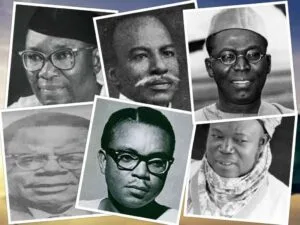
Nationalism is the love of and pride in one’s country, and the desire of a people to rule themselves. In Africa, it was the effort of Africans to oppose and end colonial rule.
Behavioural objectives
By the end of the lesson, students should be able to:
- define nationalism;
- state the factors that encouraged nationalism before the Second World War;
- explain the external and internal factors that led to the rise and growth of the nationalist movement;
- give reasons why nationalist activities were slow in French West Africa;
- state the effects of nationalism on Nigeria.
What is nationalism?
Nationalism is a sense of oneness among a people who want to control their own destiny and defend their group against rivals.
- Love of country: pride and loyalty shown by the people of a nation.
- Desire for independence: the wish of a racial or cultural group to form its own independent country.
- African nationalism: the effort of Africans to oppose or reject colonial rule.
- Group unity: a feeling of oneness that grows when a people try to control their destiny and environment.
Key terms
- Colonialism: rule of one country over another and the use of its resources.
- Self-government: a people ruling themselves, without outside control.
- Decolonisation: the process by which colonies gain independence.
- Disenfranchised: denied the right to vote.
- Ex-servicemen: former soldiers, such as West Africans who fought in the Second World War.
- Diaspora: people of African origin living outside Africa.
- Monopoly: control of trade by one person or group, with no competition.
What factors encouraged nationalism before the Second World War?
Nine main factors encouraged nationalism in West Africa before the Second World War.
- Western education: it gave West Africans a common language with which to fight colonialism.
- World depression: the economic depression of the early 1930s brought hardship and agitation for self-government.
- Economic exploitation: European firms held a monopoly of trade in West Africa and exploited the people.
- Lack of educational facilities: the missionaries had little money, and education aimed mainly at teaching Africans to read and write, with little attention to skilled manpower.
- High cost of living: rising prices of goods and services lowered the standard of living and increased agitation.
- Emergence of political parties: parties demanded more participation by Africans in government.
- Religion: missionaries disregarded African tradition and culture, and this provoked resentment.
- Heavy taxes: Africans paid heavy taxes and had no control over how the money was spent.
- Racial discrimination: colonial rulers discriminated against Africans in the civil service.
What factors led to the rise and growth of the nationalist movement?
Sixteen factors, eight external and eight internal, led to the rise and growth of nationalism during and after the Second World War.
What were the external factors?
External factors are events and influences from outside West Africa.
- The Atlantic Charter: issued in 1941, it declared the right of all peoples to choose their form of government. American support for decolonisation encouraged nationalists to demand independence.
- Anti-colonial stand of the U.N.O.: the organisation opposed colonialism and imperialism and supported nations seeking independence. This revived nationalism in West Africa.
- British Labour Party: it opposed the Conservative Party’s colonial policy. This influenced nationalism in Nigeria.
- Independence of other countries: India (1947) and Ghana (1957) gained independence. This increased the agitation of Nigerian nationalists.
- Pan-African leaders and organisations: W.E.B. Du Bois, George Padmore, the West African Students’ Union (WASU) and the Negro World newspaper preached against racial discrimination and for the freedom of black nations.
- Loss of British prestige: Britain’s setbacks in the Second World War reduced its standing in the world.
- The Second World War: it exposed the myth of white supremacy, since Europeans were seen to be no better than Africans.
- The superpowers: the rise of the U.S.A. and U.S.S.R. after the war gave courage to nationalists in Nigeria and West Africa.
What were the internal factors?
Internal factors are events and conditions inside Nigeria and West Africa.
- Racial discrimination: the treatment of Nigerians in the civil service increased nationalist feeling after 1945.
- The elective principle of 1922: it applied only to Lagos and Calabar. Many Nigerians were disenfranchised, and this provoked nationalism.
- Return of ex-servicemen: soldiers who fought in the Second World War came home with new ideas and wanted their countries free like European nations.
- Activities of educated elites: leaders such as Nnamdi Azikiwe, H.O. Davies, Herbert Macaulay and Obafemi Awolowo in Nigeria, and Kwame Nkrumah and Jomo Kenyatta elsewhere in Africa, mobilised the masses.
- Political parties and newspapers: parties and papers such as the West African Pilot and the Lagos Daily News played a big part in decolonisation.
- Trade unions: the railway workers’ union led by Michael Imoudu used strikes to demand better conditions of service and supported nationalist leaders.
- Poor prices: colonial rulers bought African produce at low prices.
- Christianity and mission schools: they taught that all people are created equal by God, and nationalists applied this to colonial rule.
What are the key dates in the rise of nationalism?
| Year | Event |
|---|---|
| 1922 | Elective principle introduced, for Lagos and Calabar only |
| 1941 | Atlantic Charter issued |
| 1947 | India gained independence |
| 1957 | Ghana gained independence |
| 1960 (1st October) | Nigeria gained independence |
Why was nationalism slow in French West Africa?
Nationalism was slow in French West Africa because French policies gave Africans little room or reason to protest.
- Policy of assimilation: France tried to turn educated Africans into Frenchmen. The few who qualified enjoyed rights and benefits, so they had little reason to agitate.
- Indigénat policy: it threatened the liberty of Africans. They could be arrested and imprisoned without trial.
- Absence of political parties: Africans had no organised way to express political views.
- Granting of citizenship: unlike Britain, France offered French citizenship to Africans who met its conditions. They shared the privileges of white citizens, so nationalist movements seemed unnecessary.
- Lack of freedom of the press: the government censored the press, so government policies could not be criticised.
What were the effects of nationalism on Nigeria?
Nationalism led to political parties, newspapers, constitutional change and, finally, independence on 1st October 1960.
- Political parties and political education: parties such as NNDP, NCNC and AG were formed.
- Newspapers: papers such as the West African Pilot and the Lagos Daily News were established.
- Independence: Nigeria became independent on 1st October 1960.
- Awareness of rights: Nigerians learnt their political and fundamental rights.
- Constitutional development: it brought change in the way Nigeria was governed.
- Better image abroad: it projected Nigeria and West Africa to the outside world.
- Less racial discrimination: colonial rulers had to modify discrimination in the civil service.
Evaluation
- Define nationalism.
- State five factors that encouraged nationalism before the Second World War.
- Explain three external factors that led to the rise and growth of the nationalist movement.
- Give three reasons why nationalist activities were slow in French West Africa.
- State four effects of nationalism on Nigeria.
Assignment
List and explain five internal factors that led to the rise and growth of nationalism in Nigeria.
This term's Government topics
SS2 Second Term · 8 topics
- Pre Colonial Administration
- Colonial Administration (British Colonial Administration)
- Nationalism
- Constitutional Development in Nigeria
- Constitutional Development II
- Constitutional Development III
- Independence and Post Independence Constitution (1960 & 1963)
- Independence and Post Independence Constitution 2nd Republic
SS2 Government Lesson Notes for Other Topics
Pre colonial Administration
Read the full lesson note.
Colonial Administration (British Colonial Administration)
Read the full lesson note.

Constitutional Development In Nigeria
Read the full lesson note.
Constitutional Development II
Read the full lesson note.
Constitutional Development III
Read the full lesson note.

Independence And Post Independence Constitution (1960 & 1963)
Read the full lesson note.

Independence And Post Independence Constitution 2nd Republic
Read the full lesson note.

Electoral Process
Read the full lesson note.

Franchise/Suffrage
Read the full lesson note.

Types Of Electoral Systems
Read the full lesson note.

Electoral Commission And Officials
Read the full lesson note.

Public Opinion
Read the full lesson note.

Public Administration
Read the full lesson note.

Local Government
Read the full lesson note.

Public Corporations
Read the full lesson note.
Lesson Notes for Other Classes

SS1 Lesson Note
The complete lesson note to guide your studies.

SS3 Lesson Note
The complete lesson note to guide your studies.
