
Colonial Administration (British Colonial Administration) – SS2 Government Lesson Note (Second Term)
Lesson note at a glance
- Class
- SS2
- Subject
- Government
- Term
- Second Term
- Reading time
- 4 min
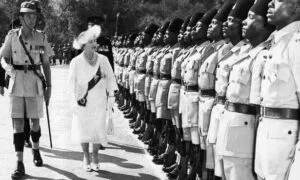
Colonialism is the forceful ruling of one country by another, in which the stronger country controls the weaker one politically and exploits it economically.
- Another name: colonialism is sometimes called imperialism.
- Colonial power in Nigeria: Britain.
- Method of rule: a central administration and a system of native administration.
Behavioural objectives
By the end of the lesson, students should be able to:
- define colonialism;
- explain the reasons why European countries colonised Africa;
- describe how Nigeria was formed between 1900 and 1914;
- state the features of British colonial administration;
- distinguish between a crown colony, a protectorate and a trust territory.
What is colonialism?
Colonialism is the control of one country by a more powerful country, which rules its people and uses its resources.
- Cultural meaning: the imposition of a more developed culture over a less developed one, backed by expansion and economic adventure.
- Political meaning: the extension of the political control of a powerful nation over a weaker nation.
- Effect on the weaker nation: it is politically dominated and economically exploited.
- Imperialism: a name often used for colonialism.
What is the historical background of British colonial rule in Nigeria?
British rule in Nigeria followed the Industrial Revolution in Europe and the scramble for Africa.
- Industrial Revolution: before the 1880s, European industries grew and needed raw materials.
- Scramble and partition: Britain, Belgium, France, Germany, Italy, Spain and Portugal competed for African colonies.
- Berlin West Africa Conference, 1884-1885: African lands were shared among European countries as colonies.
- 1900: Britain made its first attempt to set up a formal government in Nigeria.
What were the administrative units in Nigeria in 1900?
By 1900, the area now called Nigeria was made up of three separate administrative units.
- Colony of Lagos: the coastal colony around Lagos (taken by Britain in 1861).
- Protectorate of Northern Nigeria: the northern territory.
- Protectorate of Southern Nigeria: the southern territory outside Lagos.
How was Nigeria formed between 1900 and 1914?
- In 1900, Nigeria existed as three separate units.
- In May 1906, the Colony of Lagos and the Southern Protectorate were joined and renamed the Colony and Protectorate of Southern Nigeria.
- In 1914, Lord Frederick Lugard joined Southern Nigeria with the Northern Protectorate.
- The result was a single colony and protectorate called Nigeria.
- Origin of the name: Flora Shaw, a British journalist, suggested the name Nigeria in 1897.
What were the reasons for colonialism?
There were eight main reasons why European countries colonised Africa: economic, social, cultural, humanitarian, religious, prestige, political and adventure.
Economic reasons
- Raw materials for industries: after the Industrial Revolution (18th and 19th centuries), European industrialists needed large quantities of raw materials. This brought them to Africa, including Nigeria.
- Markets: Europeans needed markets outside Europe to sell excess goods. Africa was seen as a new market.
Other reasons
- Social reasons: the colonies were seen as a place to settle surplus population.
- Cultural reasons: colonialism was presented as a way of civilising Africans, who were wrongly believed to be primitive.
- Humanitarian reasons: the colonisers claimed it would stop the slave trade and inter-ethnic wars in West Africa.
- Religious reasons: Europeans on the West African coast wanted to win souls and convert Africans to Christianity.
- Prestige motive: colonies raised the prestige of home countries such as Britain and France.
- Political reasons: Europeans wanted to extend their spheres of influence and rule territories in Africa.
- Adventure motive: European travellers came to visit parts of Africa and learn about its people and natural resources.
What were the features of British colonial administration?
British colonial administration had two main features: a central administration and a native administration.
Central administration
- Head: the Governor.
- Appointment: the Secretary of State for the Colonies appointed the Governor.
- Councils: the Governor was president of both the Legislative Council and the Executive Council.
Native administration
- Where used: in the protectorates, provinces and districts.
- Method: the indirect rule system.
- Indirect rule: the British governed through existing traditional rulers under the supervision of British officers.
How were British colonies in West Africa classified?
British territories were classified as crown colonies, protectorates or trust territories.
- Crown colony: a territory owned by the British crown as property, gained by conquest or cession, e.g. Lagos Colony.
- Protectorate: a territory under the protection of the British government, shielded from conquest by other European countries, e.g. the Northern and Southern Protectorates of Nigeria.
- Trust territory: a former German colony taken over after Germany was defeated by the allied powers, e.g. Cameroon, Togo and Tanzania.
| Type | Ownership or status | Example |
|---|---|---|
| Crown colony | Owned by the British crown | Lagos Colony |
| Protectorate | Protected by Britain, not owned as property | Northern and Southern Protectorates |
| Trust territory | Former German colony placed under allied control | Cameroon, Togo, Tanzania |
Evaluation
- Define colonialism.
- Name the three administrative units that made up Nigeria in 1900.
- State four reasons why European countries colonised Africa.
- Who headed the central administration, and who appointed him?
- Explain the difference between a crown colony and a protectorate.
Assignment
Write a short answer that states the year of the Berlin West Africa Conference, the three units that made up Nigeria in 1900, the person who amalgamated them in 1914, and who suggested the name Nigeria.
This term's Government topics
SS2 Second Term · 8 topics
- Pre Colonial Administration
- Colonial Administration (British Colonial Administration)
- Nationalism
- Constitutional Development in Nigeria
- Constitutional Development II
- Constitutional Development III
- Independence and Post Independence Constitution (1960 & 1963)
- Independence and Post Independence Constitution 2nd Republic
SS2 Government Lesson Notes for Other Topics
Pre colonial Administration
Read the full lesson note.
Nationalism
Read the full lesson note.

Constitutional Development In Nigeria
Read the full lesson note.
Constitutional Development II
Read the full lesson note.
Constitutional Development III
Read the full lesson note.
Independence And Post Independence Constitution (1960 & 1963)
Read the full lesson note.
Independence And Post Independence Constitution 2nd Republic
Read the full lesson note.
Electoral Process
Read the full lesson note.
Franchise/Suffrage
Read the full lesson note.

Types Of Electoral Systems
Read the full lesson note.

Electoral Commission And Officials
Read the full lesson note.
Public Opinion
Read the full lesson note.

Public Administration
Read the full lesson note.
Local Government
Read the full lesson note.
Public Corporations
Read the full lesson note.
Lesson Notes for Other Classes

SS1 Lesson Note
The complete lesson note to guide your studies.

SS3 Lesson Note
The complete lesson note to guide your studies.
