
Pre Colonial Administration – SS2 Government Lesson Note (Second Term)
Lesson note at a glance
- Class
- SS2
- Subject
- Government
- Term
- Second Term
- Reading time
- 8 min
Pre-colonial administration was the way communities in Nigeria were governed before colonial rule.
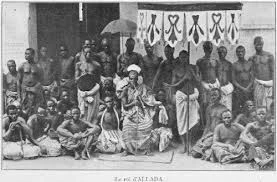
What were the main pre-colonial political systems in Nigeria?
There were three main systems: Hausa/Fulani, Igbo and Yoruba (Old Oyo).
- Hausa/Fulani: a centralised system under an Emir.
- Igbo: a decentralised system run by councils of elders, age grades and village assemblies.
- Yoruba of Oyo: a constitutional monarchy under the Alafin.
Behavioural objectives
By the end of the lesson, students should be able to:
- describe the political administration of the Hausa/Fulani, Igbo and Yoruba (Old Oyo) before colonial rule;
- name the main officials and bodies in each system and state their duties;
- state the features of the Igbo and Yoruba political systems;
- list the functions of traditional rulers, the council of elders, secret societies and age grades.
How were the Hausa/Fulani governed before colonial rule?
The Hausa/Fulani were governed as the Sokoto caliphate, a highly centralised system headed by Emirs.
What is the historical background of the Hausa/Fulani system?
- Jihad: the Fulani took political leadership of the Habe (Hausa) states in the 19th century after the jihad led by Othman Dan Fodio.
- Sokoto caliphate: Othman Dan Fodio established it as a highly centralised state.
- Emirs: rulers known as Emirs governed the emirates of the caliphate.
- Headquarters: Sokoto and Gwandu were the two headquarters of all the emirates.
- Allegiance: each Emir owed loyalty to Othman Dan Fodio and his representatives at Sokoto and Gwandu.
How was the Hausa/Fulani political system organised?
- The Emirate: the caliphate was divided into emirates, each headed by an Emir with almost all powers.
- The Emir: an authoritarian ruler who made laws and kept law and order according to Islamic rules.
- Legislative organ: Sharia, the Muslim law, applied throughout the emirate and was regarded as the supreme law of God.
- Executive organ: the Emir had a council of advisers but could accept or reject their advice.
- Judicial organ: Alkali judges administered Sharia, and village heads settled some minor cases.
- Criminal and land cases: these were for the Emir to decide, while Sharia dealt with civil cases.
- District administration: each emirate was divided into districts, each headed by a Hakimi appointed by the Emir.
Who were the Emir’s main advisers and what did they do?
- Waziri: the head of all the officials.
- Galadima: in charge of the capital.
- Madawaki: the commander of the army.
- Dogari: the head of the Emir’s guards (police).
- Sarkin Ruwa: the river fishing official.
- Sarkin Fada: the head of the palace workers.
- Sarkin Pawa: the head of all butchers.
- Yari: the official in charge of the prisons.
How were the Igbo governed before colonial rule?
The Igbo were governed by a decentralised system with no central ruler, in which different groups shared power and the people took part in governance.
- Direct democracy: the Igbo practised a form of it, because adults took part in decisions.
What were the features of the Igbo political system?
- Decentralised: power was spread out and the system was segmented.
- Republican: no individual had hereditary rights to political office.
- Democratic: it rested on equality and social justice.
- No central ruler: there was no single political ruler over all the people.
- Role of women: women played a significant part in government through the Umuada (daughters of the kindred).
How was the Igbo political system organised?
- The village: the village was the political unit, and each village was made up of families.
- Council of elders: each family head held the Ofor title, and all the Ofor holders formed the council that governed the village.
- The Okpara: the oldest Ofor title holder, who presided over the council’s meetings.
- Village meetings: every adult was expected to take part.
- The executive: the heads (council of elders) discussed village affairs, and every adult could contribute.
- The legislature: villagers made laws themselves, and the age grade could make laws which the elders accepted.
- The judiciary: family heads settled disputes between families, and serious cases went to the Council of Elders and the Okpara.
- The age grade: young men of the same age group who cleared paths and roads, kept security and helped carry out the elders’ policies.
- The Ozor title holders: wealthy and influential men who took the costly Ozor title, were respected and could join the council of elders to debate issues.
- Women’s association: women helped settle disputes and acted as a pressure group.
What did the women’s association do?
- Socialisation: they taught their young ones good morals, political values and norms.
- Checking abuse: they stood against corruption and oppression.
How was the Old Oyo Empire governed before colonial rule?
The Old Oyo Empire was a large monarchy headed by a king called the Alafin.
- Provinces: the empire was divided into different provinces.
- Monarchy: its government was like that of many other kingdoms and empires in Africa.
What were the features of the Yoruba pre-colonial political system?
- Large size: the political system covered a very large area.
- Constitutional monarchy: the Oba was not an autocratic ruler.
- Checks and balances: these stopped the Oba from abusing power.
- Role of chiefs: the Oba ratified decisions taken by the chiefs.
Who were the main officials and bodies in Old Oyo?
- The Alafin: the political head of the empire, chosen by the Oyomesi.
- His public appearance: it is claimed he appeared to the public only three times a year, during historic festivals.
- His helpers: the Aremo, the Bashorun, the Oyomesi and others assisted him.
- The Aremo: the eldest son of the Alafin, who assisted in administration but could not succeed his father.
- The Oyomesi: the seven hereditary kingmakers, headed by the Bashorun (prime minister).
- Duties of the Oyomesi: they installed a new Alafin when one died or removed a ruling one, and assisted in administration.
- Provincial governors: each province was ruled by an Ajele or Oba, who collected tribute and paid homage to the Alafin.
- The Aare-ona Kakanfo: the head of the army, who was expected to commit suicide if the army was defeated.
- The Ogboni society: a secret society headed by the Oluwo, regarded as the third organ of government.
- Duties of the Ogboni: they checked the excesses of the Oyomesi, such as rejecting an Alafin, performed judicial functions and preserved cultural duties.
Who were the three eunuchs?
- Osi Efa: in charge of political affairs and custom, and had to die with the Alafin.
- Oni Efa: in charge of the judiciary.
- Otun Efa: performed religious duties for the Alafin.
How was an Alafin chosen and removed?
- The throne did not pass automatically from father to son.
- The Oyomesi chose a new ruler from the royal families.
- If the Alafin acted unconstitutionally, the Oyomesi authorised the Bashorun to send him an empty calabash.
- The empty calabash meant the people had rejected him.
- The Alafin was then expected to commit suicide.
How do the three pre-colonial systems compare?
The table sets the Hausa/Fulani, Igbo and Yoruba systems side by side, using the points explained above.
| Point | Hausa/Fulani | Igbo | Yoruba (Old Oyo) |
|---|---|---|---|
| Head | Emir | Council of elders, presided over by the Okpara | Alafin |
| Type of system | Centralised | Decentralised, republican | Constitutional monarchy |
| Source of law | Sharia | Laws made by villagers, age grades and elders | Decisions of the chiefs, ratified by the Alafin |
| Power of the ruler | Almost all powers, authoritarian | No single ruler | Limited by the Oyomesi and Ogboni |
| Public participation | Little, as the Emir could reject advice | Every adult took part | Through the chiefs and Oyomesi |
What were the functions of traditional rulers in the pre-colonial political system?
Traditional rulers were the heads of their communities, with political, legal, religious and social duties.
- Supreme rule: they acted as the supreme rulers of their communities.
- Law-making: they performed legislative functions.
- Defence: they ensured the defence of their communities.
- Religion: they served as high priests of some religious cults.
- Administration: they were the heads of administration.
- Safety: they safeguarded the lives of the people.
- Communal wealth: they took part in sharing it.
- Unity: they served as political symbols of unity.
- Law and order: they helped maintain it.
- Development: they planned for the progress of their communities.
What were the functions and powers of the council of elders?
The council of elders was a body of senior people that advised and checked the ruler and helped govern the community.
- Advice: it advised the paramount chiefs.
- Law and order: it was responsible for maintaining them.
- Decision-making: it acted as a decision-making body.
- Religion: it performed religious functions.
- Installing and removing chiefs: it helped to install and depose paramount chiefs.
- Checking chiefs: it checked the activities of the paramount chiefs.
- War: it decided whether the community would go to war.
What were the functions of secret societies?
Secret societies were closed groups of initiated members that helped keep order and protect the community.
- Law and order: they helped to enforce them.
- Military and police duties: they performed both.
- Link with ancestors: they linked the community with its ancestors.
- Protection: they protected their members.
- Education: they educated their members and others in the community.
- Rituals: they performed rituals to drive away evil spirits.
- Socialisation: they acted as agents of socialisation.
What were the functions of the age grade?
An age grade was a group of people born within the same period who performed public duties for the community.
- Warfare: the age grade carried out the prosecution of war.
- Social labour: it built roads, bridges and similar works.
- Socialisation: it taught community values.
- Ceremonies: it performed ceremonial duties on important occasions.
- Defence: it defended the community against internal and external aggression.
- Checking chiefs: it checked the wrong use of power by permanent chiefs.
Evaluation
- Who established the Sokoto caliphate, and how was each emirate governed?
- Name four officials who advised the Emir and state the duty of each.
- State four features of the Igbo political system.
- Explain the roles of the Oyomesi and the Bashorun in the Old Oyo Empire.
- List four functions of the age grade.
Assignment
Explain three differences between the pre-colonial political systems of the Hausa/Fulani and the Igbo.
This term's Government topics
SS2 Second Term · 8 topics
- Pre Colonial Administration
- Colonial Administration (British Colonial Administration)
- Nationalism
- Constitutional Development in Nigeria
- Constitutional Development II
- Constitutional Development III
- Independence and Post Independence Constitution (1960 & 1963)
- Independence and Post Independence Constitution 2nd Republic
SS2 Government Lesson Notes for Other Topics
Colonial Administration (British Colonial Administration)
Read the full lesson note.
Nationalism
Read the full lesson note.

Constitutional Development In Nigeria
Read the full lesson note.
Constitutional Development II
Read the full lesson note.
Constitutional Development III
Read the full lesson note.
Independence And Post Independence Constitution (1960 & 1963)
Read the full lesson note.
Independence And Post Independence Constitution 2nd Republic
Read the full lesson note.
Electoral Process
Read the full lesson note.
Franchise/Suffrage
Read the full lesson note.

Types Of Electoral Systems
Read the full lesson note.

Electoral Commission And Officials
Read the full lesson note.
Public Opinion
Read the full lesson note.

Public Administration
Read the full lesson note.
Local Government
Read the full lesson note.
Public Corporations
Read the full lesson note.
Lesson Notes for Other Classes

SS1 Lesson Note
The complete lesson note to guide your studies.

SS3 Lesson Note
The complete lesson note to guide your studies.
